

A vitamin may not address the cause of a symptom, even when you take it consistently. If you’re wondering why your vitamins aren’t working, possible explanations include taking a nutrient you don’t need, difficulty absorbing or using it, or an interaction with a medicine. Persistent tiredness can also stem from insufficient sleep, stress, or depression rather than a vitamin deficiency.
It’s reasonable to expect a supplement to help when you choose it for a specific concern. But the right approach starts with understanding what your body may need, not simply adding more nutrients.
This article explains how deficiencies are identified, how nutrients work together as cofactors, and how genes or medicines may affect the way your body processes vitamins. You’ll also learn what “methylated vitamins” means, why that distinction may matter, and how to consider supplements alongside a varied diet and appropriate health advice.
Key Takeaways
- Use evidence of a nutrient need, rather than symptoms alone, to guide supplement choices.
- Learn how genetic variants can affect nutrient absorption or conversion, and why that context matters.
- Understand how nutrient cofactors work together and how beta-carotene conversion to vitamin A may vary.
- Review supplement and medicine interactions carefully, since some combinations can affect how treatments work.
- Explore NanoDoc International Pte Ltd’s Nano Cellular Essential Nutrition when considering a nutrition-focused offering.
Table of Contents
How do I know which vitamin supplements I actually need?
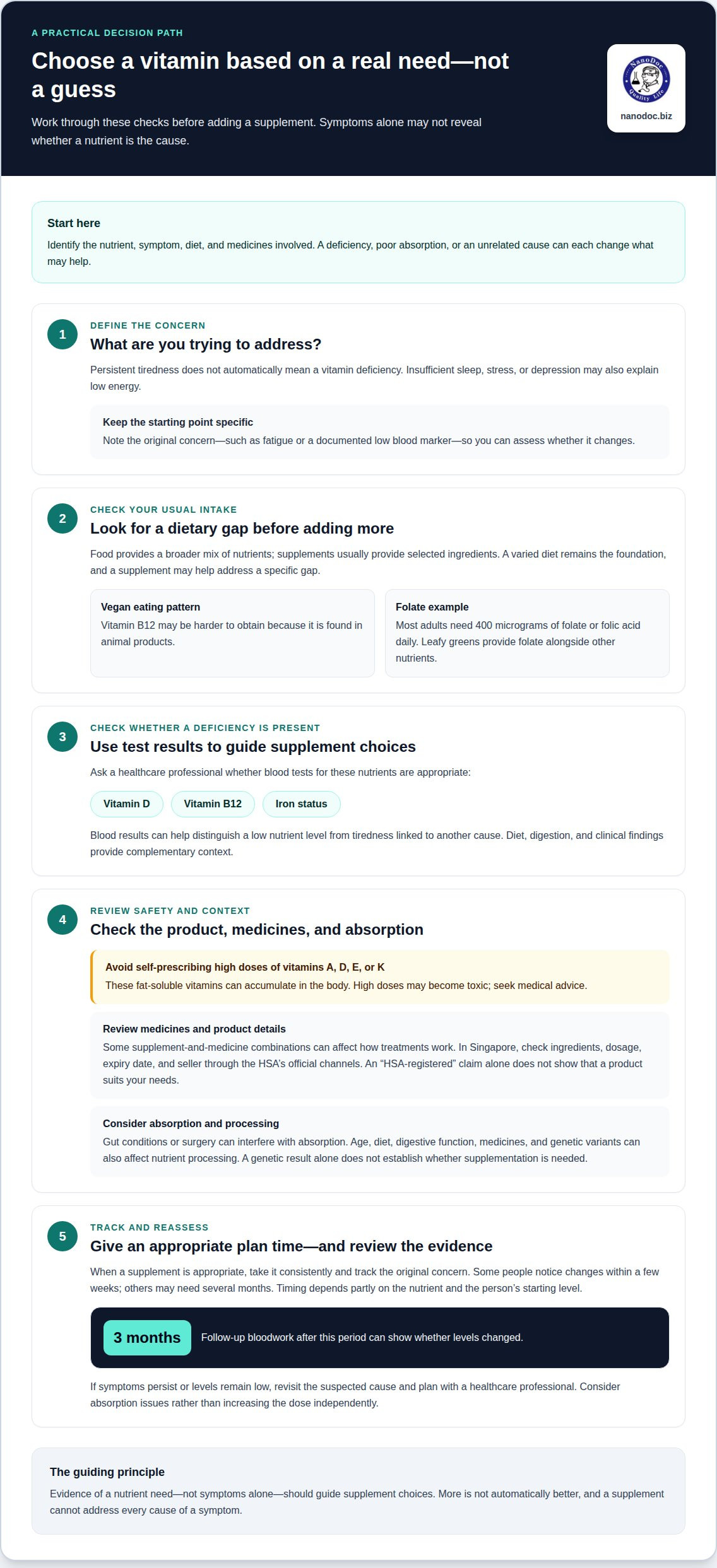
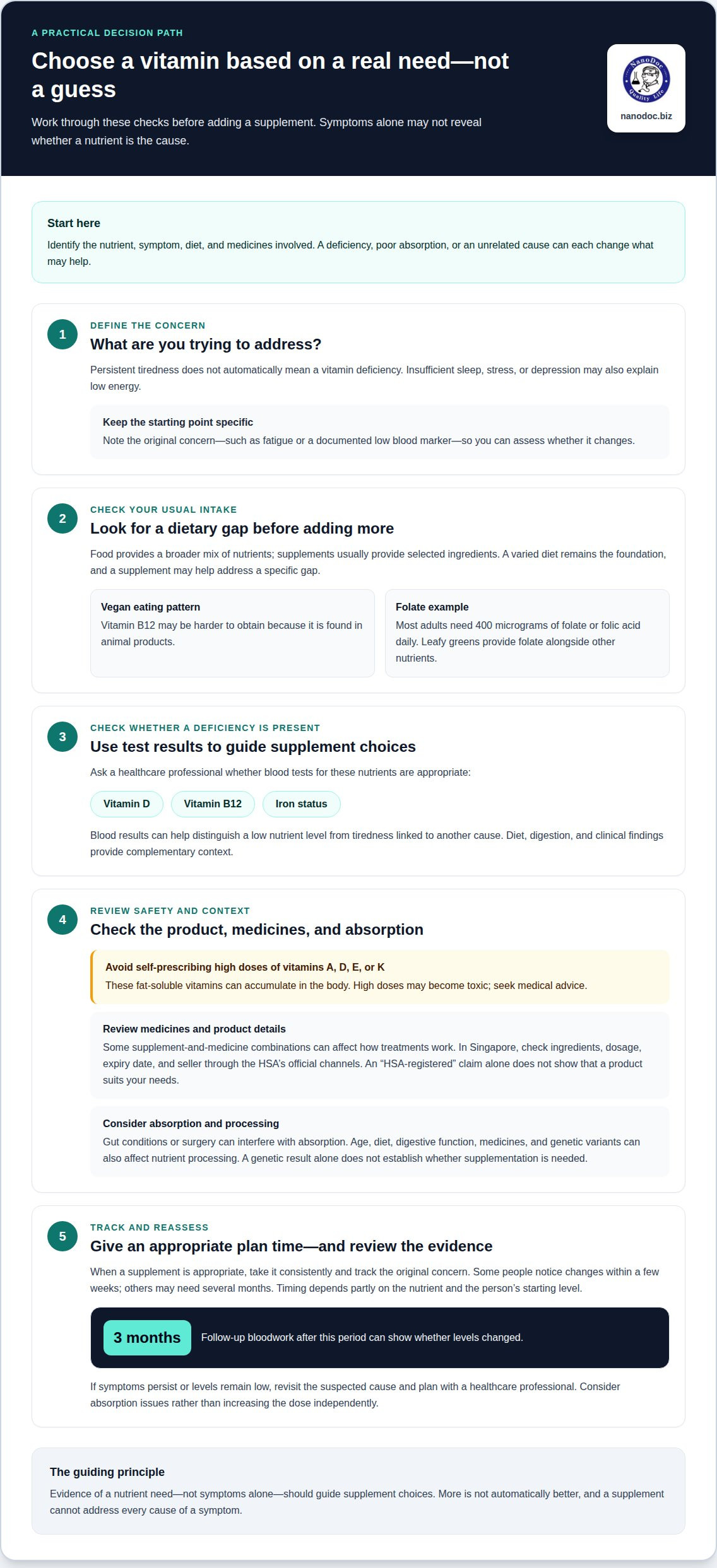
Start by identifying the nutrient, symptom, diet, and medicine involved, rather than adding a multivitamin automatically. A deficiency, poor absorption, or an unrelated cause can each change what may help.
Food nutrients and supplement limits
Supplements add selected nutrients, while food provides a broader mix of vitamins and minerals. A varied diet generally supplies what the body needs, so a supplement may not replace the range found in meals. For example, leafy greens provide folate alongside other nutrients. The National Institutes of Health, Office of Dietary Supplements states that most adults need 400 micrograms of folate or folic acid daily.
Use supplements to address a specific dietary gap or identified need, not as a substitute for regular meals. A vegan diet, for example, may make vitamin B12 harder to obtain because B12 is found in animal products. A balanced eating pattern remains the foundation; supplements can fill a targeted gap when appropriate.
Deficiency tests and excess vitamin risks
Blood tests can help identify deficiencies before you choose a supplement. Ask a healthcare professional about testing vitamin D, B12, and iron status. Results help distinguish a low nutrient level from tiredness linked to another cause, such as insufficient sleep or stress.
In Singapore, use the Health Sciences Authority (HSA)’s official channels to review product details and safety information. Check the ingredients, dosage, expiry date, and seller. An “HSA-registered” claim alone does not establish that a product suits your needs.
Vitamins A, D, E, and K are fat-soluble and can accumulate in the body. High doses may become toxic, so don’t take them without medical advice. A healthcare professional can review your test results, existing supplements, and medicines before you start.
Persistent tiredness does not automatically mean you have a vitamin deficiency. Sleep loss, stress, or depression may better explain low energy, while a blood test can help assess a suspected deficiency. If you’re considering multivitamins for a general energy boost, first identify the concern they are meant to address. High-dose products are not a substitute for finding the cause.
Consistency matters when a supplement is appropriate. Some people notice changes in energy or well-being within a few weeks, while others may need several months. The timeline depends partly on the nutrient and the person’s starting level. Taking a supplement irregularly makes its effects harder to assess.
Track the original concern, such as fatigue or a documented low blood marker, rather than relying on a vague sense of improvement. Follow-up bloodwork after 3 months can show whether levels changed. If symptoms persist, revisit the suspected cause and supplement plan with a healthcare professional instead of increasing the dose independently.
What Is a Vitamin Deficiency?
A vitamin deficiency occurs when nutrient levels are too low to support normal body function. If you’re asking, “Why are my vitamins not working?”, possible reasons include an unsuitable supplement, limited dietary variety, impaired absorption, or differences in nutrient processing.
Dietary variety and nutrient absorption
Dietary variety means eating different foods that provide a broad range of nutrients. It matters because each food has a distinct nutrient profile, while supplements usually provide selected ingredients.
A varied diet can support nutrient intake, but it does not guarantee absorption. The body must digest food, absorb nutrients, and use them in cellular processes. For example, eating foods that contain a nutrient won’t correct a deficiency if your body cannot absorb or process it effectively. Diet, digestion, and clinical findings therefore offer complementary information about nutrient levels.
Gut conditions and nutrient absorption
Nutrient absorption depends partly on the digestive system’s ability to release nutrients from food and move them into the body. Gut conditions or surgery can interfere with this process; vitamin B12 deficiency, for example, can result when the body’s ability to absorb B12 is impaired.
Taking more of a nutrient may not address an underlying absorption problem. A clinician can consider digestive history, symptoms, dietary patterns, and blood results together. If nutrient levels remain low despite appropriate intake, that may prompt closer assessment of absorption rather than an automatic increase in supplements. It can also help explain why your vitamins are not working as expected.
Genetic variants and nutrient processing
Genetic variants can influence how the body absorbs, converts, or uses particular nutrients. MTHFR C677T is one example: it affects an enzyme involved in folate processing, so genetic results need context alongside dietary intake and clinical measures.
Roughly 40 percent of people carry a genetic variant that may impair conversion of folic acid to active folate. The MTHFR C677T variant is carried by roughly 40 percent of people with European ancestry and reduces enzyme efficiency by 40 to 70 percent. These figures describe populations, not an individual’s nutrient status.
Iron regulation also involves the HFE gene. The HFE H63D variant occurs in roughly 15 to 20 percent of people with European ancestry, but its presence alone does not establish an iron deficiency or excess. Iron levels and clinical context matter more than a genetic result in isolation.
Other factors that can affect nutrient processing include age, diet, digestive function, and medicines. A genetic variant may help explain why a nutrient behaves differently, but cannot show by itself whether supplementation is needed. If you’re still asking, “Why are my vitamins not working?”, interpret genetic information alongside symptoms, blood markers, and nutrients in your usual diet.
Nutrient cofactors
A nutrient may depend on other nutrients and biological processes to perform its function. Supplement form, medicines, and individual variation can also affect what your body absorbs or uses.
Yes. Blood tests may help identify some vitamin deficiencies. A clinician interprets results alongside symptoms and dietary history.
Nutrient cofactors and vitamin function
A cofactor is a nutrient or other substance that helps another nutrient perform its biological role. Magnesium, for example, is needed to convert vitamin D, so considering one nutrient alone can overlook a relevant part of the process.
Some nutrients can influence how others are absorbed or used, so their interactions may matter when considering a supplement plan. This does not mean everyone needs both supplements; it shows why nutrient relationships matter when interpreting symptoms or a nutrient plan.
Folate provides another example: large folate intakes can hide a vitamin B12 deficiency. A supplement may change one marker while leaving another issue less visible, so results and intake should be considered together.
Medication-related nutrient depletion
Medicines can affect nutrient status or interact with supplements, changing how your body absorbs or uses particular substances. The effect depends on the medicine and nutrient, so a medication list is useful when reviewing unexplained symptoms or a supplement routine.
Statins illustrate why medicine-related effects deserve attention: plasma CoQ10 levels fell by 50% following statin initiation. This finding does not establish that every statin user needs CoQ10. It does support discussing a new symptom or supplement with the prescribing clinician before changing treatment.
Keep prescribed medicines unchanged unless your prescriber advises otherwise. Record your supplements, including multivitamins, because overlapping ingredients may alter your total intake or affect a treatment’s action.
Nutrient forms and genetic reports
Bioavailability describes how much of a nutrient becomes available for the body to use. Form can matter: magnesium oxide has an absorption rate of approximately 4%, while magnesium bisglycinate achieves absorption rates of 40 to 50%.
Vitamin D3 is approximately 87% more potent than vitamin D2 at raising blood 25-hydroxyvitamin D levels. These comparisons describe specific measures, not a guarantee of symptom improvement. The relevant form depends on the nutrient goal and clinical context.
Genetic reports can indicate variants for further discussion, but they do not diagnose a deficiency by themselves. FUT2 variants are studied in relation to gut microbiome composition and nutrient availability; a report needs to be interpreted alongside diet, symptoms, and blood results.
Use a report as context, not as a prescription. Compare its findings with actual nutrient levels and current medicines before changing supplements. This helps prevent a genetic result from being mistaken for proof that you have a deficiency or need a particular form.
BCMO1 and beta-carotene conversion to vitamin A
Beta-carotene is a plant pigment the body can convert into vitamin A. The BCMO1 enzyme is involved in that conversion, so differences in its function may affect how efficiently someone uses beta-carotene. This matters when assessing whether food sources or a supplement provide the form of vitamin A the body can use.
Two BCMO1 variants, R267S and A379V, are carried by roughly 45 percent of the population. A variant is not, by itself, proof of a deficiency or a reason to take more vitamin A. It is one piece of information about conversion ability, which should be considered alongside dietary intake and relevant clinical findings.
Check the ingredient panel to distinguish beta-carotene from preformed vitamin A. These are not interchangeable: beta-carotene must be converted, while preformed vitamin A is already in vitamin form. For example, a product listing beta-carotene may not match everyone’s assumptions about vitamin A intake. This distinction can help explain why supplement use and perceived results do not always align.
Dietary balance matters. Carrots and leafy vegetables are familiar sources of beta-carotene, while a varied diet can provide nutrients in different forms. A genetic report that identifies BCMO1 R267S or A379V should not replace a review of actual eating patterns or nutrient levels. Nor does the population figure mean that everyone carrying a variant experiences impaired conversion.
Fatigue alone cannot establish that vitamin A intake or conversion is the cause. Low energy can have other explanations, including insufficient sleep, stress, or depression. If fatigue persists, a doctor can assess the symptom in context rather than treating a BCMO1 result as a diagnosis. That distinction helps prevent a genetic finding from directing unnecessary supplementation.
More vitamin A is not automatically better. High-dose vitamin A may cause birth defects and disorders affecting the central nervous system, liver, bones, and skin. This makes it important to account for all sources, including foods and multivitamins, before adding another supplement.
Use BCMO1 information as context, not as a stand-alone prescription. A practical review considers the specific variant, the difference between beta-carotene and preformed vitamin A, dietary balance, symptoms, and clinical nutrient results. If a report raises questions about conversion, discuss those findings with a doctor before changing vitamin A intake or relying on higher doses to address fatigue.
Vitamin and mineral interactions with medicines
Vitamins and minerals can affect prescription medicines and medical treatments. An interaction may change nutrient absorption, medicine levels, or treatment effects, so review the complete combination rather than judging a supplement alone.
Start by listing every supplement alongside prescribed and over-the-counter medicines. Include multivitamins, single nutrients, fortified products, and occasional supplements. Ingredient overlap matters: two products can contain the same mineral or vitamin even when their front labels emphasize different purposes.
Warfarin is a clear example of why consistency matters. People taking anticoagulants such as warfarin should consult their doctors before starting vitamin K supplements and keep vitamin K intake steady. Sudden changes in intake can affect anticoagulation, so discuss supplements and major dietary changes with the prescribing doctor.
Do not stop warfarin or change its dose to accommodate a vitamin. The issue is the relationship between vitamin K and anticoagulation, not whether vitamin K is inherently harmful. Consistent intake allows the treatment plan to account for the nutrient, while unsupervised changes can complicate disease management.
Anticonvulsant treatment presents another concern. Taking 100 times the recommended dietary intake (RDI) of some vitamins and minerals can stop anticonvulsant drugs from working. This finding does not mean ordinary food intake has the same effect. It highlights why high-dose supplements require particular caution for people using medicines to control seizures.
Statins provide a nutrient-related example: plasma CoQ10 levels fell by 50% following statin initiation. That change does not establish that every person taking a statin needs CoQ10. It is a reason to discuss new symptoms and supplement plans with the clinician managing the medication, rather than adding a nutrient automatically or changing prescribed treatment.
Interactions can also involve absorption or metabolism. For example, high doses of vitamin C can interfere with vitamin B12 absorption and metabolism. The relevant concern depends on the nutrient amount, the medicine or treatment, and the person’s existing regimen. More supplementation is not a reliable way to compensate for a suspected interaction.
Before starting a new product, share its full ingredient label and serving instructions with the clinician reviewing your medicines. Name the medication, the supplement, and why you want to take it. This helps focus the review on the specific interaction, possible effects on treatment, and whether an appropriate adjustment is needed.
Use this same review when a treatment changes or a new supplement enters your routine. If you take warfarin, an anticonvulsant, or a statin, make the nutrient discussion part of medication management. Explore nutrition support options as part of a broader, informed approach.
NanoDoc International Pte Ltd: Anti-Ageing Skin Care
NanoDoc International Pte Ltd offers Anti-Ageing Skin Care for readers exploring skincare alongside nutrition questions. Its range also includes Nano Cellular Essential Nutrition for those interested in nutritional products. These offerings address different needs: skincare is not a substitute for identifying or treating a vitamin deficiency, and supplements should not replace an appropriate assessment of symptoms or medicines.
Consider Anti-Ageing Skin Care if your interest is topical skincare, or Nano Cellular Essential Nutrition if you’re exploring nutritional products. Choose according to the concern you want to address, rather than expecting one category to resolve unrelated health issues.
Contact NanoDoc International Pte Ltd to explore its offerings.
Make your next step specific
If you’re still asking why your vitamins aren’t working, start by clarifying the concern you want to address. Keep track of what you take and any changes, and discuss persistent symptoms or supplement questions with a healthcare professional. This can help distinguish a nutritional goal from a concern that needs a different approach.
NanoDoc International Pte offers Anti-Ageing Skin Care, Nano Cellular Essential Nutrition, and Pain Relief Care. These categories serve different purposes; no product is a substitute for assessing a suspected deficiency or reviewing medicine interactions. Choose according to the need you’re addressing, without expecting one category to resolve unrelated symptoms.
When you’re ready to explore these offerings, contact NanoDoc International Pte. A measured, informed next step can help you make choices that fit your needs.
Frequently Asked Questions
What Are Methylated Vitamins?
Methylated vitamins are nutrient forms attached to a methyl group, such as methylfolate and methylcobalamin. The label describes the form, not whether a product is necessary or will work better for you. For example, when comparing folate products, check whether the label names folic acid or methylfolate. Consider this detail alongside your diet, test results, and reason for considering a supplement.
How long does it take for vitamins to start working?
Some people notice changes within a few weeks, while others need several months. The nutrient, starting levels, and concern being addressed all affect the timeline. For example, symptoms and blood levels may not change at the same pace. If you’re wondering why your vitamins are not working, consider whether the supplement matches an identified need and whether you’ve taken it consistently.
How long does it take for vitamins to work?
There’s no single timeline for every vitamin. Vitamin D3 may take 3-6 months to significantly change blood levels, while people taking vitamin B6 daily for a deficiency may begin to feel effects in one to three weeks. These examples show why the nutrient and starting deficiency matter. Follow the intended review plan instead of increasing a dose because you haven’t noticed an immediate change.
Are gummy vitamins effective compared to other formulations?
Gummy vitamins can provide the same nutrients as traditional forms when properly manufactured and taken consistently. Compare the nutrients and amounts on the label, then consider whether the format helps you follow the directions. For instance, someone who struggles to swallow tablets may find gummies easier to take consistently. Check the full ingredient list, including added sugars, rather than assuming all gummies have the same composition.
Can I take all my vitamins at once?
Not necessarily. The right timing depends on the nutrients, doses, and medicines in your routine. Taking several products together can also make duplicate ingredients harder to spot. For example, a multivitamin and a separate single-nutrient supplement may both contain the same vitamin. Compare their labels before combining them, and review the full list with a healthcare professional if you take prescription medicine or have a treatment plan.
Can I take vitamins on an empty stomach?
Some can be taken on an empty stomach, but fat-soluble vitamins A, D, E, and K are better taken after food containing dietary fat. Water-soluble vitamins such as B12 and C are absorbed best on an empty stomach. A practical approach is to check the product directions and note whether food affects comfort or consistency. If the label gives specific instructions, follow those directions.
How long do vitamins and supplements take to show effects?
The timeline depends on the nutrient, starting level, and effect you’re tracking. Vitamin D supplementation may improve deficiency symptoms within six weeks to four months, depending on deficiency severity. If you’re asking why your vitamins are not working, compare the expected outcome with a measurable marker or the original symptom. A follow-up review after consistent use can help determine whether the approach needs reconsideration.
How do food, medications, and medical conditions affect vitamin absorption?
Food determines which nutrients enter your diet, while medicines and digestive conditions can affect absorption or use. For example, a condition or surgery that impairs B12 absorption can contribute to deficiency despite dietary intake. Keep a current list of medicines and supplements, and note relevant dietary changes. That record gives a healthcare professional useful context when interpreting symptoms or nutrient results.
Frequently Asked Questions
- What Are Methylated Vitamins?
- Methylated vitamins are nutrient forms attached to a methyl group, such as methylfolate and methylcobalamin. The label describes the form, not whether a product is necessary or will work better for you. For example, when comparing folate products, check whether the label names folic acid or methylfolate. Consider this detail alongside your diet, test results, and reason for considering a supplement.
- How long does it take for vitamins to start working?
- Some people notice changes within a few weeks, while others need several months. The nutrient, starting levels, and concern being addressed all affect the timeline. For example, symptoms and blood levels may not change at the same pace. If you’re wondering why your vitamins are not working, consider whether the supplement matches an identified need and whether you’ve taken it consistently.
- How long does it take for vitamins to work?
- There’s no single timeline for every vitamin. Vitamin D3 may take 3–6 months to significantly change blood levels, while people taking vitamin B6 daily for a deficiency may begin to feel effects in one to three weeks. These examples show why the nutrient and starting deficiency matter. Follow the intended review plan instead of increasing a dose because you haven’t noticed an immediate change.
- Are gummy vitamins effective compared to other formulations?
- Gummy vitamins can provide the same nutrients as traditional forms when properly manufactured and taken consistently. Compare the nutrients and amounts on the label, then consider whether the format helps you follow the directions. For instance, someone who struggles to swallow tablets may find gummies easier to take consistently. Check the full ingredient list, including added sugars, rather than assuming all gummies have the same composition.
- Can I take all my vitamins at once?
- Not necessarily. The right timing depends on the nutrients, doses, and medicines in your routine. Taking several products together can also make duplicate ingredients harder to spot. For example, a multivitamin and a separate single-nutrient supplement may both contain the same vitamin. Compare their labels before combining them, and review the full list with a healthcare professional if you take prescription medicine or have a treatment plan.
- Can I take vitamins on an empty stomach?
- Some can be taken on an empty stomach, but fat-soluble vitamins A, D, E, and K are better taken after food containing dietary fat. Water-soluble vitamins such as B12 and C are absorbed best on an empty stomach. A practical approach is to check the product directions and note whether food affects comfort or consistency. If the label gives specific instructions, follow those directions.
- How long do vitamins and supplements take to show effects?
- The timeline depends on the nutrient, starting level, and effect you’re tracking. Vitamin D supplementation may improve deficiency symptoms within six weeks to four months, depending on deficiency severity. If you’re asking why your vitamins are not working, compare the expected outcome with a measurable marker or the original symptom. A follow-up review after consistent use can help determine whether the approach needs reconsideration.
- How do food, medications, and medical conditions affect vitamin absorption?
- Food determines which nutrients enter your diet, while medicines and digestive conditions can affect absorption or use. For example, a condition or surgery that impairs B12 absorption can contribute to deficiency despite dietary intake. Keep a current list of medicines and supplements, and note relevant dietary changes. That record gives a healthcare professional useful context when interpreting symptoms or nutrient results.