
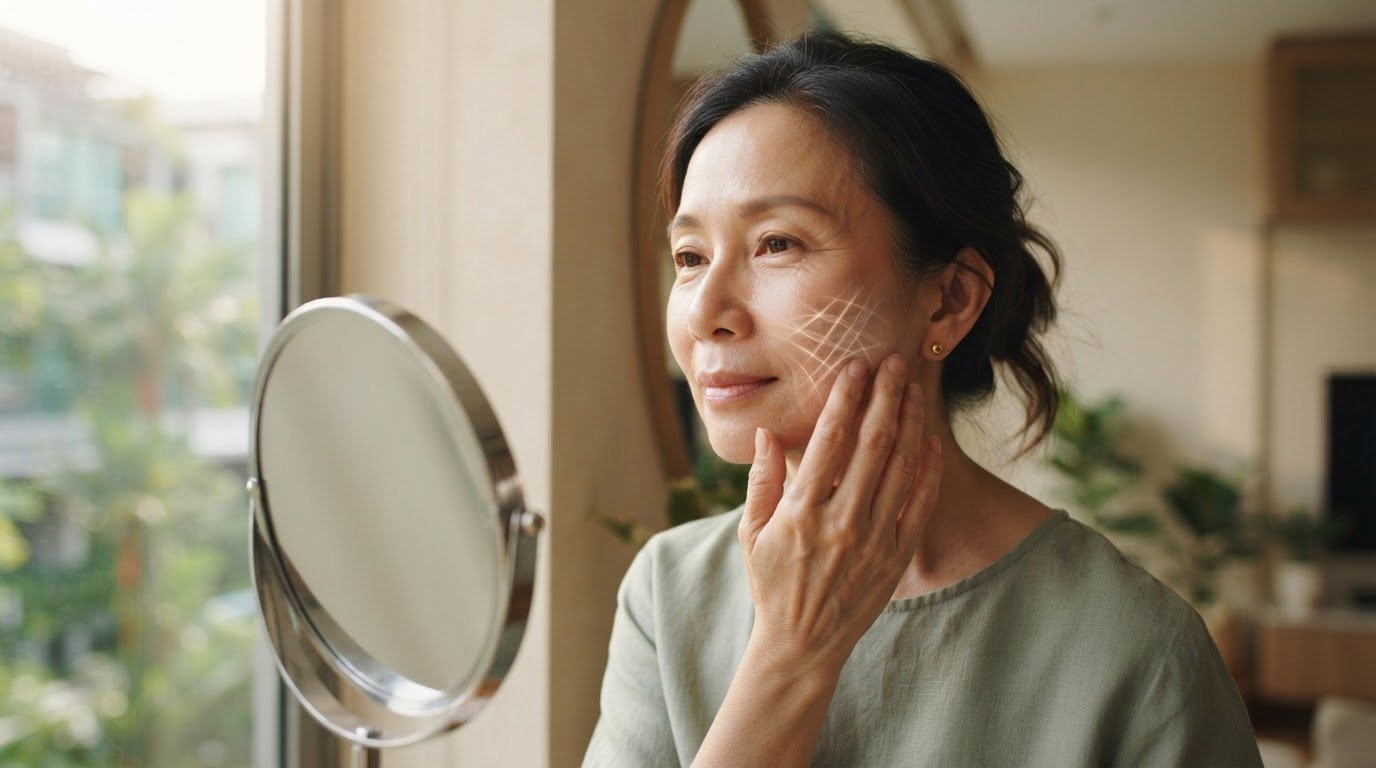
Skin elasticity can start changing before visible sagging appears. What causes loss of skin elasticity includes age-related declines in collagen and elastin, alongside factors such as genetics, lifestyle and sun exposure; these changes can begin to show from a person’s 30s. Daily sunscreen use can help stop sun-related photoaging.
If your skin looks less firm or takes longer to return to shape, you’re noticing changes in its underlying support, not just surface dryness. Understanding what causes loss of skin elasticity helps explain why these changes happen at different rates and what signs to look for.
This article explains how aging, sun exposure and nutrition can affect skin firmness, and outlines common signs of reduced elasticity. It also covers practical ways to support skin health and distinguish gradual changes from factors you may be able to address.
Key Takeaways
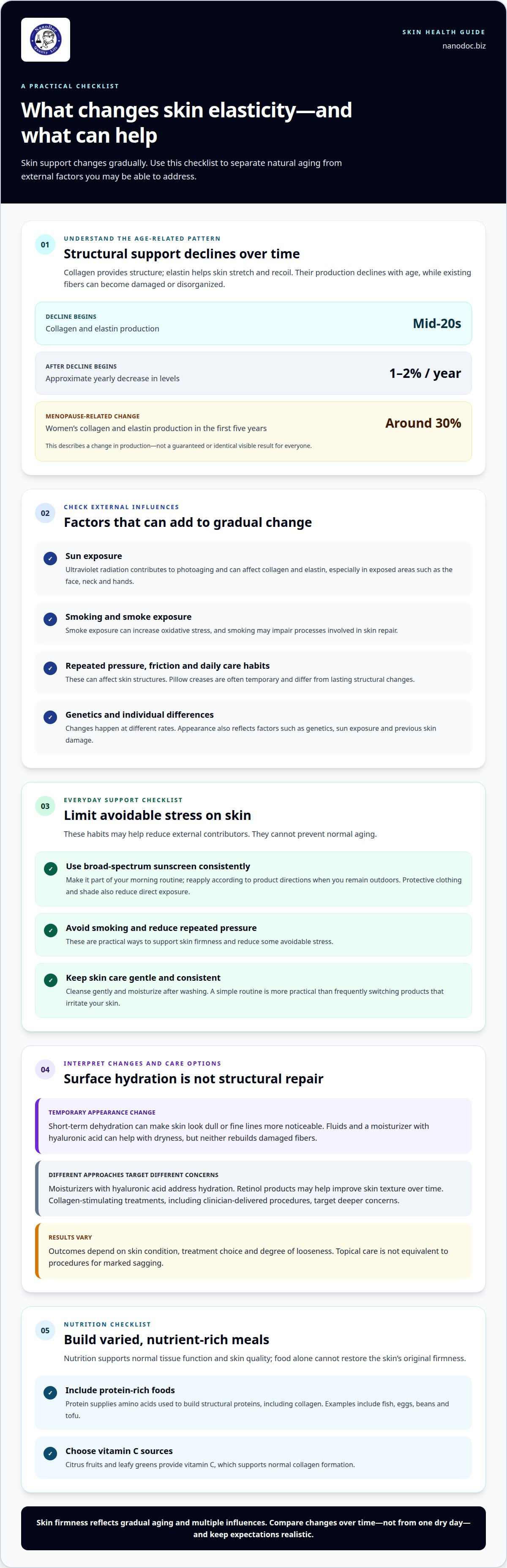
- Collagen and elastin production begins to decline in the mid-20s, with levels decreasing by approximately 1-2% per year. Recognizing this gradual shift can help put changes in firmness into context.
- Sun exposure and lifestyle factors can influence how skin changes over time. Daily sunscreen use can help limit sun-related photoaging.
- Build meals around varied, nutrient-rich foods, including leafy greens, nuts, seeds, fatty fish, citrus fruits and protein-rich options, to support overall skin health.
- Look for changes such as fine lines, crepey texture, looseness, dryness or slower wound healing; noticing a combination of signs can help you understand how skin elasticity is changing.
Table of Contents
1. Why does skin elasticity change?
Skin elasticity changes when its supporting structure loses strength or hydration. Collagen provides tensile support, while elastin fibers help skin stretch and recoil. Aging, sunlight, smoking, repeated friction and daily care habits can all affect these structures. The causes of skin elasticity loss can add up gradually rather than appearing all at once.
Sun exposure is a major environmental influence. Ultraviolet radiation contributes to photoaging, which can affect collagen and elastin in exposed areas such as the face, neck and hands. Daily sunscreen use helps limit sun-related photoaging. Make it part of your morning routine, and reapply according to the product directions when you remain outdoors. Protective clothing and shade also reduce direct exposure.
Smoking is another lifestyle factor associated with poorer skin quality. Smoke exposure can increase oxidative stress, and smoking may impair processes involved in skin repair. Sleeping with your face pressed into a pillow can leave temporary creases, but these differ from lasting structural changes. Avoiding smoking and reducing repeated pressure are practical ways to support skin firmness.
Hydration affects how skin looks and feels. Can dehydration cause lasting loss of skin elasticity? Short-term dehydration can make skin look dull or fine lines more noticeable, but it generally affects surface appearance rather than permanently changing deeper support structures. Drinking fluids and using a moisturizer with hyaluronic acid can help with dryness, but neither rebuilds damaged fibers.
How can skin elasticity loss be prevented or slowed? Use broad-spectrum sunscreen consistently, avoid smoking, cleanse gently and moisturize after washing. These habits support the skin barrier and reduce avoidable environmental stress. They cannot prevent normal aging, but they can limit some external contributors. A simple, consistent routine is more practical than frequently switching products that irritate your skin.
Which treatments can improve loose skin and skin elasticity, and how effective are they? Moisturizers with hyaluronic acid address hydration, while retinol products may help improve skin texture over time. Treatments that stimulate collagen, including clinician-delivered procedures, target deeper concerns. Results vary with skin condition, treatment choice and degree of looseness. Topical care is not equivalent to procedures for marked sagging.
2. Age-related loss of collagen and elastin
Age gradually changes the skin’s internal support network. Collagen provides structure, while elastin helps skin stretch and recoil. Production of both begins to decline in the mid-20s. After that decline begins, collagen and elastin levels decrease by approximately 1-2% per year. These changes are gradual, so their effects on appearance may become more noticeable over time.
The process involves more than producing less collagen. Skin cells also become less efficient at maintaining and organizing the surrounding support structure. Existing fibers can become damaged, fragmented or disorganized. As that framework weakens, skin may feel less resilient and recover more slowly after stretching. The visible effects vary between people, even at similar ages.
Aging affects different areas in different ways. The face, neck and hands experience regular movement and environmental exposure, while other areas may face different levels of stretching or protection. Facial expressions repeatedly fold the skin around the eyes and mouth. Over time, these creases may take longer to fade, especially as underlying support changes. This is a gradual process, not a sudden loss of the skin’s ability to move.
Hormonal changes can also influence skin structure. Women’s skin loses around 30% of its collagen and elastin production in the first five years of menopause. This period can coincide with changes in firmness and texture. The figure describes a change in production, not a guaranteed or identical visible result for every person. Individual appearance also reflects genetics, sun exposure and previous skin damage.
Age-related changes help explain why rejuvenation approaches target different concerns. Moisturizers can improve surface hydration and soften the appearance of dryness, but they don’t replace lost structural fibers. Some topical ingredients and procedures are designed to stimulate collagen, and their suitability depends on the concern and skin condition. More intensive, invasive options involve different considerations from daily topical care, so the approaches aren’t interchangeable.
To assess changes, compare the same area under similar lighting over time. For example, note whether a cheek crease fades after facial movement or remains visible at rest. Don’t judge firmness based on one dry day, since temporary surface dehydration can alter appearance. Consistent sun protection helps reduce one external contributor, while age-related changes continue naturally. Understanding both factors helps set realistic expectations for treatments intended to improve skin firmness.
3. Diet and nutrients for skin firmness
Skin needs adequate nutrition to maintain normal tissue function. Protein supplies amino acids used to build structural proteins, including collagen. Include protein-rich foods such as fish, eggs, beans or tofu in balanced meals. Vitamin C from citrus fruits and leafy greens also supports normal collagen formation. A varied diet can support skin quality, though food alone cannot restore the skin’s original firmness.
A systematic review found that oral collagen supplements improved skin elasticity and hydration and reduced wrinkles over 90 days, according to Authors of the cited systematic review (not identified in the research facts). This finding suggests a possible benefit from supplementation, but it doesn’t mean every product or person will experience the same change. Collagen supplements also don’t replace a nutrient-rich diet or topical care.
Food choices can supply a wider mix of nutrients. Leafy greens, citrus fruits, nuts, seeds, fatty fish and protein-rich foods each contribute different components to an eating pattern. Nuts and seeds provide fats, while fatty fish contains omega-3 fatty acids. Omega-3, omega-6 and omega-9 fatty acids can help limit moisture loss, strengthen the skin barrier and replenish lost lipids. Choose a range of foods rather than relying on one ingredient.
Research has also examined cocoa flavanols. The cited cocoa flavanol study used chocolate containing around 320 milligrams of cocoa flavanols, according to Authors of the cited cocoa flavanol study (not identified in the research facts). The cited cocoa flavanol trial lasted 24 weeks, according to Authors of the cited cocoa flavanol trial (not identified in the research facts). These study details describe the tested chocolate and trial duration, not a general serving recommendation. Chocolate remains a food, not a substitute for sun protection or balanced nutrition.
Hydration and surface moisture are related but distinct. Drinking fluids supports the body’s hydration needs, while a moisturizer with hyaluronic acid helps attract and retain water at the skin’s surface. Applying moisturizer after cleansing can ease the dry, tight feeling associated with moisture loss. It may improve the appearance of dehydration, but it doesn’t rebuild deeper elastic fibers.
For a practical routine, include protein and colourful produce across meals, and add nuts, seeds or fatty fish where suitable. Bone broth is another food option, but it isn’t a guaranteed way to increase skin firmness. Supplements may suit some dietary patterns, but their role depends on the product and the person. Platelet-rich plasma is a procedure involving platelets, not a dietary nutrient, so it belongs in a discussion of treatments rather than meal planning.
4. Signs of reduced skin elasticity
Reduced elasticity can cause several visible changes rather than one defining mark. Fine lines may deepen into wrinkles, especially around the eyes or mouth, while folds can remain after facial movement. Skin may also appear thinner, looser or crepey, with less facial volume than before. These changes can develop gradually, so comparing the same area over time is more useful than judging a single photograph.
Texture and moisture offer additional clues. Dryness can make fine lines more prominent, while loose skin may hang or move more readily around the jaw, neck or upper arms. These signs can overlap with ordinary surface dehydration. For example, skin that looks temporarily dull after cleansing may feel more comfortable after moisturizing, while persistent looseness is a different visible concern.
Reduced elasticity can also affect how skin responds to a gentle pinch. The skin return-to-flat times after the pinch test are 1-2 seconds for people aged 29 and under, 3-4 seconds for ages 30-44, 5-9 seconds for ages 45-59, 10-15 seconds for ages 60-69, and 35-55 seconds for people aged 70 and over. These age-specific ranges describe return time; a pinch test alone cannot explain why a change has occurred.
Other visible details may provide context. Slower wound healing can be a possible sign, but a wound’s appearance can have causes beyond elasticity. Cellulite describes a dimpled skin surface and isn’t, by itself, proof of reduced elasticity. Lifestyle factors such as sun exposure can influence skin appearance, while a vitamin or supplement cannot identify the cause of a particular change.
Notice whether changes are gradual, widespread or limited to one area. For instance, loose skin after substantial weight loss may not retract fully; the page notes that this can happen after weight loss of around 100 pounds or more. That example concerns excess skin after weight change, not a threshold for diagnosing reduced elasticity. Record when the change began and which areas are affected.
When should someone see a doctor about sudden loss of skin elasticity? Seek medical assessment if a change appears abruptly, progresses quickly or occurs alongside other new symptoms. Sudden changes differ from gradual lines or looseness, and timely evaluation can help identify whether another health issue needs attention.
Treatment choices depend on the sign being addressed. A moisturizer may improve dryness, while persistent folds or loose skin raise different concerns. Identifying whether the main change is wrinkles, thinning, volume loss or delayed wound healing helps keep the next step focused on the actual problem.
5. Causes of skin elasticity loss
Loss of elasticity usually reflects several influences on the skin’s support structure, not one isolated cause. Age-related collagen and elastin changes, sun exposure, genetics, weight changes and hormonal shifts can all contribute. Their effects differ by body area. For example, the face receives more daily sun exposure than skin usually covered by clothing.
Weight gain can stretch the skin as the body expands. After weight loss, stretched skin may not tighten fully, particularly when the change is substantial or the skin has less recoil. The degree of looseness depends on factors such as age, genetics, how long the skin remained stretched and the area affected. Skin around the abdomen, upper arms or thighs may therefore respond differently.
Can rapid weight loss or pregnancy cause loose skin and reduced elasticity? Yes. Pregnancy stretches abdominal skin as the body changes, and rapid weight loss can leave skin that doesn’t fully retract after a larger body becomes smaller. Stretching and later recoil vary with individual skin structure, age and the extent of change.
Repeated stretching isn’t the only source of damage. Ultraviolet exposure can affect collagen and elastin, while smoking can add oxidative stress and impair skin repair. These influences can build up alongside natural aging. For example, someone who often spends time outdoors without protection has a different environmental exposure history from someone whose skin gets less direct sun.
What medical conditions or medications can affect skin elasticity? Some conditions and medicines can influence skin indirectly through changes in hydration, inflammation, weight or tissue repair. Relevant clues include when the change began, whether other symptoms are present and whether skin changes followed the start of a medicine or the onset of a condition. Don’t stop prescribed medication without discussing it with the prescriber.
Distinguish structural looseness from temporary changes. Dryness can make fine lines more visible, while a moisturizer may improve surface comfort without tightening loose skin. A change in body weight can also alter how skin drapes, but doesn’t identify the underlying cause on its own. Note the affected areas and sequence of changes, such as pregnancy followed by abdominal looseness or weight loss followed by excess skin.
The clearest takeaway is that skin recoil reflects both its history and its current condition. Limiting avoidable damage, including sun exposure and smoking, can address external contributors, but it cannot remove every influence. For a nutrition-focused approach to supporting skin health, explore nutrition support for skin.
NanoDoc International Pte: Anti-Ageing Skin Care
NanoDoc International Pte Ltd offers Anti-Ageing Skin Care for readers looking to include targeted skincare in their routine as skin firmness changes. The range sits alongside Nano Cellular Essential Nutrition, a complementary nutritional option for those considering both topical care and nutrition.
NanoDoc’s formulations use nano-encapsulation technology designed to enhance absorption through the skin and gut. This describes the delivery approach, not a guaranteed change in elasticity. Choose skincare based on your current needs, such as addressing dryness or supporting the appearance of mature skin, and maintain consistent sun protection.
If you’re exploring skincare and nutrition as part of your approach to skin health, visit NanoDoc International Pte Ltd.
Choose a skin-care approach that fits your priorities
Understanding what causes loss of skin elasticity can help you choose a sensible next step instead of chasing every new treatment or ingredient. Consider the change you want to address, such as dryness, texture or a less firm appearance, and keep your routine consistent enough to assess your skin’s response. Sudden or concerning changes call for a different response from gradual cosmetic concerns.
NanoDoc International Pte Ltd offers Anti-Ageing Skin Care, Nano Cellular Essential Nutrition and Pain Relief Care. These offerings address different needs, so focus on the options relevant to your skincare priorities. A considered routine is a practical starting point, not a promise of a particular result.
To explore the available options, contact NanoDoc International Pte Ltd today. Choose your next step with care and give your skin routine time to become consistent.
Frequently Asked Questions
Why does skin elasticity change?
Skin elasticity changes as its supporting tissues respond to aging, environmental exposure and physical strain. Genetics influence the skin’s baseline structure, while repeated sun exposure or stretching can add stress. For a practical comparison, observe one area, such as your cheek, under similar lighting over time. This can help distinguish a lasting change in texture from temporary dryness or changes caused by facial expression.
At what age does loss of elasticity begin?
Collagen and elastin production begins to decline in the mid-20s, although visible changes can appear later. Skin changes may begin in a person’s 30s, depending on genetics and lifestyle. Age alone doesn’t predict when looseness will become noticeable. For example, two people of the same age can have different skin histories because of their sun exposure, inherited traits and the amount of stretching their skin has experienced.
Can elasticity be fully restored?
There isn’t a reliable way to restore every area of skin completely to its earlier elasticity. Moisturizers can improve dryness and surface appearance, while some procedures target deeper tissue changes. The right approach depends on whether the main concern is fine lines, loose skin or texture. For example, a moisturizer can help with dry skin that feels tight, but it won’t remove excess skin after substantial body changes.
How important is diet for minimizing skin laxity?
A balanced diet supports the body’s normal maintenance of skin, but can’t prevent all age-related laxity. Include protein sources across meals, such as tofu at lunch and fish or beans at dinner, alongside a variety of produce. This pattern supplies nutrients used in normal tissue processes. Nutrition is one part of an overall approach, not a substitute for sun protection or skincare.
Which vitamins improve elasticity?
Vitamin C supports normal collagen formation, so foods such as citrus fruits and capsicum can contribute to a balanced diet. No single vitamin can independently tighten loose skin or reverse structural changes. Focus on getting nutrients from varied meals rather than assuming higher supplement doses will improve firmness. For example, pair a protein source with vegetables and fruit instead of relying on a single nutrient.
What causes skin to lose elasticity?
Several factors can contribute, including natural aging, inherited traits, sun-related damage and stretching during pregnancy or weight changes. Their effects can overlap. For instance, someone may notice looseness after weight loss alongside age-related changes in skin support. Identifying when the change began and which areas are affected can help distinguish a gradual shift from one linked to a specific event.
How do aging and collagen and elastin changes affect skin elasticity?
Collagen provides structural support, while elastin helps skin recoil after stretching. As production declines with age, the skin’s framework changes, which can make folds or creases more persistent. Collagen and elastin levels decrease by approximately 1-2% per year after production begins to decline. The rate describes a gradual biological change, not a prediction of how quickly any individual will notice visible looseness.
Does sun exposure cause loss of skin elasticity?
Yes. Sun exposure contributes to photoaging and can damage the collagen and elastin that support skin. Areas that receive frequent exposure, such as the face, neck and hands, can show changes differently from covered areas. In Singapore, regular sunscreen use is a practical protective habit for time outdoors. Pair it with shade or protective clothing to reduce direct exposure during outdoor activities.
Frequently Asked Questions
- Why does skin elasticity change?
- Skin elasticity changes as its supporting tissues respond to aging, environmental exposure and physical strain. Genetics influence the skin’s baseline structure, while repeated sun exposure or stretching can add stress. For a practical comparison, observe one area, such as your cheek, under similar lighting over time. This can help distinguish a lasting change in texture from temporary dryness or changes caused by facial expression.
- At what age does loss of elasticity begin?
- Collagen and elastin production begins to decline in the mid-20s, although visible changes can appear later. Skin changes may begin in a person’s 30s, depending on genetics and lifestyle. Age alone doesn’t predict when looseness will become noticeable. For example, two people of the same age can have different skin histories because of their sun exposure, inherited traits and the amount of stretching their skin has experienced.
- Can elasticity be fully restored?
- There isn’t a reliable way to restore every area of skin completely to its earlier elasticity. Moisturizers can improve dryness and surface appearance, while some procedures target deeper tissue changes. The right approach depends on whether the main concern is fine lines, loose skin or texture. For example, a moisturizer can help with dry skin that feels tight, but it won’t remove excess skin after substantial body changes.
- How important is diet for minimizing skin laxity?
- A balanced diet supports the body’s normal maintenance of skin, but can’t prevent all age-related laxity. Include protein sources across meals, such as tofu at lunch and fish or beans at dinner, alongside a variety of produce. This pattern supplies nutrients used in normal tissue processes. Nutrition is one part of an overall approach, not a substitute for sun protection or skincare.
- Which vitamins improve elasticity?
- Vitamin C supports normal collagen formation, so foods such as citrus fruits and capsicum can contribute to a balanced diet. No single vitamin can independently tighten loose skin or reverse structural changes. Focus on getting nutrients from varied meals rather than assuming higher supplement doses will improve firmness. For example, pair a protein source with vegetables and fruit instead of relying on a single nutrient.
- What causes skin to lose elasticity?
- Several factors can contribute, including natural aging, inherited traits, sun-related damage and stretching during pregnancy or weight changes. Their effects can overlap. For instance, someone may notice looseness after weight loss alongside age-related changes in skin support. Identifying when the change began and which areas are affected can help distinguish a gradual shift from one linked to a specific event.
- How do aging and collagen and elastin changes affect skin elasticity?
- Collagen provides structural support, while elastin helps skin recoil after stretching. As production declines with age, the skin’s framework changes, which can make folds or creases more persistent. Collagen and elastin levels decrease by approximately 1–2% per year after production begins to decline. The rate describes a gradual biological change, not a prediction of how quickly any individual will notice visible looseness.
- Does sun exposure cause loss of skin elasticity?
- Yes. Sun exposure contributes to photoaging and can damage the collagen and elastin that support skin. Areas that receive frequent exposure, such as the face, neck and hands, can show changes differently from covered areas. In Singapore, regular sunscreen use is a practical protective habit for time outdoors. Pair it with shade or protective clothing to reduce direct exposure during outdoor activities.