
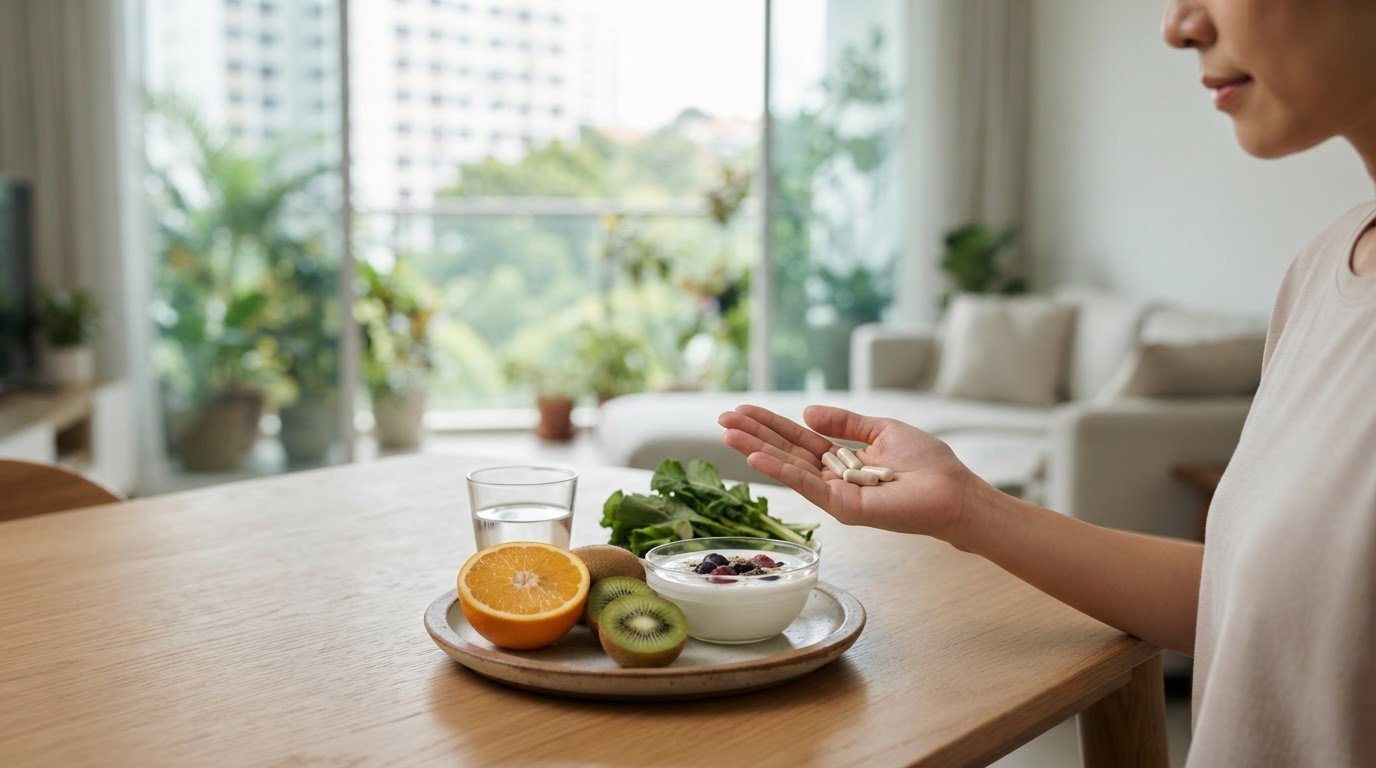
Supplements are not a reliable shield against respiratory infections. Supplements to prevent getting sick have clear limits: vitamin C and zinc may affect how long a cold lasts in some circumstances, but regular use does not prevent common colds. Vaccination, good hygiene and everyday health habits remain important ways to reduce risk.
It’s understandable to look for extra support, especially when colds and flu are circulating. The useful question is not which supplement makes the biggest promise, but whether an option has evidence relevant to your situation and can be used safely.
This guide explains what the evidence says about vitamin D, vitamin C, zinc and probiotics, including where findings are limited. It also covers how to assess supplement quality, avoid common safety pitfalls and decide whether a supplement may be worth considering.
Key Takeaways
- Understand why supplements may influence cold duration in some cases without reliably preventing infection.
- See how vitamin D evidence relates to respiratory infections, and why more of a nutrient isn’t automatically better.
- Identify food sources of key nutrients, including vitamin C, before relying on supplements.
- Learn why probiotic findings vary and what limits conclusions about their role in respiratory infection prevention.
- Use practical safety checks to review supplement ingredients, possible interactions and quality markers.
Table of Contents
- 1. Vitamin D, deficiency risk and respiratory infection evidence
- 2. Which supplements can help against colds and the flu?
- 3. Quick Guide: Which Immune System Supplement Fits Your Situation?
- 4. Probiotics and upper respiratory infection prevention
- 5. Choosing supplements safely and checking quality markers
- NanoDoc International Pte Ltd: Anti-Ageing Skin Care
1. Vitamin D, deficiency risk and respiratory infection evidence
Vitamin D supports immune activity, but taking it is not a universal barrier to respiratory infections. The article describes direct sunlight as the best way for the body to meet its vitamin D needs. Supplementation may be relevant when levels are inadequate; taking more when levels are already sufficient does not establish stronger protection against colds or flu.
Vitamin D may delay a virus’s ability to replicate, reduce inflammation, increase T-cell levels and promote healing. These biological effects help explain why researchers study respiratory infection prevention, but they do not prove that supplements reliably prevent illness for everyone. A plausible immune mechanism is not the same as demonstrated prevention.
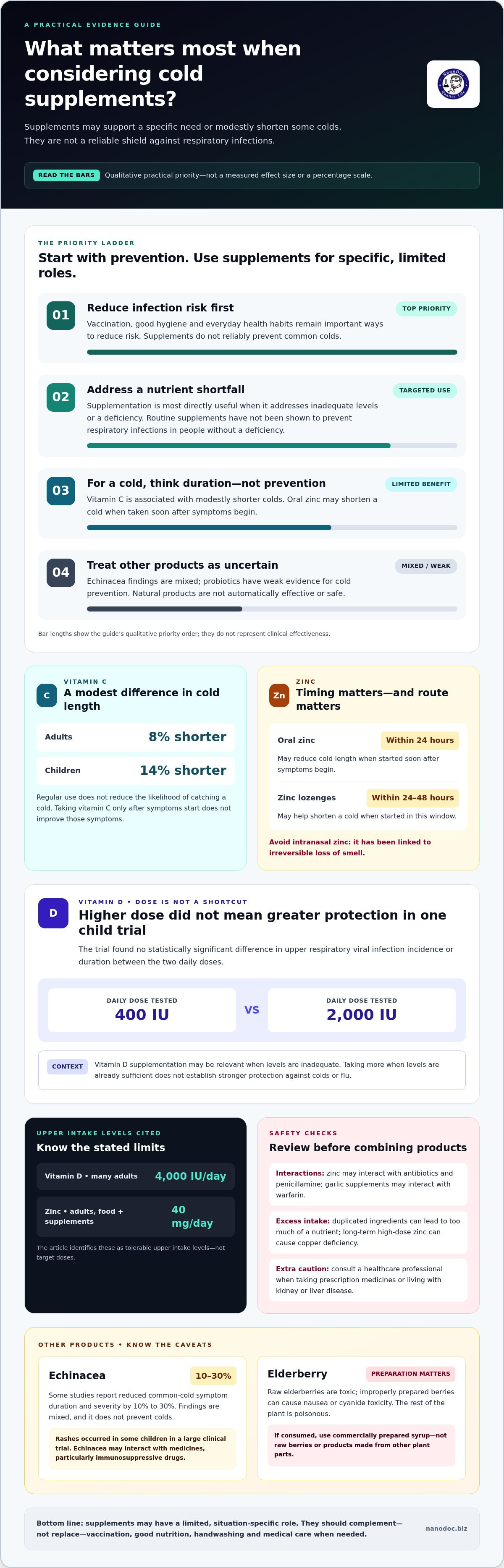
A trial in children found no statistically significant difference in upper respiratory viral infection incidence or duration between 400 IU/day and 2,000 IU/day of vitamin D. The result cautions against assuming a higher dose provides greater protection. It also doesn’t establish that every child or adult has the same vitamin D status or response.
Which supplements are most useful for people with a nutrient deficiency? Supplements are most directly useful when they address a shortfall: vitamin C deficiency can make people more prone to getting sick, and vitamin D supplementation may be relevant when levels are inadequate. For people without a deficiency, evidence does not establish that routine supplements prevent respiratory infections.
Vitamin C supports immune function, but regular use does not reduce the likelihood of catching a cold. It is associated with modestly shorter colds: 8% shorter in adults and 14% shorter in children. Extra vitamin C taken before symptoms begin may shorten a cold for some people, but it does not prevent someone from getting sick. Taking it only after cold symptoms start does not improve those symptoms.
Vitamin B6 helps produce white blood cells and T cells, which fight viruses and bacteria. That role supports normal immune function, but it doesn’t mean a B6 supplement prevents infection when someone already gets enough. Zinc also supports immune-cell function; oral zinc may reduce cold length when taken within 24 hours after symptoms start. Zinc lozenges may help when started within 24 to 48 hours.
Dose and context matter. According to the National Institutes of Health Office of Dietary Supplements, the tolerable upper intake level for vitamin D for many adults is 4,000 IU per day. The U.S. Centers for Disease Control and Prevention recommends annual flu vaccination for everyone aged 6 months and older. Supplements should complement, not replace, vaccination and basic infection-prevention habits.
2. Which supplements can help against colds and the flu?
For colds, vitamin C and zinc have evidence mainly for reducing symptom duration, not preventing infection. Evidence for natural products against flu is not strong. Supplements and home remedies should not replace routine vaccinations, good nutrition, handwashing or medical care when needed. Effects also depend on the ingredient, dose and timing, so a product marketed for immune support is not automatically useful for every illness.
Elderberry requires particular care. Raw elderberries are toxic, and improperly prepared berries can cause nausea or cyanide toxicity. Only the berries should be used; the rest of the plant is poisonous. If consuming elderberry, use commercially prepared syrup rather than raw berries, and avoid products made from other parts of the plant. These safety details are especially important for children, who may be more sensitive to supplement doses and contaminants.
Echinacea may reduce common-cold symptom duration and severity by 10% to 30% in some studies, but it doesn’t prevent colds. A leaflet says it may help when taken from the first onset for 7-10 days. Results are mixed, and products can contain different plant parts. In a large clinical trial, some children taking echinacea developed rashes. Echinacea may also interact with medicines, particularly immunosuppressive drugs.
Zinc lozenges may help shorten a cold when started within 24 to 48 hours after symptoms develop. They can cause nausea or altered taste, which stop after supplementation is discontinued. Intranasal zinc has been linked to irreversible loss of smell and should not be used. For adults, the tolerable upper intake level is 40 mg per day from food and supplements combined. Long-term, high-dose use can cause copper deficiency.
Check for possible medicine interactions before adding zinc or herbal products. Zinc may interact with antibiotics and penicillamine; garlic supplements may interact with warfarin. People taking prescription medicines should consult a healthcare professional before using supplements. Kidney or liver disease also warrants caution because these organs process supplements, and overuse can cause toxicity. Avoid combining products without reviewing their ingredients, since duplicated constituents can lead to excessive intake.
Probiotics are sometimes promoted for immune support, but evidence that they prevent colds is weak, and little is known about their long-term safety. People with serious underlying health problems should use them only with close monitoring by a healthcare provider. A practical approach is to define the intended outcome, review the full ingredient list and follow the product instructions. Stop and seek medical advice if an unexpected effect develops.
3. Quick Guide: Which Immune System Supplement Fits Your Situation?
Start with your diet and routine, then consider whether a supplement addresses a specific gap. If you’re considering supplements to prevent getting sick, first ask whether you need to correct a nutrient shortfall or are looking for broad protection. Supplements provide vitamins or minerals that support normal immune function; they do not replace a varied diet or reliably prevent every infection. Review what you already eat, including fruit, vegetables, protein foods and fortified products.
At Singapore pharmacies, prices for common immune supplements depend on the nutrient, formulation, dose, pack size and brand. Compare the ingredient amount and serving instructions, not just the package size. For example, bottles with different capsule counts may also have different serving directions, making shelf price alone a poor basis for comparison.
Food can supply several nutrients involved in immune processes. Citrus fruit, guava and capsicum provide vitamin C. Eggs, fish, poultry and legumes contribute vitamin B6. Seafood, eggs, meat and grains can provide selenium, while nuts, seeds and legumes contribute vitamin E and minerals such as zinc. A varied plate combines these nutrients with protein and fibre rather than relying on one nutrient alone.
The research guidance recommends five to nine servings of vegetables and fruit. Another leaflet advises at least five servings per day, estimating about 200 mg of vitamin C from that intake. Add fruit at breakfast, vegetables at lunch and a vegetable side at dinner. Fresh, frozen or canned options can widen food choices while keeping meals varied.
Selenium helps activate the immune system in response to a threat and helps regulate it. This role matters because immune activity must respond to bacteria while avoiding chronic inflammation. Selenium-rich foods contribute to dietary intake, but a supplement is not automatically useful simply because selenium plays a role in immune function. Consider your overall diet and whether it supplies the nutrients you need.
Sleep and daily habits provide essential context. Adults are advised to get seven to nine hours of sleep each day; children need eight to 14 hours, depending on age. Rest, hydration, balanced meals and good hygiene support a healthy, balanced immune system. Wash hands consistently, drink fluids through the day and include varied foods at meals. These steps support general health, though no dietary routine guarantees illness prevention.
A focused approach to supplements to prevent getting sick starts with a clear purpose. Consider whether your intake is limited or a nutrient shortfall has been identified, then check the serving directions and full label. Avoid stacking products that duplicate ingredients. Choosing based on the nutrient, dose and dietary pattern is more precise than selecting a product solely for broad immune claims.
4. Probiotics and upper respiratory infection prevention
Probiotics are live microorganisms studied for possible effects on respiratory infections, but results depend on the strains tested. A systematic review and meta-analysis of 23 randomised controlled trials found probiotics appeared to decrease respiratory tract infection incidence in children. That finding concerns children and infection incidence; it doesn’t establish that every probiotic prevents colds or reduces symptoms for all ages.
The broader evidence remains mixed. A 2015 report summarising 17 Cochrane systematic reviews found no high-quality evidence that probiotics could prevent illnesses. Studies have used different bacterial strains, making results difficult to compare. Some combined multiple strains, so researchers couldn’t identify which strain, if any, produced an observed effect. A product’s probiotic label alone therefore doesn’t show it matches a strain studied for respiratory outcomes.
Do probiotics or elderberry supplements prevent respiratory infections? Current evidence does not establish either as a dependable way to prevent them. Probiotic findings vary by strain and study, while evidence for elderberry is insufficient to support a reliable prevention claim.
There is a separate question about flu vaccination. A meta-analysis of 9 randomised controlled trials found probiotics and/or prebiotics helped improve flu vaccine efficacy in healthy adults when taken around vaccination. This result doesn’t mean probiotics replace vaccination, or that every strain has the same effect. It also concerns vaccine response in healthy adults, not proven prevention of every respiratory infection.
Fermented foods such as yogurt, kefir and kimchi can be part of a varied diet, but they are not automatically equivalent to a supplement used in a clinical study. Fermentation methods and microbial content differ, and research findings apply to the strains and preparations actually tested. Treat fermented foods as foods, not as a guaranteed way to prevent colds or a substitute for routine vaccination.
For a practical decision, first define the intended outcome: fewer infections, shorter symptoms or support around vaccination. Then compare the product’s named strains with evidence relevant to that outcome. If a label lists only a general probiotic blend, it may not tell you whether the formulation matches research on respiratory infections. Do not assume that a higher number of strains means greater protection.
Safety matters, too. Long-term probiotic safety is not well understood, and people with serious underlying health problems should use probiotics only with close monitoring by a healthcare provider. Track side effects, such as nausea or digestive changes, and stop taking a product if troubling effects occur. Probiotics may have immune effects, but they are not a treatment for active respiratory symptoms or inflammation.
5. Choosing supplements safely and checking quality markers
Choose a supplement for a defined dietary need, not a broad promise to prevent disease. Start by comparing its active ingredients with your current diet and other products. For example, a multivitamin and a separate mineral tablet may contain overlapping vitamins and minerals. Taking both without checking the labels can increase your total intake unnecessarily.
Read the full label before use. Check the active ingredients, amount per serving, serving directions, warnings and expiry date. Follow the product instructions and avoid combining products with the same constituents. An antioxidant claim describes a product attribute, not proof that it prevents infections or treats disease. Keep the packaging so you can refer to its ingredients if side effects occur.
Quality markers can help you assess what a label contains. Products with third-party certifications such as USP, NSF International or ConsumerLab are checked for listed ingredients and harmful contaminants. A marker is one useful screening point, not proof that a product prevents colds or is suitable for everyone. Also compare the named ingredient and amount with the specific purpose you have in mind.
Review possible interactions before adding a supplement to prescription medicines. Zinc, for example, can interact with antibiotics and penicillamine; herbal products can also affect medicines, as garlic may interact with warfarin. Adults taking regular medication should discuss ingredients with a healthcare professional. Kidney or liver disease also calls for caution because these organs process supplements, and overuse can cause toxicity.
Some circumstances call for additional care. People who are pregnant, breastfeeding or trying to become pregnant should avoid unregulated herbal supplements. Children can be more sensitive than adults to adult-sized doses and contaminants, so do not assume an adult product is suitable for them. People with serious underlying health problems should use probiotics only with close monitoring by a healthcare provider.
More is not automatically safer or more effective. High-dose supplements and intravenous infusions can bypass the body’s natural filtering systems and sometimes cause heart or respiratory problems. Keep a simple record of each product, dose and start date to help identify possible side effects or duplicated ingredients. Avoid raw elderberries, which are toxic, and use only properly prepared products.
For a more considered approach to nutrition support, explore nutrition options and compare their purpose with your dietary needs.
NanoDoc International Pte Ltd: Anti-Ageing Skin Care
NanoDoc International Pte Ltd offers Nano Cellular Essential Nutrition and Oral & Immunity Care for readers exploring nutrition products as part of their wellbeing routine. These categories are a relevant next step after reviewing the evidence and safety factors above. Choose supplements for a clear purpose and follow product instructions rather than treating them as a guarantee against illness.
NanoDoc International Pte Ltd also offers Anti-Ageing Skin Care and Pain Relief Care for needs beyond nutritional support. Choose the category that matches your interest, while keeping prevention decisions grounded in evidence, everyday habits and appropriate medical care.
For more information, visit nanodoc.biz.
Make your next health choice with clarity
Choosing supplements to prevent getting sick is best approached as a deliberate decision, not a reaction to bold packaging or seasonal concern. Before adding a product, define the outcome you’re seeking and consider how it fits your diet, medicines and wider health routine. This gives you a clearer basis for deciding whether a supplement is relevant or another step deserves attention first.
NanoDoc International Pte Ltd offers Nano Cellular Essential Nutrition alongside Anti-Ageing Skin Care and Pain Relief Care. These categories serve different needs, so focus on the one that aligns with your interest rather than treating every health product as an immune supplement. A considered choice starts with a clear purpose and realistic expectations.
If you’d like to explore the available offerings, visit NanoDoc International Pte Ltd. Keep asking precise questions, make choices that fit your needs, and take a measured approach to supporting your wellbeing.
Frequently Asked Questions
Quick Guide: Which Immune System Supplement Fits Your Situation?
Choose based on your goal and likely nutrient gap, not the broadest immune claim. If your diet regularly includes fruit, vegetables, protein foods and varied sources of minerals, consider whether a supplement adds anything useful. If a deficiency is suspected, focus on that nutrient rather than stacking products. For general prevention, vaccination, hygiene, sleep and balanced meals remain more dependable priorities than trying several supplements at once.
5 Tips: Natural Products for the Flu and Colds: What Does the Science Say?
Natural products are not interchangeable, and evidence for flu prevention is limited. Vitamin C and zinc have some evidence related to cold duration, while echinacea findings are mixed and do not show reliable prevention. Elderberry must be properly prepared because raw berries can be toxic. Evidence is insufficient to recommend garlic supplements, despite some findings suggesting possible prevention. Evidence for Panax ginseng is also insufficient, and Pelargonium sidoides has not been tested for cold prevention.
Which supplements can help against colds and the flu?
Vitamin C and zinc may help shorten a common cold in specific circumstances, but neither should be treated as dependable protection against catching one. Echinacea may affect cold symptoms, but study results vary by product and plant parts. Evidence does not establish natural supplements as useful for flu prevention. Keep the distinction clear: a possible effect on cold duration is different from preventing influenza or treating serious complications.
Which supplements have evidence for preventing respiratory infections or colds?
Evidence is limited and depends on the supplement and population studied. A review of 23 randomised controlled trials found probiotics appeared to decrease respiratory infection incidence in children, but results vary by bacterial strain. A separate analysis of 9 trials found probiotics and/or prebiotics improved flu vaccine efficacy in healthy adults when taken around vaccination. These findings don’t establish a universal probiotic for cold prevention or replace vaccination.
Does vitamin C prevent colds, and what dose is supported by evidence?
Regular vitamin C use doesn’t reduce the likelihood of catching a cold, although it’s associated with shorter colds. A daily supplement of 500 mg is described as sufficient in most cases. Studies have also used doses of 1 gram per day or more, but that doesn’t make higher doses necessary. The adult tolerable upper intake level is 2,000 mg per day; high doses can cause nausea or diarrhoea.
Does vitamin D supplementation reduce the risk of getting sick, and who may benefit?
Vitamin D may be more relevant when someone has a deficiency than when intake and levels are already adequate. Sunlight is described as the best way for the body to meet its needs, while supplements can address a shortfall. A trial in children found no significant difference in infection incidence or duration between 400 IU/day and 2,000 IU/day. For many adults, the upper intake level is 4,000 IU per day.
Can zinc prevent colds, and what are the risks and recommended doses?
Zinc supplements don’t prevent common colds, though lozenges may shorten a cold when started within 24 to 48 hours after symptoms appear. Studies have examined lozenges providing 9-24 mg of elemental zinc per dose, but this isn’t a universal dosing instruction. For adults, the upper intake level from food and supplements combined is 40 mg per day. Zinc can interact with antibiotics and penicillamine.
What are the risks, side effects, and interactions of common immune supplements?
Risks differ by ingredient, dose, health condition and medication. High vitamin C intake can cause digestive effects; long-term high-dose zinc can contribute to copper deficiency. Echinacea may interact with immunosuppressive medicines, and garlic can interact with warfarin. Kidney or liver disease can also affect how supplements are processed. Review labels for duplicated ingredients, follow product instructions and discuss potential interactions with a healthcare professional before starting a new product.
Frequently Asked Questions
- Quick Guide: Which Immune System Supplement Fits Your Situation?
- Choose based on your goal and likely nutrient gap, not the broadest immune claim. If your diet regularly includes fruit, vegetables, protein foods and varied sources of minerals, consider whether a supplement adds anything useful. If a deficiency is suspected, focus on that nutrient rather than stacking products. For general prevention, vaccination, hygiene, sleep and balanced meals remain more dependable priorities than trying several supplements at once.
- 5 Tips: Natural Products for the Flu and Colds: What Does the Science Say?
- Natural products are not interchangeable, and evidence for flu prevention is limited. Vitamin C and zinc have some evidence related to cold duration, while echinacea findings are mixed and do not show reliable prevention. Elderberry must be properly prepared because raw berries can be toxic. Evidence is insufficient to recommend garlic supplements, despite some findings suggesting possible prevention. Evidence for Panax ginseng is also insufficient, and Pelargonium sidoides has not been tested for cold prevention.
- Which supplements can help against colds and the flu?
- Vitamin C and zinc may help shorten a common cold in specific circumstances, but neither should be treated as dependable protection against catching one. Echinacea may affect cold symptoms, but study results vary by product and plant parts. Evidence does not establish natural supplements as useful for flu prevention. Keep the distinction clear: a possible effect on cold duration is different from preventing influenza or treating serious complications.
- Which supplements have evidence for preventing respiratory infections or colds?
- Evidence is limited and depends on the supplement and population studied. A review of 23 randomised controlled trials found probiotics appeared to decrease respiratory infection incidence in children, but results vary by bacterial strain. A separate analysis of 9 trials found probiotics and/or prebiotics improved flu vaccine efficacy in healthy adults when taken around vaccination. These findings don’t establish a universal probiotic for cold prevention or replace vaccination.
- Does vitamin C prevent colds, and what dose is supported by evidence?
- Regular vitamin C use doesn’t reduce the likelihood of catching a cold, although it’s associated with shorter colds. A daily supplement of 500 mg is described as sufficient in most cases. Studies have also used doses of 1 gram per day or more, but that doesn’t make higher doses necessary. The adult tolerable upper intake level is 2,000 mg per day; high doses can cause nausea or diarrhoea.
- Does vitamin D supplementation reduce the risk of getting sick, and who may benefit?
- Vitamin D may be more relevant when someone has a deficiency than when intake and levels are already adequate. Sunlight is described as the best way for the body to meet its needs, while supplements can address a shortfall. A trial in children found no significant difference in infection incidence or duration between 400 IU/day and 2,000 IU/day. For many adults, the upper intake level is 4,000 IU per day.
- Can zinc prevent colds, and what are the risks and recommended doses?
- Zinc supplements don’t prevent common colds, though lozenges may shorten a cold when started within 24 to 48 hours after symptoms appear. Studies have examined lozenges providing 9-24 mg of elemental zinc per dose, but this isn’t a universal dosing instruction. For adults, the upper intake level from food and supplements combined is 40 mg per day. Zinc can interact with antibiotics and penicillamine.
- What are the risks, side effects, and interactions of common immune supplements?
- Risks differ by ingredient, dose, health condition and medication. High vitamin C intake can cause digestive effects; long-term high-dose zinc can contribute to copper deficiency. Echinacea may interact with immunosuppressive medicines, and garlic can interact with warfarin. Kidney or liver disease can also affect how supplements are processed. Review labels for duplicated ingredients, follow product instructions and discuss potential interactions with a healthcare professional before starting a new product.