

No single supplement is established as a solution for chronic fatigue, but vitamin D, CoQ10, acetyl-L-carnitine and D-ribose may be relevant in different circumstances. The potential value of supplements for chronic fatigue and low energy depends on factors such as nutrient status and how the body produces and uses energy. D-ribose deserves a closer look because it has been studied specifically in people experiencing chronic fatigue.
It’s understandable to look for nutritional support when fatigue persists, yet a supplement’s mechanism and evidence matter more than an energy claim on a label. This article explains how vitamin D, CoQ10, acetyl-L-carnitine and D-ribose relate to fatigue, what the research suggests, and why supplements may not address every cause. It also outlines practical considerations for using them thoughtfully, so you can better understand where nutritional support may fit alongside appropriate care.
Key Takeaways
- Persistent fatigue can have different causes, so learn why checking nutrient status, including vitamin B12, can help inform supplement decisions.
- See how CoQ10 supports cellular energy production and what to consider before adding it to your routine.
- Understand acetyl-L-carnitine’s role in moving fatty acids into mitochondria, and why thyroid conditions matter when considering it.
- Explore how magnesium relates to fatigue-associated energy, mood and pain symptoms.
- Discover why D-ribose has drawn interest in chronic fatigue research, and what its findings can and can’t tell you.
Table of Contents
1. Does vitamin D deficiency cause fatigue?
Low vitamin D may contribute to fatigue, but it isn’t the only possible explanation for low energy. Persistent tiredness can also relate to vitamin B12, iron status, thyroid function, cortisol or blood glucose. For someone in Singapore experiencing ongoing fatigue, a healthcare provider may discuss tests for thyroid function, cortisol, ferritin, vitamin B12, vitamin D and HbA1c. These tests help investigate possible causes rather than assuming one nutrient explains every symptom.
Vitamin B12 supports normal red blood cell formation and nervous system function. It also participates in energy metabolism, the process by which the body converts nutrients into usable energy. A deficiency can be associated with fatigue, so a blood test can help determine whether supplementation may be appropriate. Testing offers a more targeted starting point than taking B12 solely because energy feels low.
Can vitamin B12 supplements help fatigue if you are not deficient? They’re unlikely to provide a reliable energy boost when B12 levels are normal. Their clearest role is addressing a deficiency, so test results and the reason for low levels matter when deciding whether supplementation fits.
B vitamins play distinct roles in energy production. Several act as coenzymes, helping enzymes process carbohydrates, fats and proteins. This supports the body’s normal energy pathways, but taking extra B vitamins does not automatically boost energy. Correcting a deficiency is different from adding nutrients when the body already has enough. Fatigue alone, for example, does not show that someone needs a B-complex supplement.
Vitamin D is another nutrient to consider. Vitamin D intake needs can vary, so consider individual circumstances when discussing supplementation. These figures describe daily intake, not a personalised treatment dose for deficiency. A test result and the reason for low vitamin D help inform supplementation decisions.
Can iron supplements improve low energy, and what tests should be done before taking them? Iron may improve energy when iron deficiency contributes to fatigue, but don’t start it based on tiredness alone. Discuss ferritin testing and the broader blood-test picture with a healthcare provider. This helps distinguish low iron stores from fatigue related to B12, vitamin D or another factor.
Before an appointment, note when the fatigue began, how it affects daily life and any other symptoms. Record whether tiredness is persistent or improves with rest. Bring these notes and a list of medicines and supplements you use. This can help make the discussion more focused and inform decisions about relevant tests or nutritional support.
2. CoQ10 and mitochondrial energy production
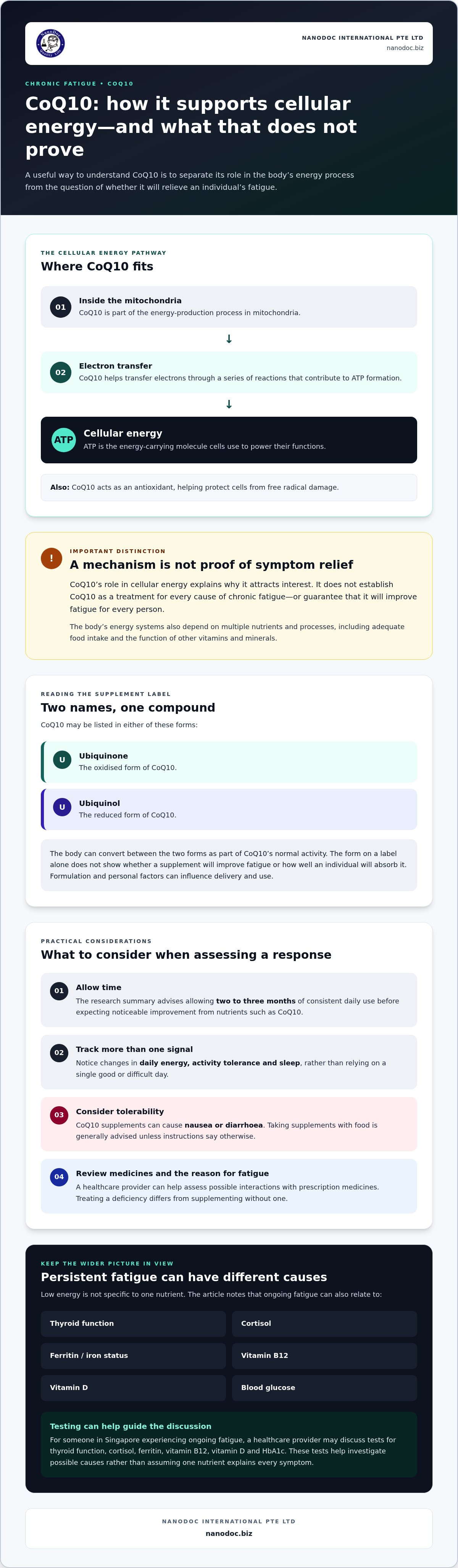
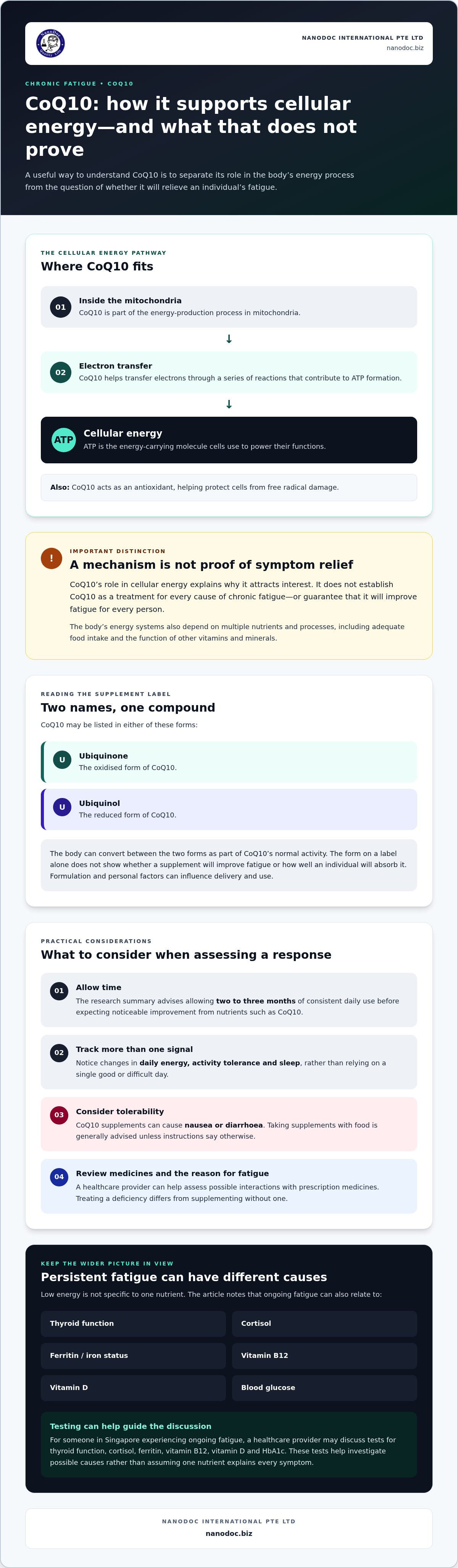
Coenzyme Q10, or CoQ10, helps the body produce adenosine triphosphate (ATP). ATP is the energy-carrying molecule cells use to power their functions. CoQ10 also acts as an antioxidant, helping protect cells from free radical damage. These roles explain why CoQ10 attracts interest for energy levels, but they don’t establish it as a treatment for every cause of chronic fatigue. Mitochondria are central to cellular energy production, so researchers have considered whether CoQ10 support may matter when mitochondrial function is affected.
CoQ10 works as part of the energy-production process inside mitochondria. It helps transfer electrons through a series of reactions that contribute to ATP formation. This is a cellular mechanism, not an instant source of energy like caffeine. The body’s energy systems also depend on multiple nutrients and processes, including adequate food intake and the function of other vitamins and minerals. A deficiency or illness may affect energy differently from a general feeling of tiredness, so the context matters.
Supplement labels may identify CoQ10 as ubiquinone or ubiquinol. These are two forms of the same compound: ubiquinone is the oxidised form, while ubiquinol is the reduced form. The body can convert between them as part of CoQ10’s normal activity. The form on a label alone doesn’t show whether a supplement will improve fatigue or how well an individual will absorb it. Formulation and personal factors can influence how a nutrient is delivered and used.
Delivery is one consideration in supplement design. NanoDoc International Pte Ltd’s Nano Cellular Essential Nutrition uses nano-encapsulation technology intended to enhance absorption through the gut. This approach addresses nutrient delivery rather than proving that CoQ10 will change symptoms for every person. If you’re exploring how delivery technologies relate to supplements, learn about nano-encapsulated essential nutrition as one example of a formulation approach.
Give any response time to assess. The research summary advises allowing two to three months of consistent daily use before expecting noticeable improvement from nutrients such as CoQ10. Track changes in daily energy, activity tolerance and sleep, rather than relying on a single good or difficult day. CoQ10 supplements can cause nausea or diarrhoea. Taking supplements with food is generally advised unless instructions say otherwise, and a healthcare provider can help assess possible interactions with prescription medicines.
CoQ10 may be relevant to mitochondrial energy production, but chronic fatigue syndrome involves more than one pathway. A proposed mechanism doesn’t prove that a supplement will relieve symptoms, and treating a deficiency differs from supplementing without one. Consider the form, delivery, tolerability and reason for fatigue together. That makes CoQ10 a more informed option to discuss, rather than a stand-alone answer to persistent low energy.
3. Acetyl-L-carnitine
Carnitine helps transport long-chain fatty acids into mitochondria, where cells can use them for energy. This role contributes to energy supply in skeletal and heart muscle. Acetyl-L-carnitine is one form of carnitine, with an acetyl group attached to the carnitine molecule. This function helps explain why researchers study carnitine in relation to fatigue, but it does not show that supplements will improve symptoms.
People with chronic fatigue syndrome are often reported to have low acylcarnitine levels. Acylcarnitines form when carnitine binds with fatty acids or other organic acids. This finding may indicate differences in energy metabolism, but it does not prove that carnitine supplements will relieve fatigue. Chronic fatigue can have varied causes, and a mechanism related to muscle energy does not necessarily explain every person’s symptoms.
Carnitine and Coenzyme Q10 have different roles in cellular energy processes. Carnitine helps move fatty acids toward mitochondrial use, while CoQ10 supports ATP production within mitochondria. Both relate to energy metabolism, but they are not interchangeable nutrients. Taking both does not establish that energy levels will improve, and combining supplements can make it harder to identify which one affects tolerance or symptoms.
“Carnitine” can refer to different forms, including L-carnitine and acetyl-L-carnitine. The distinction matters when reading a supplement label: a product with one form is not automatically equivalent to one with another. Check the ingredient and amount listed, and do not assume that a higher dose or combining forms will work better. The mechanism alone cannot determine an appropriate dose.
One important safety consideration is that people with hypothyroidism or Hashimoto’s disease should not take carnitine. These thyroid conditions may also be relevant when investigating fatigue, so disclose any diagnosis and current medicines before considering a carnitine supplement. This can help clarify whether fatigue may be related to thyroid function or another factor, rather than assuming it is a simple nutrient shortfall.
If considering carnitine, first record a baseline: note your daily activity, muscle symptoms and energy levels, then introduce only one new supplement at a time. This makes it easier to notice changes or unwanted reactions. Keep the ingredient form consistent when comparing results, and follow product directions rather than applying research on a different form of carnitine. The key question is whether there is a specific need for it, not whether its role in energy metabolism sounds promising.
4. Why do supplements matter for chronic fatigue?
Magnesium supports more than 300 biochemical reactions, including processes involved in muscle and nerve function. It also contributes to ATP production, which powers cellular activity. These roles explain why magnesium is considered in discussions about fatigue, but they don’t show that everyone with low energy needs a supplement.
People with chronic fatigue syndrome are often described as having low magnesium. Those taking magnesium supplements have reported better energy, improved emotional state and less pain. These reports link magnesium with fatigue-related symptoms, including muscle discomfort and emotional wellbeing. They do not establish magnesium as a stand-alone treatment or show that everyone will experience the same effects.
Magnesium supplements come in different forms, such as citrate and glycinate. Compare the label’s stated amount of elemental magnesium, not only the total weight of the magnesium compound. The form and amount can affect how much magnesium a serving provides and how well it suits an individual. Follow the product directions, and avoid combining products without adding their magnesium amounts together.
Evidence differs across nutrients. Correcting a diagnosed deficiency has a clearer rationale than taking a nutrient without evidence of low status. CoQ10 has a plausible role in ATP production, while a D-ribose study involving 203 participants reported increased energy after three weeks. Study findings don’t establish that any supplement works equally well for all fatigue causes.
In Singapore, choose products with clear ingredient information, amounts and directions for use, and consult the Health Sciences Authority’s current guidance on health products. HSA regulates health products, but a seller’s use of the word “registered” alone does not prove approval or an individual benefit.
Risks depend on the supplement, amount and personal health factors. CoQ10 can cause nausea or diarrhoea, while supplements may interact with prescription medications. Share your full supplement and medicine list with a healthcare provider before starting a new product.
Practical steps can complement medical care: pace activity and rest, stay hydrated, eat a nutritious diet, manage stress, and consider a short nap. For chronic fatigue syndrome, pacing means avoiding activity that exceeds personal limits. Persistent fatigue can also relate to ME/CFS, sleep apnoea or other conditions; ME/CFS can develop after viral infections, including COVID-19. A clinical assessment helps distinguish these possibilities.
5. D-ribose for chronic fatigue
D-ribose stands out because a study described in the research involved 203 participants with chronic fatigue. They took D-ribose for three weeks, and reported outcomes included energy, overall wellbeing, sleep, mental clarity and pain. For readers considering supplements for chronic fatigue and low energy, this study offers specific findings to assess rather than a general energy claim. It still represents reported results, not proof that everyone with fatigue will respond similarly.
Participants reported a 66% increase in energy and a 37% improvement in overall wellbeing after three weeks. Those figures describe reported changes, not a guaranteed effect or a comparison with every other treatment. A percentage can sound definitive, but it needs context about participants, methods and outcome measurements before guiding an individual decision.
Other reported outcomes add detail. After three weeks, 29.3% reported improved sleep, while 30% reported increased mental clarity. Pain decreased by 15.6%. These findings suggest participants noticed changes beyond energy levels, including sleep and mental function. They don’t establish why those changes occurred or whether D-ribose alone accounts for them.
The described dose is 5 g three times per day, with one 5 g dose before exercise. Treat this as a study-related regimen, not an automatic personal prescription. Health, current medicines and the pattern of fatigue all matter when considering a supplement. Discuss dose and timing with a healthcare provider, especially before pairing D-ribose with other products or changing an existing plan.
Exercise deserves particular attention. In ME/CFS, post-exertional malaise can begin 12 to 48 hours after physical or emotional exertion and last for days or weeks. A pre-exercise dose shouldn’t be interpreted as permission to push beyond personal limits. Pacing activity and rest remains important, because exceeding capacity can worsen symptoms even when considering a supplement.
Dietary sources and supplements are different decisions. A balanced diet supports general nutrition, while a concentrated supplement delivers a defined amount in a serving. If considering D-ribose, introduce one new supplement at a time and monitor how you feel for 3 or 4 days. Record energy, sleep, mental clarity and unwanted effects, then assess the pattern rather than judging by one day. This helps put supplements for chronic fatigue and low energy in the context of your own response.
The clearest takeaway is that D-ribose has specific reported findings worth discussing, but those findings don’t settle its role in chronic fatigue. For broader nutritional support, explore Nano Cellular Essential Nutrition from NanoDoc International Pte Ltd as a separate consideration, not as evidence that it contains D-ribose or reproduces the study results.
NanoDoc International Pte: Anti-Ageing Skin Care
NanoDoc International Pte Ltd offers Anti-Ageing Skin Care and Nano Cellular Essential Nutrition for distinct wellness and personal-care needs. The supplement evidence discussed above can help you understand how nutrients such as CoQ10 or D-ribose relate to energy, but it doesn’t establish that a particular product treats chronic fatigue. Persistent fatigue calls for attention to its underlying cause, while product choices should match your specific goals.
For nutritional support, explore Nano Cellular Essential Nutrition as a separate option, without assuming it contains the specific nutrients discussed here. Anti-Ageing Skin Care serves a different purpose. Choose according to your needs, and keep decisions about fatigue separate from skincare choices.
Visit nanodoc.biz to explore NanoDoc International Pte Ltd’s offerings.
Choose a thoughtful next step
Choosing supplements for chronic fatigue and low energy starts with a clear purpose: identify what you hope to support, while investigating persistent symptoms separately. A simple record of energy, sleep and daily activities can help you spot patterns and have a more focused conversation about next steps. Introduce supplements carefully and consider how each fits into your wider health routine.
NanoDoc International Pte offers Nano Cellular Essential Nutrition alongside Anti-Ageing Skin Care and Pain Relief Care. These offerings address different needs, so choose according to your priorities rather than treating a wellness product as a solution for unexplained fatigue. If you’d like to explore the company’s offerings, contact NanoDoc International Pte.
Informed, considered decisions can make the way forward clearer. Focus on what your body may need, and take the next step at a manageable pace.
Frequently Asked Questions
Why do supplements matter for chronic fatigue?
Supplements are most relevant when they address a specific nutritional need, rather than replace investigation into fatigue. Someone with a confirmed deficiency, for example, may have a different reason to supplement than someone with adequate nutrient levels. Keep a record of what you take and any changes you notice. This can help you discuss the decision, possible interactions and next steps with a healthcare professional.
Does vitamin D deficiency cause fatigue?
Vitamin D deficiency may contribute to fatigue, but tiredness alone cannot identify the cause. Consider whether the fatigue began alongside changes in sleep, diet, daily routine or health, and note these details before seeking advice. A vitamin D test can help determine whether low levels are relevant. Decisions about supplements should take the result and your circumstances into account, rather than relying on fatigue alone as a reason to take vitamin D.
How much do supplements cost?
Supplement prices vary by ingredient, formulation, serving size and pack size, so there is no single price that applies to every product. Compare the amount of active ingredient per serving and the number of servings, rather than judging by the bottle price alone. In Singapore, consider whether the product contains the specific nutrient you intend to use. Avoid choosing a product solely on the basis of a broad energy claim.
What gives you a quick boost of energy?
For temporary tiredness, try drinking water, taking a brief nap or pausing a demanding task for a short rest. These steps may help in the moment, but they do not explain or resolve persistent fatigue. Energy drinks can contain high levels of caffeine and other ingredients that intensify its effects. They may pose serious health risks, particularly for children, teenagers and young adults.
Why am I always tired?
Ongoing tiredness can have several contributors, including nutrient deficiencies, thyroid function, disrupted sleep, stress or another health condition. Note when it occurs, whether rest helps, and whether you also experience pain, difficulty concentrating or changes in mood. These details can make a healthcare discussion more useful. Avoid starting several supplements at once, as this can make it harder to tell what affects your symptoms.
What causes chronic fatigue and low energy, and when should you see a doctor?
Chronic fatigue and low energy can relate to nutrient status, thyroid function, blood glucose, sleep or an underlying condition. Arrange medical assessment when fatigue persists, affects daily activities or appears with other concerning symptoms. A healthcare provider may consider tests such as ferritin, vitamin B12, vitamin D, thyroid function or HbA1c, guided by your symptoms and health history. Seek urgent care for severe or sudden symptoms.
How much do common fatigue supplements cost in Singapore?
There’s no single Singapore price for common fatigue supplements such as vitamin D, CoQ10, magnesium or D-ribose. Costs depend on the ingredient form, amount per serving, formulation and pack size. Compare like with like by checking the active ingredient and servings, not just the product name. Choose based on a clear need and suitability, rather than assuming a higher-priced or more complex formula will improve fatigue more.
Frequently Asked Questions
- Why do supplements matter for chronic fatigue?
- Supplements are most relevant when they address a specific nutritional need, rather than replace investigation into fatigue. Someone with a confirmed deficiency, for example, may have a different reason to supplement than someone with adequate nutrient levels. Keep a record of what you take and any changes you notice. This can help you discuss the decision, possible interactions and next steps with a healthcare professional.
- Does vitamin D deficiency cause fatigue?
- Vitamin D deficiency may contribute to fatigue, but tiredness alone cannot identify the cause. Consider whether the fatigue began alongside changes in sleep, diet, daily routine or health, and note these details before seeking advice. A vitamin D test can help determine whether low levels are relevant. Decisions about supplements should take the result and your circumstances into account, rather than relying on fatigue alone as a reason to take vitamin D.
- How much do supplements cost?
- Supplement prices vary by ingredient, formulation, serving size and pack size, so there is no single price that applies to every product. Compare the amount of active ingredient per serving and the number of servings, rather than judging by the bottle price alone. In Singapore, consider whether the product contains the specific nutrient you intend to use. Avoid choosing a product solely on the basis of a broad energy claim.
- What gives you a quick boost of energy?
- For temporary tiredness, try drinking water, taking a brief nap or pausing a demanding task for a short rest. These steps may help in the moment, but they do not explain or resolve persistent fatigue. Energy drinks can contain high levels of caffeine and other ingredients that intensify its effects. They may pose serious health risks, particularly for children, teenagers and young adults.
- Why am I always tired?
- Ongoing tiredness can have several contributors, including nutrient deficiencies, thyroid function, disrupted sleep, stress or another health condition. Note when it occurs, whether rest helps, and whether you also experience pain, difficulty concentrating or changes in mood. These details can make a healthcare discussion more useful. Avoid starting several supplements at once, as this can make it harder to tell what affects your symptoms.
- What causes chronic fatigue and low energy, and when should you see a doctor?
- Chronic fatigue and low energy can relate to nutrient status, thyroid function, blood glucose, sleep or an underlying condition. Arrange medical assessment when fatigue persists, affects daily activities or appears with other concerning symptoms. A healthcare provider may consider tests such as ferritin, vitamin B12, vitamin D, thyroid function or HbA1c, guided by your symptoms and health history. Seek urgent care for severe or sudden symptoms.
- How much do common fatigue supplements cost in Singapore?
- There’s no single Singapore price for common fatigue supplements such as vitamin D, CoQ10, magnesium or D-ribose. Costs depend on the ingredient form, amount per serving, formulation and pack size. Compare like with like by checking the active ingredient and servings, not just the product name. Choose based on a clear need and suitability, rather than assuming a higher-priced or more complex formula will improve fatigue more.