
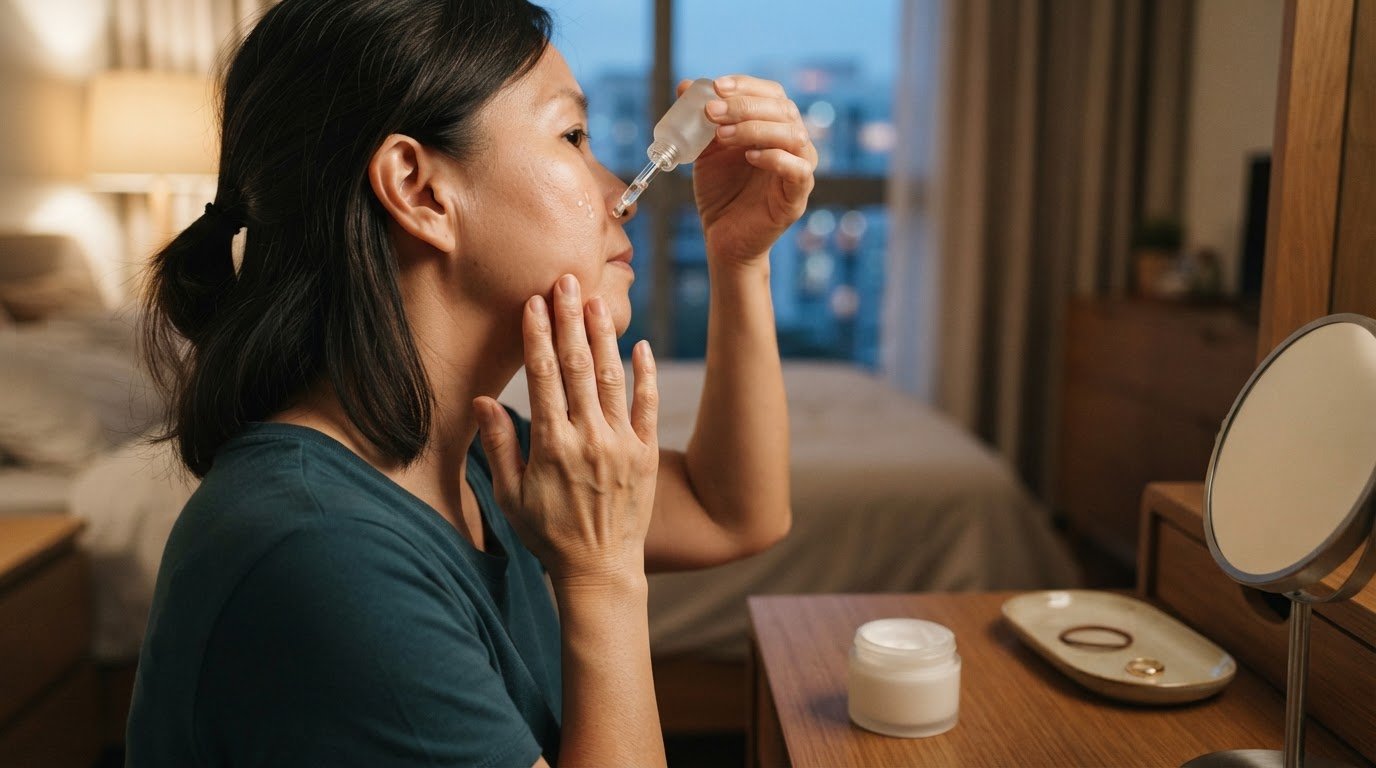
The most useful firming ingredient isn’t one that promises an overnight lift. Among the best ingredients for skin tightening are topical retinoids, especially retinol, which can support collagen production and help improve the look of skin firmness over time. Peptides and hyaluronic acid can complement retinol by supporting skin structure and hydration.
A cream may make skin feel smoother or look more hydrated, but that temporary effect is not the same as lifting sagging skin. Ingredient choice, consistent use and a routine your skin tolerates all matter when you’re aiming for a firmer-looking complexion.
This guide explains how skin elasticity changes and what retinoids, peptides, niacinamide, vitamin C and hyaluronic acid may contribute. It also outlines a practical morning and evening routine, so you can choose ingredients with a clear purpose and realistic expectations about what topical skincare can achieve.
Key Takeaways
- Choose ingredients for their distinct roles: some support skin structure, while others mainly improve hydration and the appearance of plumpness.
- Set realistic expectations: topical skincare can refine texture and firmness, but it cannot lift significant sagging skin.
- Build a simple routine by layering lightweight serums before moisturiser, and introduce active ingredients gradually.
- Use daytime sun protection to help limit the environmental damage associated with visible skin ageing.
- Look for a consistent routine you can maintain; ingredient choice and skin tolerance both shape the experience.
Table of Contents
1. What Are the Best Lifting & Firming Products?
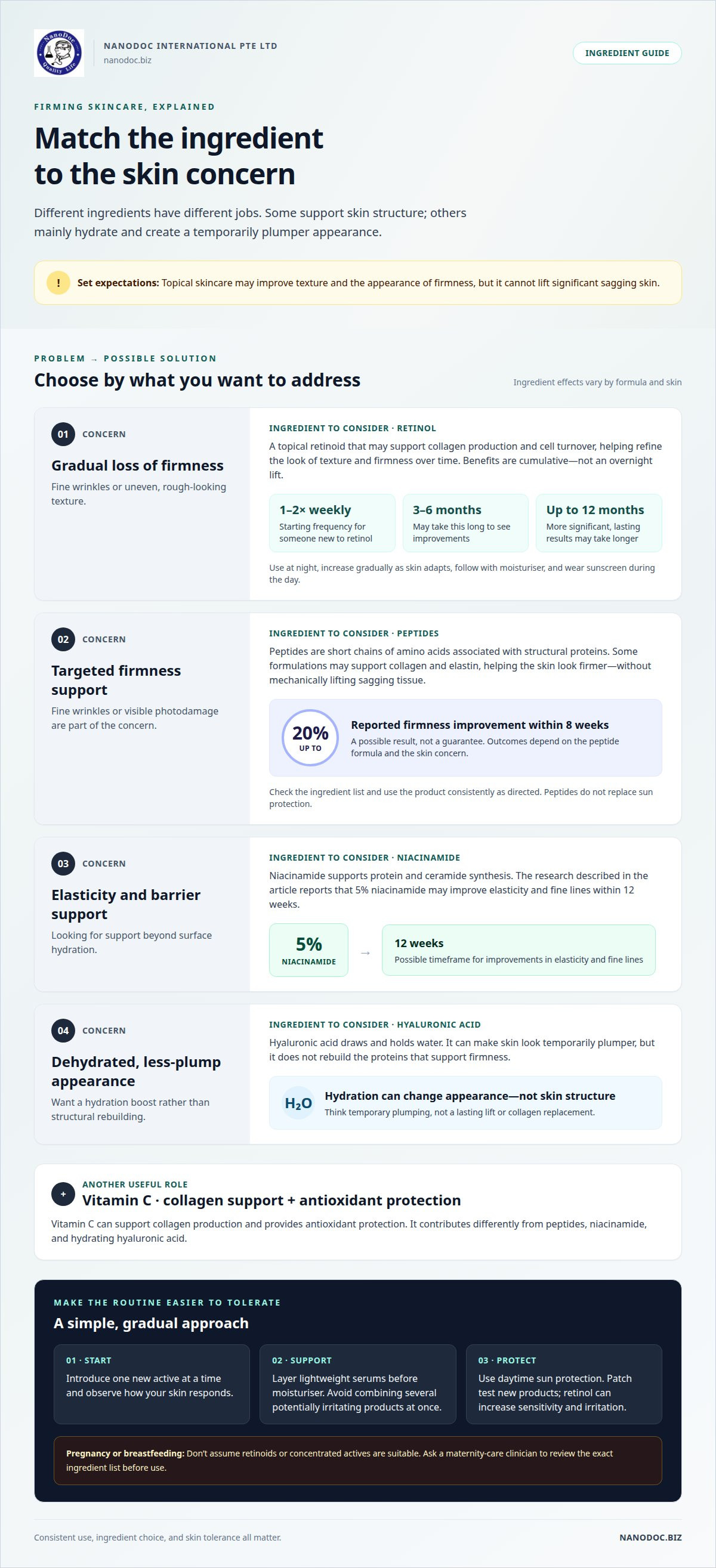
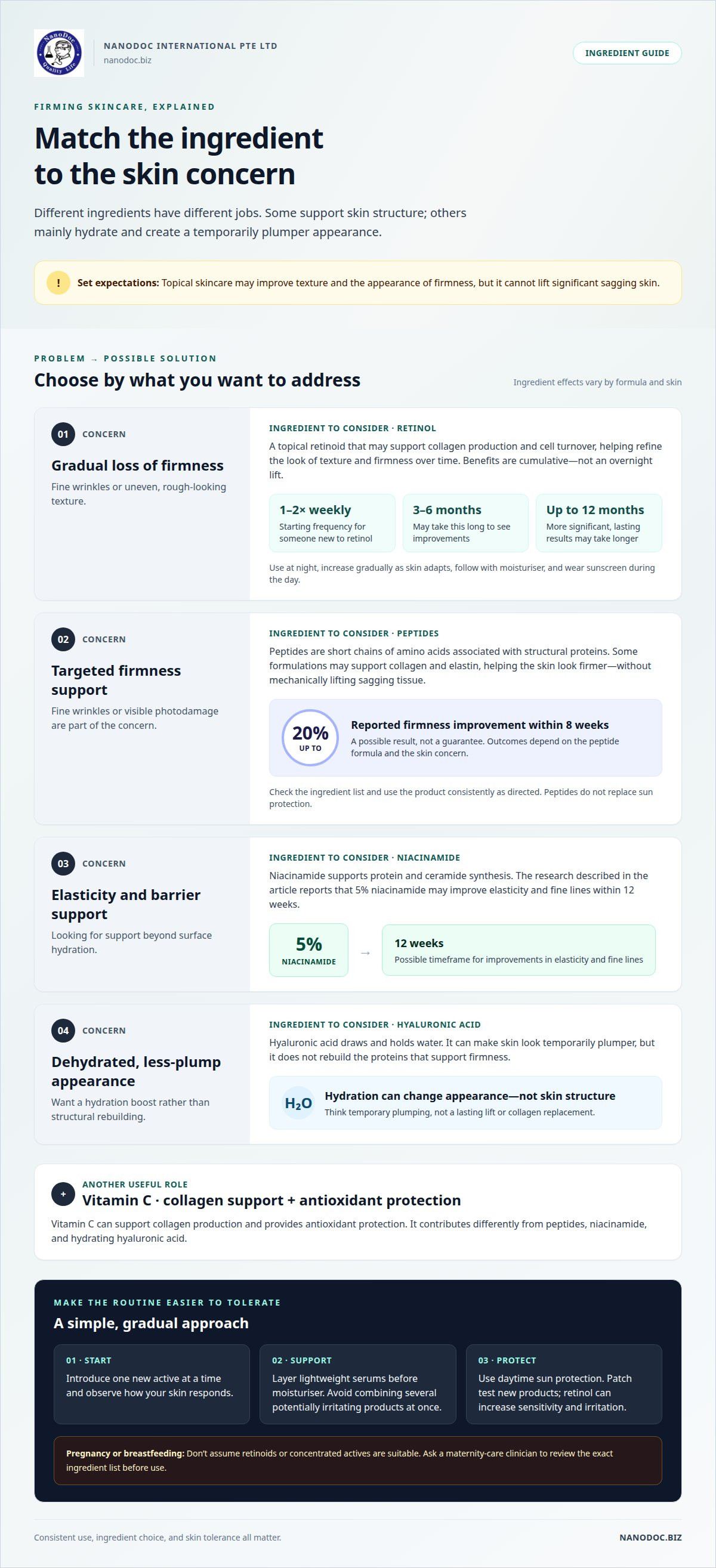
Retinoid creams and serums are among the leading topical options for firmer-looking skin. Retinol, a retinoid used in skincare, may support collagen production and help limit collagen loss. It is a practical ingredient to consider when your goals include improving the appearance of firmness, fine wrinkles and uneven texture.
Retinoids also increase cell turnover, encouraging older surface cells to shed as newer cells reach the skin’s surface. Over time, this can refine rough texture and improve the appearance of uneven tone. Retinol’s benefits are cumulative: it supports changes in skin structure rather than producing an immediate lifting effect.
Consistency matters more than expecting a quick result. With regular use, retinol may take three to six months to show improvements, depending on wrinkle depth and product concentration. More significant and lasting results may take up to 12 months. Clinical studies cited in the research report increased skin thickness and firmness within 12 weeks of regular use.
Retinol may help soften the appearance of wrinkles and make skin look smoother, but it won’t restore youthful skin overnight. Choose a formula intended for the area you’re treating and follow its directions. A facial serum may suit smaller areas, while a body lotion can be easier to apply over larger areas such as the arms or thighs.
Topical creams and lotions can’t penetrate deeply enough to lift significant loose skin. They may improve surface texture and the appearance of firmness, but pronounced sagging may require a procedure rather than skincare alone. Mild looseness after weight loss may improve with time, though the degree of sagging affects what topical products can realistically achieve.
In Singapore, retinol creams and serums are available in different formulations. The ingredient itself isn’t usually priced separately; the product price depends on factors such as formula, concentration, and container size. Compare the retinol concentration and intended use on product labels, rather than assuming that a higher price means better firming results.
For facial or body use, introduce retinol gradually and apply it at night, as it can increase sensitivity and irritation. If you’re new to it, begin once or twice per week, then increase use as your skin adapts. Follow with moisturiser and wear sunscreen during the day to protect skin from UV damage.
Retinol is one of the best ingredients for skin tightening when the concern is gradual loss of firmness, fine wrinkles or uneven texture. Use it consistently, with realistic expectations about how long results may take and the difference between improving skin’s appearance and lifting sagging tissue.
2. Which Ingredient is Best for Skin Tightening?
No single ingredient suits every concern, but peptides are a targeted option for supporting the appearance of firmness. Skin relies on collagen for structure and fullness, while elastin helps it stretch and return. Peptides are short chains of amino acids associated with these structural proteins, so peptide creams aim to support a firmer-looking surface rather than mechanically lift sagging skin.
Some peptides, including signal peptides, may stimulate collagen and elastin production. Other peptide formulations may support collagen and hyaluronic acid production and epidermal thickness. The effects depend on the peptide and the finished formula. Check the ingredient list for peptides and use the product consistently as directed.
Peptide creams have been reported to improve skin firmness by up to 20% within eight weeks. Treat that figure as a possible result, not a guaranteed outcome: the response depends on the formula and the skin concern being addressed. Peptides may be relevant for fine wrinkles and visible photodamage, but they don’t replace sun protection, which helps limit further UV-related damage.
Which skincare ingredients have the best evidence for improving skin firmness and elasticity? Retinoids, peptides and niacinamide are options with mechanisms linked to collagen support, skin structure or barrier function. Hyaluronic acid mainly draws and holds water, so it can make skin look temporarily plumper without rebuilding the proteins that support firmness.
Vitamin C, peptides, and niacinamide can each contribute differently. Vitamin C supports collagen production and provides antioxidant protection; peptides target structural protein support, while niacinamide supports protein and ceramide synthesis. Studies cited in the research report that 5% niacinamide may improve elasticity and fine lines within 12 weeks.
Risks vary by ingredient. Retinol can increase sensitivity and irritation, so introduce it gradually and patch test new products. Other active ingredients can also irritate some skin. During pregnancy or breastfeeding, don’t assume retinoids or concentrated actives are suitable. Ask a maternity-care clinician to review the exact ingredient list before use.
For a practical choice, match the ingredient to the concern: peptides for targeted firmness support, niacinamide for barrier support, or hyaluronic acid for hydration and temporary plumping. Add one new active at a time, observe how your skin responds, and avoid layering several potentially irritating products at once. This makes it easier to identify what your routine actually improves.
3. What Causes Skin to Lose Elasticity?
Skin elasticity changes as its support system changes. Collagen gives skin structure and fullness, while elastin helps it stretch and return. Production of collagen slows with age, and skin elasticity can begin declining in a person’s 20s and 30s. Around age 25, collagen production decreases by about 1% annually. Weight gain can stretch skin and damage collagen and elastin; after weight loss, reduced elasticity may become more visible.
Smoking, poor sleep, stress, dehydration, pollution and a diet low in micronutrients can contribute to visible skin changes. Their effects vary, but together they can make texture and fine lines more noticeable. Hyaluronic acid addresses hydration: it draws water into the skin and holds it there, helping create a plumper appearance without replacing collagen or elastin.
Hyaluronic acid can hold up to 1,000 times its weight in water. In a serum, it helps increase skin water content, which can temporarily soften the appearance of fine lines. That visible plumpness is not the same as restored elasticity. Think of it as improving the skin’s hydrated appearance, rather than rebuilding the deeper support that gives skin firmness.
For a simple routine, apply a hyaluronic acid serum to clean skin, then follow with a moisturizer. The moisturizer helps reduce water loss and maintain a comfortable surface. This pairing can suit skin that feels dry or looks temporarily less full. In Singapore’s warm, humid conditions, choose textures that feel comfortable for your skin, then adjust how much moisturizer you use.
Olive oil is another hydrating ingredient. Fermented olive oil is described as having enhanced bioavailability that allows deeper skin penetration. It may complement a routine focused on moisture and elasticity, although hydration alone doesn’t reverse age-related structural changes. Olive oil, shea butter and aloe vera also contain vitamins A and E, which support skincare through cell renewal and antioxidant protection.
Choose a formula to suit your concern. Hyaluronic acid may suit a dehydrated, tight-feeling surface; a richer moisturiser can support comfort when skin feels dry. An oil-based product may suit someone seeking a more emollient finish. Introduce one new formula at a time so you can identify changes in comfort or texture.
Hydrating ingredients can improve the appearance of plumpness, but they don’t lift substantial sagging. Mild looseness after weight loss may improve with time. A balanced diet rich in protein and vitamins supports the body’s normal maintenance processes, while daily sun protection helps limit UV damage. Each step addresses a different contributor to a healthy-looking complexion.
4. Daily and nightly firming skincare routines
A firming skincare routine works through repeat application, not a single intensive treatment. Use a small number of compatible products consistently, then assess changes in hydration, texture, and the appearance of signs of aging. Moisturisers may take eight to 12 weeks of twice-daily use to show changes in tone, texture, redness, or fine lines.
In the morning, cleanse gently, apply a targeted serum, and finish with moisturiser and sunscreen. Vitamin C and other antioxidants suit daytime routines because they help protect against environmental damage. Choose broad-spectrum sunscreen with a protection factor of 50, and apply it during the day to help limit UV-related skin aging. In Singapore, make sunscreen a daily step, including on cloudy days.
At night, cleanse away sunscreen and residue before applying treatment products. Apply serum before moisturiser, so the lighter formula goes onto clean skin. Retinol and other cell-renewal ingredients are generally used at night. Follow retinol with a nourishing moisturiser to support comfort and hydration.
Introduce retinol gradually. If you’re new to it, begin once or twice per week, then increase use as your skin adapts. Retinol can cause irritation and increase sensitivity, so patch test new products and avoid adding several active ingredients at once. If redness or discomfort develops, pause the active and use a simple moisturiser while your skin settles.
Targeted products don’t all need daily application. Clay masks or exfoliants containing retinoids may be used two to three times a week, according to their directions. Apply each treatment to clean, dry skin, and avoid combining multiple exfoliating steps in one evening. This keeps your routine focused and makes it easier to identify how each product affects your skin.
- Morning: Cleanse, apply a vitamin C serum, moisturise, then use broad-spectrum SPF 50.
- Evening: Cleanse, apply retinol on scheduled nights, then moisturise.
- Non-retinol nights: Use a hydrating serum and moisturiser to support skin comfort.
For a new routine, add one product at a time and patch test before wider application. A moisturiser can temporarily plump skin, making fine lines less noticeable, but that appearance benefit requires regular use. Significant elasticity improvements typically become visible after 12 to 16 weeks of consistent use. Sunscreen helps protect progress by reducing ongoing UV damage.
Keep the sequence simple: treatment serums first, moisturiser next and sunscreen last in the morning. Consistent use in the morning and evening helps you judge whether your routine supports a smoother, firmer-looking appearance.
5. Vitamin C and collagen production
Vitamin C supports collagen production and provides antioxidant protection against free radicals. In skincare, it can be a targeted option for a smoother-looking complexion and protection from environmental stress. It won’t treat sagging skin instantly, so pair it with realistic expectations and a routine suited to your main concern.
Collagen production decreases by approximately 1% every year after a person’s 20s. This gradual change is one reason vitamin C appears in routines focused on visible signs of aging. Apply a vitamin C product in the morning, then use sunscreen. The combination supports antioxidant care while helping limit further UV-related skin damage.
Avocado seed extract is associated with anti-inflammatory properties rather than direct collagen building. Keep ingredient roles distinct when comparing products: vitamin C supports collagen production, while avocado seed extract serves a different purpose. Consider a formula containing both in light of its full ingredient list and intended skin concern.
Choose skincare according to the outcome you want to address. For dullness or uneven-looking tone, consider vitamin C; for dryness and temporary plumping, consider hyaluronic acid. Niacinamide supports protein and ceramide synthesis, while peptides target structural support. These ingredients have different roles, so a longer ingredient list doesn’t automatically make a product a better match.
Skin type matters, too. If your complexion is easily irritated, introduce one active product at a time. Patch test it on a discreet area and observe your skin before applying it more broadly. This helps you understand how your skin responds to a particular formula, especially when adding an active to an established routine.
Read the product’s ingredient list and directions to understand what it contains and how to use it. Focus on the active ingredients relevant to your concern rather than relying on broad firming claims. For example, someone targeting uneven tone may prioritise vitamin C, while someone focused on dryness may choose a hydrating formula.
A dermatologist can assess persistent concerns or substantial sagging, particularly if you’re considering a skin-tightening procedure. The degree of sagging and your skin’s condition help determine an appropriate approach. For topical care, start with one concern and choose a vitamin C product that fits comfortably into your morning routine.
- For uneven tone: Consider a vitamin C serum, followed by sunscreen.
- For dehydration: Pair hyaluronic acid with moisturiser.
- For reactive skin: Patch test new skincare and introduce one active at a time.
To explore skincare options that complement an ingredient-led routine, review anti-ageing skincare choices and focus on the concern you want to address.
NanoDoc International Pte Ltd: Anti-Ageing Skin Care
NanoDoc International Pte Ltd offers Anti-Ageing Skin Care for readers looking to make topical skincare part of a consistent routine. Its formulations use patented bionano delivery technology designed to enhance absorption through the skin. Explore this range when you’ve identified the ingredients and routine that fit your skin concerns.
For a broader wellness focus, NanoDoc International Pte Ltd also offers Nano Cellular Essential Nutrition, Pain Relief Care and Oral & Immunity Care. These categories address distinct needs, rather than replacing a skincare routine or treatment for significant sagging.
To learn more about its Anti-Ageing Skin Care, visit NanoDoc International Pte Ltd.
Make Your Next Skincare Step Deliberate
Choose a routine you can maintain and give each product a clear purpose. Instead of adding several new formulas at once, decide which concern matters most and make changes thoughtfully. This makes it easier to notice how your skin responds and whether your choices still suit your priorities.
The best ingredients for skin tightening are only part of a considered approach to skincare. NanoDoc International Pte Ltd offers Anti-Ageing Skin Care for topical care, as well as Nano Cellular Essential Nutrition and Pain Relief Care for distinct needs. Explore the category that aligns with your next step, without expecting one product category to address every concern.
If you’re ready to explore its skincare range, contact NanoDoc International Pte Ltd today. A clear, consistent plan can help you move forward with greater confidence in your daily care.
Frequently Asked Questions
Which Ingredient is Best for Skin Tightening?
Peptides are a useful option for targeted firmness support, while retinoids, niacinamide and vitamin C address other aspects of skin appearance. The right choice depends on your main concern: a peptide product may suit someone focused on loss of firmness, while niacinamide may better fit a routine focused on barrier support. No topical ingredient can lift substantial loose skin as a procedure can.
What Causes Skin to Lose Elasticity?
Age-related changes, repeated stretching from weight gain, and environmental or lifestyle stressors can all contribute to reduced elasticity. Someone may notice looseness after weight loss, while another person sees gradual changes alongside sun exposure or smoking. These factors affect the skin’s supporting structure in different ways, so visible changes can vary across the face and body.
What Are the Best Lifting & Firming Products?
For at-home care, look for retinol, peptides, niacinamide or hyaluronic acid according to your concern. A serum can provide a targeted active step, while a moisturiser helps maintain comfort and hydration. For example, a routine might use retinol at night and sunscreen during the day. Creams can improve the appearance of texture and firmness, but they won’t lift pronounced sagging.
How long does it take to see results from elasticity ingredients?
Early texture changes may appear after four to six weeks, while more noticeable elasticity changes typically take 12 to 16 weeks of consistent use. Retinol may take three to six months to show improvements, with more lasting results taking up to 12 months. These timelines refer to different outcomes, so assess hydration, texture, and firmness separately rather than expecting one change to represent all three.
What is the fastest way to improve skin elasticity?
For a quick visible change, moisturiser or hyaluronic acid can make dehydrated skin look temporarily plumper. This improves appearance, not the underlying support structure. Topical skincare works gradually, while procedures may offer a more noticeable lift for suitable concerns. With ultrasound treatment, modest lifting and tightening may appear within two to six months after one treatment.
Does topical retinol or tretinoin help tighten loose skin, and how should it be used?
Retinol may support collagen and improve the appearance of firmness, but topical retinoids don’t lift substantial loose skin. Begin retinol once or twice weekly, apply it at night and follow with moisturiser. Increase use only as your skin adapts, since irritation and sun sensitivity can occur. Tretinoin is also a retinoid; follow its product instructions rather than automatically applying guidance for retinol.
Do hyaluronic acid and moisturizers tighten skin or only temporarily plump it?
Hyaluronic acid and moisturisers mainly improve hydration and can temporarily make fine lines less noticeable. They don’t rebuild the deeper structures responsible for skin elasticity or provide a lasting lift. A well-hydrated cheek, for example, may look fuller after moisturising, but that appearance depends on continued use. Pair hydration products with ingredients that address other concerns when building a broader skincare routine.
Which ingredients stimulate collagen production, and how long do results take?
Retinoids, including retinol, may support collagen production, and vitamin C acts as a cofactor in collagen production. Peptides may also support collagen-related structural processes. Retinol improvements can take three to six months with regular use, while more lasting changes may take up to 12 months. Apply products consistently and judge progress by the specific concern, such as fine lines or firmness, rather than hydration alone.
Frequently Asked Questions
- Which Ingredient is Best for Skin Tightening?
- Peptides are a useful option for targeted firmness support, while retinoids, niacinamide and vitamin C address other aspects of skin appearance. The right choice depends on your main concern: a peptide product may suit someone focused on loss of firmness, while niacinamide may better fit a routine focused on barrier support. No topical ingredient can lift substantial loose skin as a procedure can.
- What Causes Skin to Lose Elasticity?
- Age-related changes, repeated stretching from weight gain, and environmental or lifestyle stressors can all contribute to reduced elasticity. Someone may notice looseness after weight loss, while another person sees gradual changes alongside sun exposure or smoking. These factors affect the skin’s supporting structure in different ways, so visible changes can vary across the face and body.
- What Are the Best Lifting & Firming Products?
- For at-home care, look for retinol, peptides, niacinamide or hyaluronic acid according to your concern. A serum can provide a targeted active step, while a moisturiser helps maintain comfort and hydration. For example, a routine might use retinol at night and sunscreen during the day. Creams can improve the appearance of texture and firmness, but they won’t lift pronounced sagging.
- How long does it take to see results from elasticity ingredients?
- Early texture changes may appear after four to six weeks, while more noticeable elasticity changes typically take 12 to 16 weeks of consistent use. Retinol may take three to six months to show improvements, with more lasting results taking up to 12 months. These timelines refer to different outcomes, so assess hydration, texture, and firmness separately rather than expecting one change to represent all three.
- What is the fastest way to improve skin elasticity?
- For a quick visible change, moisturiser or hyaluronic acid can make dehydrated skin look temporarily plumper. This improves appearance, not the underlying support structure. Topical skincare works gradually, while procedures may offer a more noticeable lift for suitable concerns. With ultrasound treatment, modest lifting and tightening may appear within two to six months after one treatment.
- Does topical retinol or tretinoin help tighten loose skin, and how should it be used?
- Retinol may support collagen and improve the appearance of firmness, but topical retinoids don’t lift substantial loose skin. Begin retinol once or twice weekly, apply it at night and follow with moisturiser. Increase use only as your skin adapts, since irritation and sun sensitivity can occur. Tretinoin is also a retinoid; follow its product instructions rather than automatically applying guidance for retinol.
- Do hyaluronic acid and moisturizers tighten skin or only temporarily plump it?
- Hyaluronic acid and moisturisers mainly improve hydration and can temporarily make fine lines less noticeable. They don’t rebuild the deeper structures responsible for skin elasticity or provide a lasting lift. A well-hydrated cheek, for example, may look fuller after moisturising, but that appearance depends on continued use. Pair hydration products with ingredients that address other concerns when building a broader skincare routine.
- Which ingredients stimulate collagen production, and how long do results take?
- Retinoids, including retinol, may support collagen production, and vitamin C acts as a cofactor in collagen production. Peptides may also support collagen-related structural processes. Retinol improvements can take three to six months with regular use, while more lasting changes may take up to 12 months. Apply products consistently and judge progress by the specific concern, such as fine lines or firmness, rather than hydration alone.