

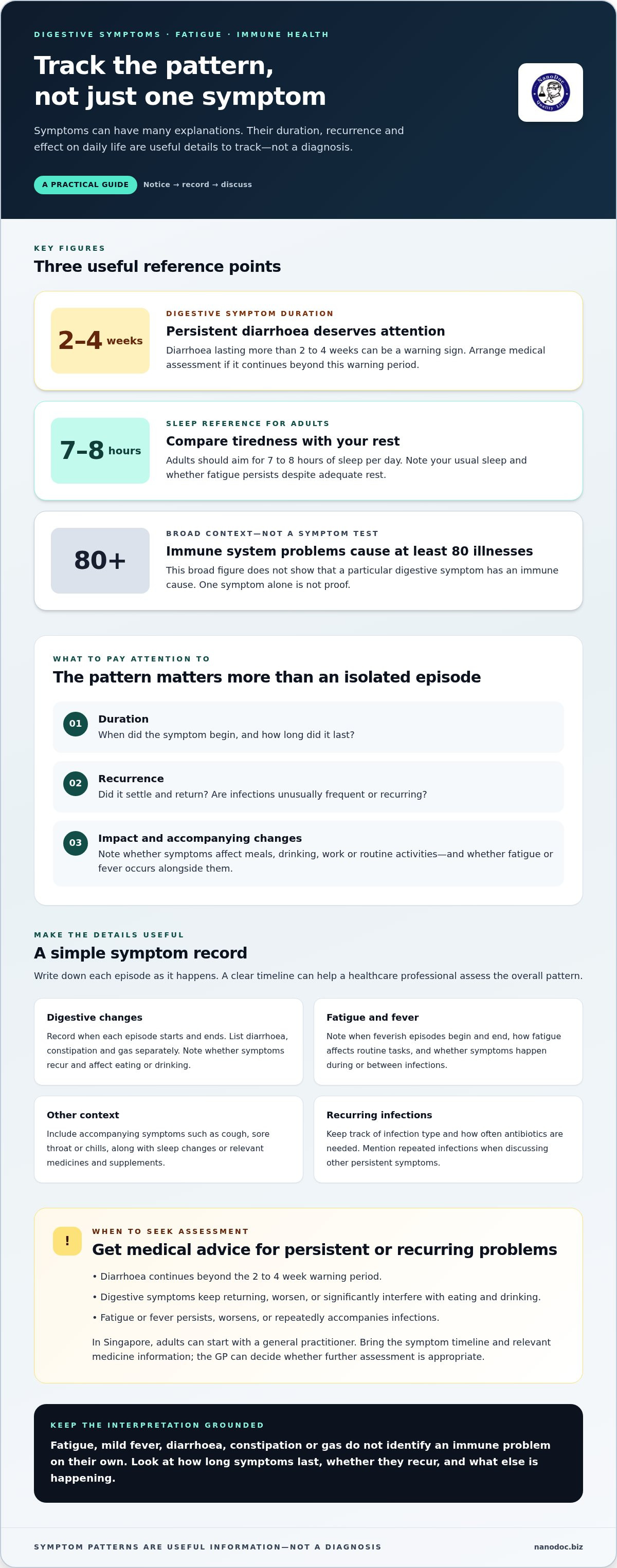
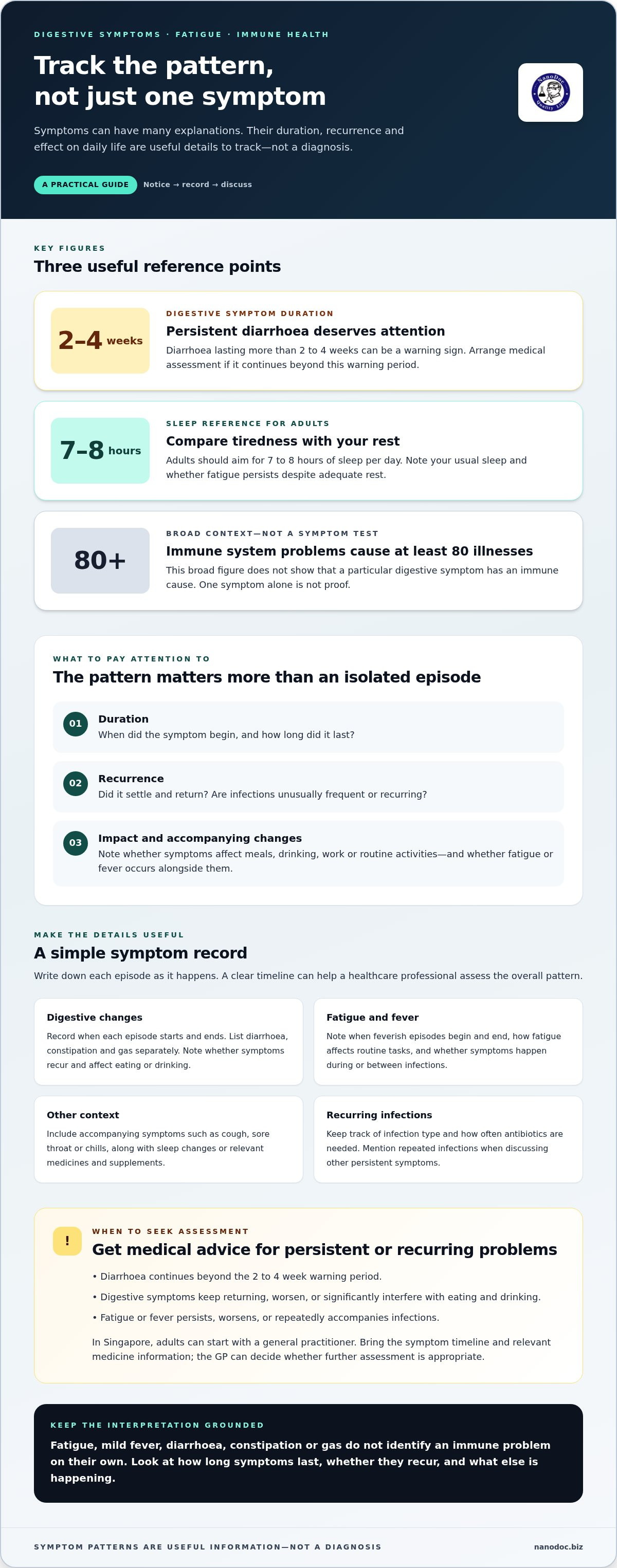
Frequent infections and persistent digestive problems can be signs of a weak immune system in adults, but symptoms alone don’t establish the cause. Diarrhoea lasting more than 2 to 4 weeks can be a warning sign, while fatigue or a mild fever may have many explanations. The pattern and duration matter more than one isolated symptom.
It’s understandable to wonder whether recurring health changes reflect immune function, especially when stress, poor sleep or daily habits may also affect how you feel. Prolonged stress can affect immune-cell development and the body’s ability to fight infections, so consider it alongside any physical symptoms.
This guide explains which digestive issues, fatigue, mild fever and recurring infections may warrant closer attention, and when symptoms call for medical assessment. It also covers practical habits, including sleep, balanced eating and stress management, that can support immune function without replacing medical care.
Key Takeaways
- Look at the pattern, duration and recurrence of symptoms; a single episode of fatigue, mild fever or digestive discomfort does not identify an immune problem.
- Persistent digestive changes, including diarrhoea lasting more than 2 to 4 weeks, deserve attention rather than being dismissed as a short-lived upset.
- Notice whether infections are unusually frequent or recurrent, and keep track of their type and how often antibiotics are needed.
- Support everyday immune function with regular sleep, balanced meals, exercise and practical stress-management habits.
- Use symptom patterns to guide a conversation with a healthcare professional when problems persist or infections keep returning.
Table of Contents
2. Digestive problems
Digestive symptoms can sometimes accompany changes in immune function, but they don’t identify the cause on their own. Diarrhoea lasting more than 2 to 4 weeks can be a warning sign of immune-system harm to the small-intestinal lining or digestive tract. Duration is therefore a useful detail to track, not a diagnosis.
Pay attention to the pattern as well as the symptom. Note when diarrhoea began, whether it continues, and whether constipation or gas also occurs. These symptoms may occur with an imbalance between good and bad bacteria in the stomach, but that possibility is different from evidence of immune deficiency. One symptom alone is not proof.
A simple symptom record can make changes easier to track. Write down when each episode starts and ends, its main symptom, and whether it disrupts meals or daily activities. For example, note whether loose stools recur over several weeks or happen only after a particular meal. Include other changes, such as fatigue or fever, without assuming they share a cause.
Persistent diarrhoea deserves particular attention because the small intestine’s lining is involved in digestion and absorption. If diarrhoea continues beyond the 2 to 4 week warning period, arrange medical assessment rather than relying only on dietary changes. Also seek assessment for recurrent digestive problems that keep returning, worsen, or interfere with eating and drinking.
Adults in Singapore can start with a general practitioner for recurrent digestive symptoms or concerns about immune problems. A GP can review the symptom timeline and decide whether further assessment, including specialist evaluation, is appropriate.
Before an appointment, prepare a concise timeline: when each episode began, how long it lasted, and whether it recurred. List diarrhoea, constipation and gas separately, since they may have different explanations. Mention repeated infections and any relevant medicines, including antibiotics. These details help distinguish an isolated digestive upset from a longer-running pattern that needs investigation.
Seek prompt medical advice if digestive symptoms persist or make it significantly difficult to maintain food or fluid intake. Gas or constipation alone does not mean your immune system is weak. Consider how long symptoms last, whether they recur and what other symptoms occur alongside them. A clear record gives a healthcare professional a useful starting point for assessing possible causes.
At least 80 illnesses are caused by immune system problems. This broad figure gives context to immune-related concerns, but it does not show that any particular digestive symptom has an immune cause. Diarrhoea, constipation and gas should still be considered in their own pattern and alongside the wider health picture, rather than used as a shortcut to a conclusion.
When discussing symptoms, focus on what changed and how long it has been happening. A clear account of repeated episodes, their effect on eating and drinking, and any other changes can help a GP decide what needs attention. If symptoms settle and later return, note that pattern too. The aim is not to diagnose yourself from a symptom list, but to give a healthcare professional accurate information and follow their advice about assessment.
3. Fatigue and mild fever
Fatigue and a mild fever can occur during an infection, but neither proves an immune problem. Their significance depends on the pattern, accompanying symptoms and effect on daily activities. For example, fatigue during a brief illness differs from tiredness that continues after other symptoms settle. Recurrent fever also deserves attention, particularly when infections keep returning.
Sleep is one practical factor to review. Adults should aim for 7 to 8 hours of sleep per day. Record your usual sleep duration for several days and note whether tiredness persists despite adequate rest. Also consider changes such as disrupted sleep, demanding work or reduced appetite. These observations can help distinguish a change in routine from fatigue that appears alongside other health concerns.
Track symptoms in a short daily log. Note when a feverish feeling or measured temperature began, how long it lasted, and whether fatigue affected work, exercise or routine tasks. Include relevant context, such as cough, sore throat or chills. A record can show whether episodes are isolated or repeatedly occur together.
A mild fever alone has many possible explanations. Fatigue can also follow poor sleep or an infection, so neither symptom should be treated as a stand-alone sign of weak immunity. Instead, look for a pattern: repeated illnesses, fatigue that persists between episodes, or symptoms that interfere with ordinary activities. Note when each change began rather than relying on memory at an appointment.
In Singapore, adults concerned about persistent fatigue, repeated fever or recurring illness can start with a general practitioner. Bring your symptom log and a list of medicines or supplements you use. Describe how symptoms affect daily routines and whether they occur between infections or only during them. A clinician can assess the overall pattern and decide whether further evaluation is needed.
- Record the start, duration and recurrence of feverish episodes.
- Compare fatigue with sleep, including whether you regularly reach 7 to 8 hours per day.
- Note accompanying symptoms and their effect on routine activities.
Seek medical assessment if fatigue or fever persists, worsens or repeatedly accompanies infections. A clear timeline gives the clinician more useful detail than a general report of “feeling run-down.” It also separates the timing of symptoms from assumptions about their cause.
4. Stress and immune function
Prolonged stress can affect the development of immune cells and the body’s ability to fight infections. Stress alone doesn’t establish immune deficiency, but it is one factor to consider alongside recurring illnesses and other symptoms. For example, note whether infection episodes coincide with a sustained period of work pressure, disrupted sleep or caregiving demands.
What causes a weakened immune system in adults? Prolonged stress may contribute by affecting immune-cell development and the body’s response to infection. Medications and medical conditions can also affect immune function, so share your health history with a doctor rather than assuming stress is the only cause.
Can medications or medical conditions weaken the immune system? Some medications and conditions may affect immune function, but the effect depends on the specific medicine and condition. Record prescribed medicines, over-the-counter products and relevant diagnoses, and discuss them with a doctor before changing treatment.
To understand stress in context, keep a brief daily record. Note stressful events, sleep quality, exercise, infections and other symptoms. A diary may help identify patterns, such as symptoms appearing during a prolonged period of poor rest. It cannot diagnose an immune problem, but it gives a clinician concrete context for discussion.
Regular exercise can reduce stress and improve circulation, supporting healthy immune function. Choose a routine that fits your current ability, such as a walk during the day, and note whether it feels sustainable. If exercise and a healthy sleep routine aren’t enough to reduce stress, meditation or yoga are suggested relaxation methods. Consistency matters more than treating one session as a cure.
How do doctors test for immune deficiency in adults? A baseline blood test can help a doctor determine whether antibody levels fall within the typical range. The doctor also considers your infection history, symptoms and medicines when interpreting results. Bring your timeline and medication list, and describe how prolonged stress has affected your sleep or routine.
What symptoms of immune deficiency require urgent medical care? Seek urgent medical assessment for symptoms that are severe or rapidly worsening, rather than waiting to see whether stress-management habits help. Discuss recurrent infections or ongoing concerns with a doctor, who can assess the full pattern.
For a practical starting point, choose one manageable habit that supports stress management and monitor it. For example, schedule regular exercise or set aside time for meditation, then record how consistently you follow the routine. Pair that record with notes on sleep and symptoms. This approach helps distinguish a lifestyle pattern from an assumption about immune function, while giving a healthcare professional specific information to consider.
5. How often is it normal for adults to get infections?
There isn’t one yearly infection count that defines what is normal for every adult. Exposure, infection type and recovery time all matter. A short-lived respiratory illness after close contact differs from repeated infections that recur, last longer or disrupt everyday activities. Frequency is useful context, not a diagnosis by itself.
Frequent infections can be a sign of a weak immune system, particularly when episodes keep returning or recovery is difficult. Needing antibiotics more than twice a year is a red flag for adults. This threshold does not establish immune deficiency; it signals a pattern worth discussing with a healthcare professional.
Count episodes carefully rather than relying on memory. Record each illness, its start and end, its symptoms and any prescribed treatment. For example, note whether a respiratory infection cleared before another began or whether symptoms continued throughout. This distinction helps show whether separate episodes are occurring or one illness is lingering.
Record the effect on daily life, too. Note missed work, difficulty completing routine tasks or symptoms that return soon after improvement. Include the type of infection when known, such as a sinus or skin infection, and whether a clinician diagnosed it. A specific timeline is more informative than saying you “get sick a lot.”
Antibiotic use needs context. Write down when a clinician prescribed antibiotics and which infection they were treating. The red-flag threshold is needing antibiotics more than twice a year, not simply having a prescription available. Don’t start, stop or reuse medication based on this threshold; discuss your treatment history with a doctor.
For adults in Singapore, a general practitioner is a practical first point of assessment when infections repeatedly return or antibiotic use exceeds that red-flag level. Bring your episode record, medication list and any relevant test results. Describe how long each illness lasted and whether you fully recovered between episodes. These details help guide an assessment of the pattern.
Consider frequency alongside severity and recovery. For example, recurring illnesses that require repeated medical care may raise more concern than occasional, mild infections that resolve. A clinician can review the full history, including infection type, duration, treatment and underlying health factors, before deciding whether further assessment is appropriate.
Use your record to identify a clear change from your usual pattern. If infections are becoming more frequent, more persistent or harder to recover from, arrange an appointment rather than relying on the yearly count alone. The number of episodes is one clue; the recurring pattern and its impact provide essential context.
Regular handwashing with soap and warm water, or using an alcohol-based gel, can help avoid infections. Prevention and a careful episode record address different parts of the same concern. Hand hygiene is not a way to decide whether recurring infections need assessment; repeated episodes or difficult recovery still warrant discussion with a healthcare professional. Simple advice is easier to include in everyday routines.
5. Which infections may indicate an immune deficiency in adults?
Repeated infections can be more informative than one isolated illness. According to the CDC, repeated ear infections, sinus infections, pneumonia, bronchitis, meningitis and skin infections may be signs of primary immunodeficiency. These infection types are clues to discuss with a healthcare professional, not proof of a particular diagnosis. Track which infections occur and whether they return after recovery.
Some red flags use specific thresholds. More than four ear infections in a year is listed as a warning sign for people over age 4. Pneumonia more than once is also listed as a possible sign of immune-system problems. These thresholds help identify patterns that merit attention, but they do not establish immune deficiency by themselves.
Pay attention to recurrence across different parts of the body. For example, repeated sinus infections followed by bronchitis create a different history from one isolated sinus infection. Record the infection type, when it began, how it was diagnosed, treatment received and whether symptoms returned. This makes the pattern easier to describe accurately.
Skin infections also feature in the CDC list. Note repeated episodes, their location and whether one resolved before another appeared. Meningitis is another infection named in the list. Describe any history of these infections to a doctor, especially if several types recur or recovery is difficult.
Use a simple illness log rather than estimating from memory. Record the date of each episode, the affected area, symptoms, diagnosis and prescribed treatment. Note whether you fully recovered between illnesses. If pneumonia occurred more than once, or ear infections exceeded four in a year, highlight those details when discussing your history.
In Singapore, adults concerned about repeated infections can start with a general practitioner. Bring your infection log and medication history, including antibiotics prescribed for individual episodes. Explain which illnesses recurred and whether they affected the same area or different areas. A clear account helps the clinician assess your history and consider whether further evaluation is appropriate.
Frequency is only one part of the pattern. Infection type, recurrence, recovery and treatment history all provide context. For example, repeated sinus infections and pneumonia are both included in the CDC’s list, while a single episode is not a repeated-infection pattern. Share concrete details rather than concluding that a particular infection proves immune deficiency.
Arrange medical assessment if the infections listed by the CDC keep returning, or if you have had pneumonia more than once. Mention the threshold of more than four ear infections in a year if it applies to your history. These details help focus the discussion on specific infections and recurrence patterns that need review.
NanoDoc International Pte Ltd: Anti-Ageing Skin Care
NanoDoc International Pte Ltd offers Anti-Ageing Skin Care, Oral & Immunity Care and Nano Cellular Essential Nutrition. These products may suit adults seeking everyday wellness options as part of a broader routine, not as a way to diagnose or treat recurring infections.
NanoDoc International Pte Ltd’s health formulations use nano-encapsulation technology designed to enhance absorption through the gut or skin. If you’re considering nutrition or oral immunity products, consider how they fit your routine and keep medical assessment separate from product choices. Persistent or repeated infections still call for assessment by a healthcare professional.
For product information or to discuss the available offerings, contact NanoDoc International Pte Ltd or visit nanodoc.biz.
Choose a thoughtful next step
Use what you’ve noticed to decide on a considered next step. If you’re tracking signs of a weak immune system in adults, keep health concerns separate from choices about everyday wellness products. Ongoing or recurring symptoms deserve appropriate medical assessment; personal care products are not a substitute.
For those exploring products as part of a broader routine, NanoDoc International Pte Ltd offers Anti-Ageing Skin Care, Nano Cellular Essential Nutrition and Pain Relief Care. Choose an option based on its role in your routine, not with the expectation that it will diagnose or resolve immune concerns. A measured approach keeps health decisions distinct from products intended for their respective categories.
To learn more about these offerings, contact NanoDoc International Pte Ltd. A clear next step can help you move forward with greater confidence and a routine that suits your needs.
Frequently Asked Questions
What are common signs of a weak immune system in adults?
Common clues include recurring infections, persistent digestive problems, fatigue or fever alongside illness. The pattern matters: note which symptoms occur together, whether they return between infections and how they affect daily activities. For example, keep a dated record of symptoms and recovery instead of relying on a general impression of feeling unwell. These signs can have other causes, so a symptom list cannot confirm immune deficiency.
How can adults support immune health with lifestyle changes?
Build consistent habits: wash your hands with soap and warm water, avoid touching your eyes, nose and mouth with unwashed hands, and eat balanced meals with plenty of fruit and vegetables. Regular physical activity can support circulation and help manage stress, so choose an activity you can sustain. Notice whether your routine includes adequate rest and time to unwind. These habits support general health, but they don’t replace assessment of recurring symptoms.
Frequently Asked Questions
- What are common signs of a weak immune system in adults?
- Common clues include recurring infections, persistent digestive problems, fatigue or fever alongside illness. The pattern matters: note which symptoms occur together, whether they return between infections and how they affect daily activities. For example, keep a dated record of symptoms and recovery instead of relying on a general impression of feeling unwell. These signs can have other causes, so a symptom list cannot confirm immune deficiency.
- How can adults support immune health with lifestyle changes?
- Build consistent habits: wash your hands with soap and warm water, avoid touching your eyes, nose and mouth with unwashed hands, and eat balanced meals with plenty of fruit and vegetables. Regular physical activity can support circulation and help manage stress, so choose an activity you can sustain. Notice whether your routine includes adequate rest and time to unwind. These habits support general health, but they don’t replace assessment of recurring symptoms.