
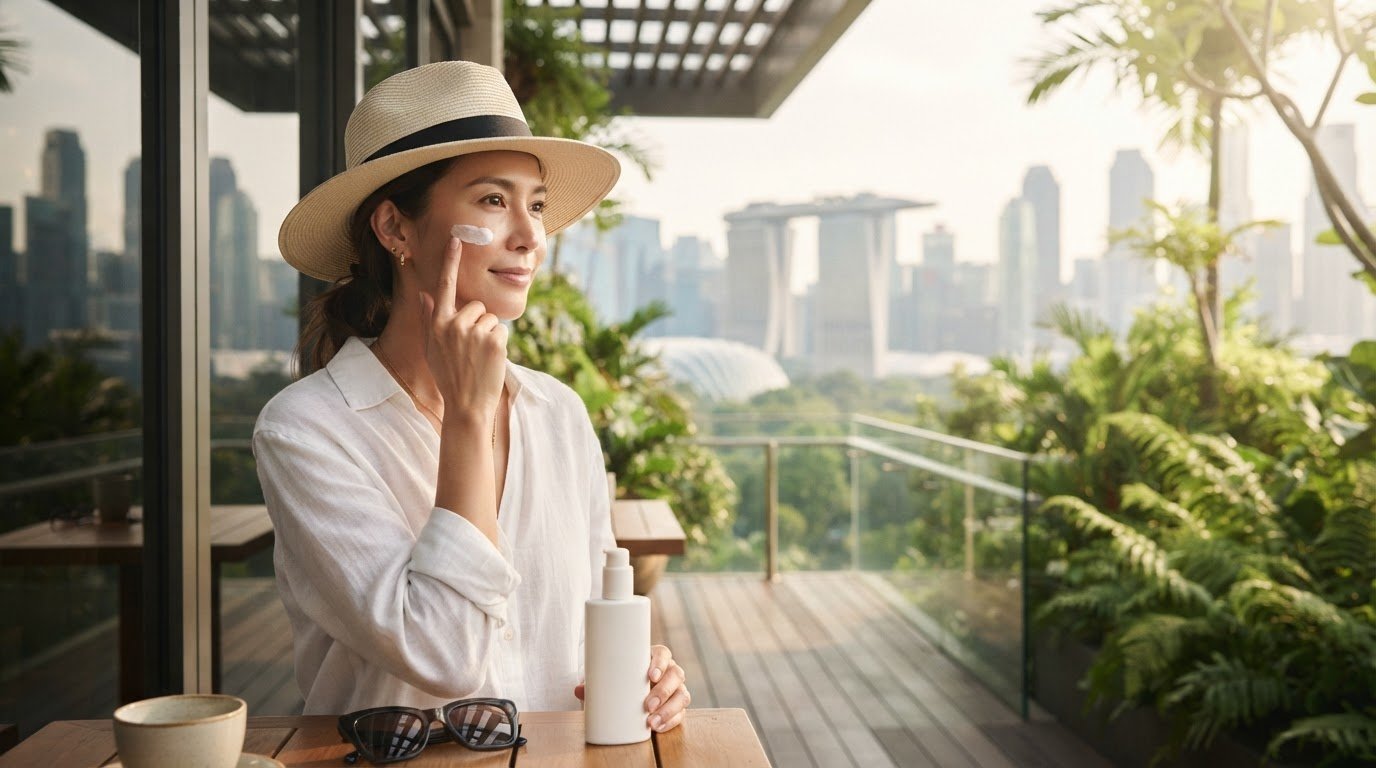
Sun exposure is a primary cause of premature skin ageing, and daily protection is the most direct place to start. To prevent premature skin ageing in the tropics, use broad-spectrum, water-resistant sunscreen with SPF 30 or higher, seek shade, and cover exposed skin with protective clothing. According to the American Academy of Dermatology, sunscreen should be applied every day to skin not covered by clothing.
It makes sense to focus on the sun, but Singapore’s humid, urban environment and everyday skin-care habits also influence how skin changes over time. This article explains the main contributors to early skin ageing and practical ways to reduce avoidable exposure, choose sun protection and keep your routine gentle. It also explains why products that sting or burn may undermine skin comfort rather than improve it.
Key Takeaways
- Support skin health with a balanced diet, regular activity and consistent, quality sleep; smoking and excess alcohol can also affect how skin ages.
- Make broad-spectrum sunscreen part of your daily routine, including on cloudy days, and reapply it during extended outdoor exposure.
- Reduce direct sun exposure by seeking shade and adding protective clothing, a wide-brimmed hat and UV-protective sunglasses.
- Understand how environmental exposure and oxidative stress can affect skin, then focus on practical habits that help limit avoidable damage.
- Choose gentle skin care: cleanse without scrubbing, and pay attention to products that sting or burn rather than pushing through irritation.
Table of Contents
1. What causes premature skin ageing?
In Singapore, skin ageing reflects more than time or one skincare choice. The skin exposome describes how environmental exposure, diet, behaviour and internal factors interact. Ultraviolet rays are a primary cause, while urban pollution and humidity can also affect skin when they’re not managed. Wrinkles, fine lines and uneven tone may become visible earlier than expected, so prevention works best across daily habits.
Diet can influence the skin’s exposure to oxidative stress. Build meals around fresh fruits and vegetables, which provide antioxidants; berries, red bell peppers and green tea are examples. A diet high in sugar or refined carbohydrates may accelerate skin ageing, so make whole foods a regular choice rather than relying on supplements alone. Hydration matters too: aim for at least 8 glasses of water a day, adjusting intake to your activity and conditions.
Smoking restricts blood flow to the skin and breaks down collagen, which supports its structure. Stopping smoking can help skin look healthier. Excess alcohol can dehydrate skin and affect its elasticity over time, so reducing or avoiding it removes an avoidable stressor. Moderate exercise can improve circulation and support immune function, but it does not replace sun protection.
Sleep gives the body time to support skin repair. Aim for seven to nine hours of quality sleep per night; getting less than seven hours can age the body’s cells more quickly. Repeated pressure may also matter: sleeping on the same side every night can contribute to fine lines on that side of the face. Varying your position or sleeping on your back may help reduce repeated compression.
Humidity can make sweat and heavy-feeling skincare uncomfortable. Choose cleansing and moisturising products that suit your skin, and gently remove sweat and dirt after exposure. Humidity is not a substitute for hydration or protection; Singapore’s pollution and tropical conditions can still affect skin when daily care is inconsistent.
Can retinoids prevent premature skin ageing, and what are their risks in tropical weather? Retinoids such as tretinoin can improve skin appearance by speeding cell turnover and boosting collagen, but they may cause redness and dryness during the first few weeks. Introduce them slowly. Heat and humidity do not remove this irritation risk, and pregnant or breastfeeding women should not use retinoid cream.
2. Daily broad-spectrum sunscreen
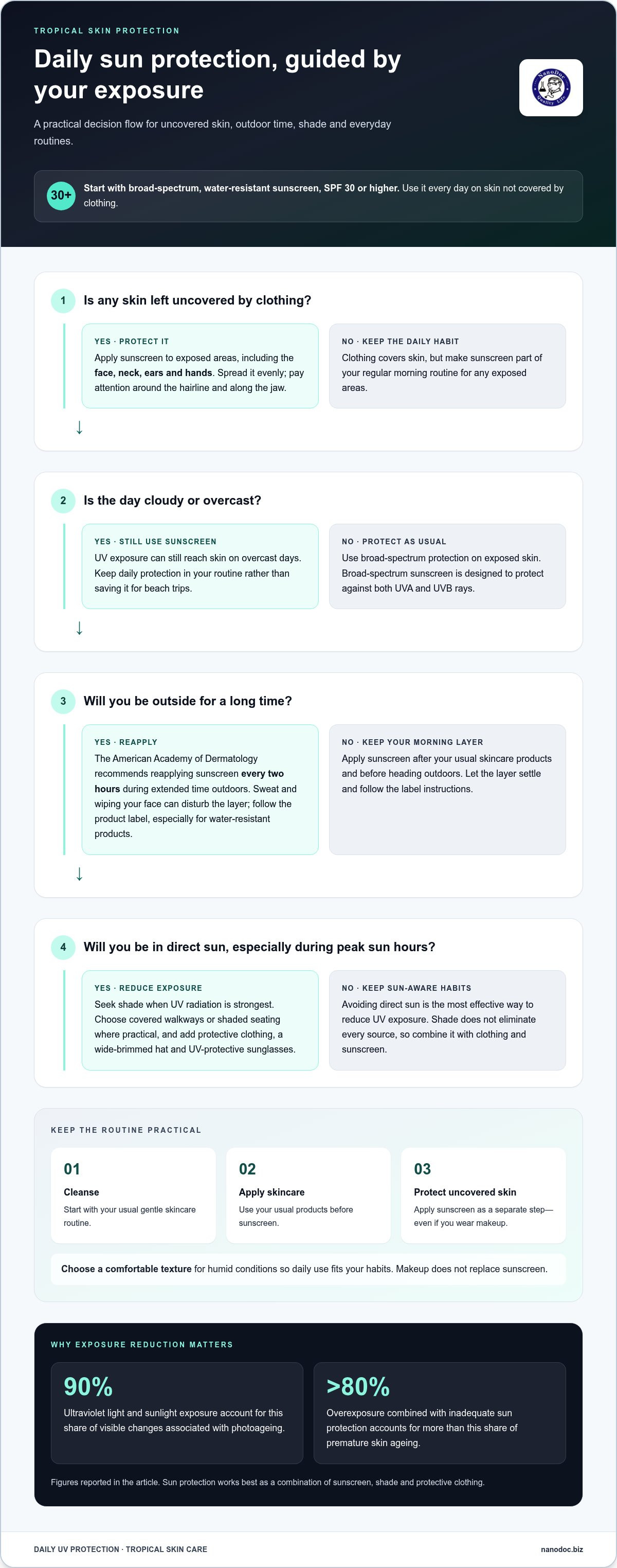
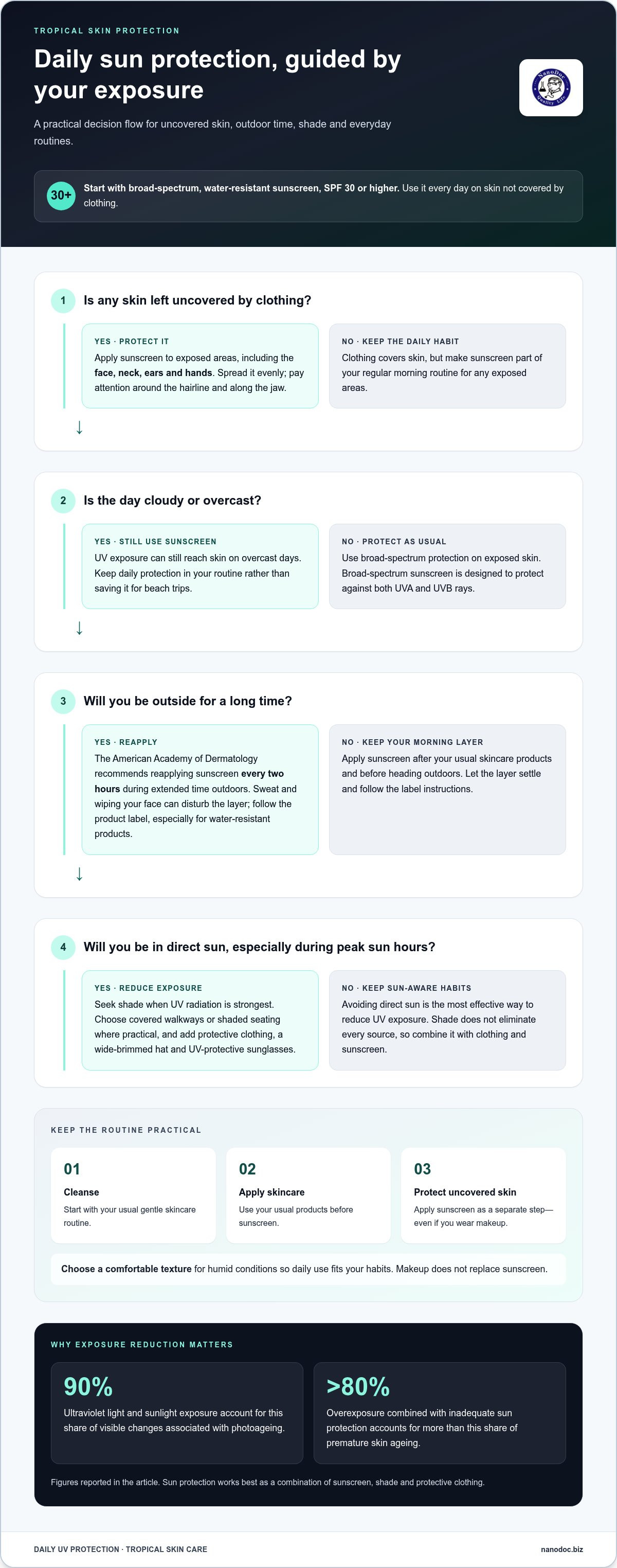
In Singapore, sunscreen belongs in the morning skincare routine throughout the year. According to the American Academy of Dermatology, broad-spectrum, water-resistant sunscreen with SPF 30 or higher helps protect against premature skin ageing. “Broad-spectrum” matters because the product is designed to protect against both UVA and UVB rays, not just sunburn. Apply it to skin left uncovered by clothing, including the face, neck, ears and hands.
Cloud cover does not make daily protection unnecessary. UV exposure can still reach skin on overcast days, so use sunscreen regularly rather than saving it for beach trips. A practical sequence is to cleanse, apply your usual skincare products, then finish with sunscreen on exposed areas. Follow the product label’s instructions and let the layer settle before heading outdoors.
Coverage matters as much as the SPF on the label. Spread sunscreen evenly over exposed skin, including around the hairline and along the jaw, where small areas are easily missed. If you wear makeup, apply sunscreen as a separate protection step rather than assuming makeup replaces it. Include exposed skin in your routine for a commute, outdoor lunch or time near a window.
Reapplication helps maintain protection during extended time outdoors. The American Academy of Dermatology recommends reapplying sunscreen every two hours when spending a long time outside. In Singapore’s hot, humid weather, sweat and wiping your face can disturb the layer, so plan to reapply during prolonged outdoor activities. Follow the label’s directions, particularly for water-resistant products.
How much do sunscreen and professional photoaging treatments cost in Singapore? Sunscreen costs depend on the product’s format, size and formulation, while clinic treatment costs depend on the treatment chosen and the area addressed. Compare practical features that suit your routine rather than assuming one price applies to every product or treatment.
A simple routine is easier to maintain: cleanse, apply skincare, then protect uncovered skin with sunscreen. Choose a texture you can comfortably wear in humid conditions, since a product that fits your daily habits is more likely to be used consistently. If you’re considering an additional skincare step, explore anti-ageing skin care alongside, not instead of, daily sun protection.
3. Avoiding sun exposure and using protective clothing
Ultraviolet exposure damages skin cells and increases skin cancer risk, while repeated sunlight contributes to premature ageing. Ultraviolet light and sunlight exposure account for 90% of visible changes associated with photoageing. Overexposure combined with inadequate sun protection accounts for more than 80% of premature skin ageing. These figures make exposure reduction a practical action, not simply an optional addition to skincare. In Singapore, plan shade and clothing into everyday commutes and outdoor activities.
Start by changing where and when you spend time outdoors. Seek shade during peak sun hours, when UV radiation is strongest, and choose covered walkways or shaded seating where practical. Avoiding direct sun is the most effective way to reduce UV exposure. Shade does not eliminate every source of exposure, so combine it with clothing and other protection. UV rays can also reach skin indoors and during winter, making sun-aware habits relevant beyond sunny outings.
Clothing creates a physical barrier between sunlight and skin. Choose tightly woven, covering garments for outdoor activity, and consider clothing with a UPF label for more effective sun protection. A long-sleeved top can cover your arms during a walk, while a wide-brimmed hat shades your face, ears and neck. UV-protective sunglasses help protect your eyes and the delicate surrounding area. These measures work together, rather than relying on a single item.
Use an umbrella when shade or protective clothing alone cannot cover your route. For example, carry one when walking between transport stops or waiting outdoors in Singapore’s heat. Combine it with a hat and sunglasses, especially when sunlight reaches exposed areas from the side. Avoid deliberate tanning, including tanning beds and other indoor tanning equipment, because both expose skin to harmful UV rays that accelerate ageing. Self-tanning products can provide colour without intentional UV exposure.
The skin exposome helps explain why sun protection is only one part of prevention. Environmental exposure, diet, behaviour and internal factors interact with skin and influence signs of ageing. Antioxidants from a balanced diet may support skin health, while avoiding smoking removes another behaviour linked with skin ageing. However, food choices and stopping smoking cannot cancel UV damage. Focus on reducing exposure, covering vulnerable areas and maintaining protective habits consistently.
What signs of sun damage require a dermatologist in Singapore? Seek medical advice if a skin change appears suddenly, is painful or bothersome, or worsens quickly. Note when it began and how it has changed, then arrange an assessment with a dermatologist. For gradual appearance changes, continue sun-protective measures and record any new or changing areas so you can describe them clearly during the appointment.
4. Oxidative stress and free radicals
Oxidative stress occurs when reactive oxygen species damage cellular structures faster than the body can manage them. Blue light can produce these reactive species and oxidative damage in skin, and may penetrate deeper skin layers than ultraviolet radiation. UV and blue light can also affect collagen and elastin by inhibiting their formation and increasing their degradation. These proteins help maintain skin structure and elasticity, so repeated exposure can contribute to visible changes over time.
Collagen provides structural support, while elastin helps skin stretch and return to shape. When their production and breakdown become imbalanced, skin may gradually lose firmness and develop fine lines. Several factors can influence this process, including light exposure and chronic stress. A single stressful day does not create permanent lines, but persistent strain can affect skin biology over time. Managing stress complements, but does not replace, sun protection and consistent skincare.
Chronic stress elevates cortisol, which can break down collagen and elastin. Stress can also lead people to contract facial muscles repeatedly, such as furrowing the brow while concentrating. Repeating the same facial expressions over many years can make expression lines permanent. Notice habitual tension in your forehead or jaw during work and consciously relax those muscles. This awareness may reduce repeated contraction, though it cannot reverse established lines.
Regular movement is one useful part of a stress-management routine. Make exercise a habit that fits your schedule, such as a brisk walk, stretching or a home workout. Choose an activity you can sustain, and use it to break up prolonged work or screen time. Exercise supports an active lifestyle and may help manage stress, but it is not a direct treatment for wrinkles. Pair it with sleep and sun-protective habits.
For a simple daily approach, identify recurring stress points, such as tight shoulders during desk work, and add a short movement break. Relax your forehead and jaw when you notice tension, then return to the task. Keep expectations realistic: stress reduction supports general wellbeing, while skin changes reflect multiple interacting factors. Protecting collagen also means limiting avoidable light exposure. Antioxidant-rich foods may support skin health, but they do not cancel UV or blue-light effects.
Blue light and oxidative stress are only part of the picture. The skin exposome includes environmental exposure, behaviour, diet and internal factors that interact with skin. In Singapore, combine stress-management habits with daily sun protection and a gentle skincare routine. If fine lines or changes in elasticity concern you, observe where and when they appear. Keeping a record can help distinguish gradual changes from sudden or rapidly worsening concerns.
5. Avoiding irritating skin-care products
A complicated routine can make it harder to identify what causes irritation. In Singapore’s warm, humid climate, start with a few suitable steps instead of layering many treatments. Skin that stings or burns after you apply a product may look older, so discomfort is not proof that a treatment is working. Note the product and reaction, then pause its use while your skin settles.
Cleanse gently. The American Academy of Dermatology recommends washing your face twice a day and after heavy sweating. Use a mild cleanser, lukewarm water and your fingertips; scrubbing can irritate skin and accelerate visible ageing. After a humid commute or exercise, remove sweat and dirt without rubbing with a rough cloth. If makeup is part of your routine, remove it before bed rather than leaving it on overnight.
Moisturising helps limit dryness by trapping water in the skin. The American Academy of Dermatology recommends applying facial moisturiser every day; a morning and evening routine can make this step consistent. Choose a texture that feels comfortable in Singapore’s humidity, and adjust if it causes discomfort. Exfoliation can remove outer layers of the stratum corneum, but this article recommends doing it once a week, not scrubbing repeatedly.
Introduce active treatments carefully. Retinoids such as tretinoin can improve skin appearance by speeding cell turnover and boosting collagen production, but redness and dryness can occur during the first few weeks. Introduce retinoid cream slowly instead of adding it alongside several new treatments. Alpha hydroxy acids can support cell turnover and collagen production, though to a lesser extent than prescription retinoids. Do not increase use simply to pursue younger-looking skin.
Use a simple test-and-observe approach when changing skincare. Add one new product at a time, follow its directions, and watch for stinging, burning, redness or unusual dryness. If a reaction appears, stop the newest addition and return to the basic steps your skin tolerates. This makes it easier to identify likely causes than changing your cleanser, moisturiser and treatments all at once.
Gentler care is not the same as abandoning treatments for signs of ageing. It means choosing steps your skin can tolerate and using them consistently, while keeping daily sun protection in place. If you’re refining your routine, explore a gentler skincare approach as part of your broader skin-care choices.
NanoDoc International Pte Ltd: Anti-Ageing Skin Care
NanoDoc International Pte Ltd offers Anti-Ageing Skin Care to complement daily sun protection and a gentle skincare routine. Its cosmeceutical formulations use nano-encapsulation technology designed to support delivery through the skin. This range may suit you if you want to add a dedicated skincare step while continuing practical habits such as sunscreen use, seeking shade and wearing protective clothing.
Skin-care products complement these habits, not replace them. Keep your routine centred on what your skin tolerates, and introduce new products thoughtfully so you can observe how your skin responds. Explore NanoDoc International Pte Ltd’s Anti-Ageing Skin Care range as a dedicated addition to your routine to help prevent premature skin ageing in the tropics.
Make your next skincare step intentional
Choose one manageable change to carry forward, then give your routine time to become consistent. A brief note of the products you use and how your skin responds can help you make considered adjustments rather than adding several treatments at once. This steady approach can help you prevent premature skin ageing in the tropics while keeping your skincare choices suited to your needs.
If you want to explore a dedicated skincare option, NanoDoc International Pte Ltd offers Anti-Ageing Skin Care. Its other offerings include Nano Cellular Essential Nutrition and Pain Relief Care, which address separate needs and are not substitutes for sun protection or gentle skincare. Choose support according to the concern you want to address, and keep your daily routine practical.
For information about its offerings, contact NanoDoc International Pte Ltd today. A thoughtful, consistent next step can make skin care easier to maintain.
Frequently Asked Questions
What causes premature skin ageing?
Premature skin ageing develops through several interacting influences, rather than one isolated cause. Ultraviolet exposure can damage skin cells and contribute to changes in collagen, while smoking, excess alcohol, disrupted sleep and environmental pollution add other stressors. The skin exposome describes how surroundings, behaviour, diet and internal factors combine. Considering these influences together helps you identify which everyday habits may contribute to changes in your skin.
What are the signs of premature aging?
Common visible signs include fine lines, wrinkles, uneven tone, sun spots and changes in firmness or elasticity. Their location and pattern can offer clues: sun-exposed areas may show more uneven pigmentation, while repeated facial expressions can contribute to expression lines. Signs that appear earlier than expected may be considered premature, but a sudden, painful or rapidly worsening change warrants medical attention rather than treatment with cosmetics alone.
Anti-ageing cosmetics, what are they and what active ingredients should I look for?
Anti-ageing cosmetics are topical products designed to improve the appearance or feel of skin, not replace medical care. Retinoids can support cell turnover and collagen production; alpha hydroxy acids support these processes to a lesser extent. For hydration, look for hyaluronic acid. Vitamin C, niacinamide and white mulberry are used to improve the appearance of uneven tone. Introduce active ingredients carefully, especially if your skin is easily irritated.
Can You Reverse Premature Skin Wrinkling?
You can soften the appearance of some fine lines, but skincare cannot fully reverse the processes that created them. Retinoids may improve skin appearance by supporting cell turnover and collagen production, while moisturiser can make skin look temporarily smoother by helping it retain water. Keep expectations realistic: results vary with the product, consistency and skin response. Protecting skin from further UV exposure helps reduce an avoidable source of ongoing damage.
Which Anti-Ageing Approaches Should You Trust?
Prioritise approaches with a clear purpose and evidence-supported use: daily sun protection, gentle cleansing, moisturising and well-understood active ingredients. Be cautious of products promising dramatic, rapid changes or claiming to address every cause of ageing. Check the ingredient list and directions, introduce one new active product at a time, and stop using it if it causes persistent stinging or burning. Sudden or quickly worsening skin changes warrant medical advice.
What causes premature skin ageing in tropical climates?
In tropical settings, frequent UV exposure combines with environmental and lifestyle factors to influence skin. Singapore’s humidity can make some routines uncomfortable, while urban pollution may add environmental stress. Sweat, time outdoors and inconsistent protection can also shape daily exposure. To prevent premature skin ageing in the tropics, consider how these conditions interact with your habits, then make your skincare practical enough to follow consistently.
How does UV exposure in Singapore contribute to skin ageing?
UV radiation damages skin cells and contributes to photoageing, including changes in skin texture, tone and firmness. Exposure can happen during routine activities, such as walking between buildings or sitting near a window, not just during outdoor recreation. Cumulative exposure matters, so include your face, ears, neck and hands when planning protection. UV damage also increases skin cancer risk, making sun protection important for skin health beyond appearance.
What SPF and PA rating should I use in Singapore's tropical climate?
Choose a broad-spectrum, water-resistant sunscreen with SPF 30 or higher. The American Academy of Dermatology recommends this level to help protect against premature skin ageing. Broad-spectrum protection addresses both UVA and UVB rays. If a sunscreen label also shows a PA rating, use it as an additional indicator of UVA protection and select a strong rating. Apply it to exposed skin daily, then follow the product directions for reapplication.
Frequently Asked Questions
- What causes premature skin ageing?
- Premature skin ageing develops through several interacting influences, rather than one isolated cause. Ultraviolet exposure can damage skin cells and contribute to changes in collagen, while smoking, excess alcohol, disrupted sleep and environmental pollution add other stressors. The skin exposome describes how surroundings, behaviour, diet and internal factors combine. Considering these influences together helps you identify which everyday habits may contribute to changes in your skin.
- What are the signs of premature aging?
- Common visible signs include fine lines, wrinkles, uneven tone, sun spots and changes in firmness or elasticity. Their location and pattern can offer clues: sun-exposed areas may show more uneven pigmentation, while repeated facial expressions can contribute to expression lines. Signs that appear earlier than expected may be considered premature, but a sudden, painful or rapidly worsening change warrants medical attention rather than treatment with cosmetics alone.
- Anti-ageing cosmetics, what are they and what active ingredients should I look for?
- Anti-ageing cosmetics are topical products designed to improve the appearance or feel of skin, not replace medical care. Retinoids can support cell turnover and collagen production; alpha hydroxy acids support these processes to a lesser extent. For hydration, look for hyaluronic acid. Vitamin C, niacinamide and white mulberry are used to improve the appearance of uneven tone. Introduce active ingredients carefully, especially if your skin is easily irritated.
- Can You Reverse Premature Skin Wrinkling?
- You can soften the appearance of some fine lines, but skincare cannot fully reverse the processes that created them. Retinoids may improve skin appearance by supporting cell turnover and collagen production, while moisturiser can make skin look temporarily smoother by helping it retain water. Keep expectations realistic: results vary with the product, consistency and skin response. Protecting skin from further UV exposure helps reduce an avoidable source of ongoing damage.
- Which Anti-Ageing Approaches Should You Trust?
- Prioritise approaches with a clear purpose and evidence-supported use: daily sun protection, gentle cleansing, moisturising and well-understood active ingredients. Be cautious of products promising dramatic, rapid changes or claiming to address every cause of ageing. Check the ingredient list and directions, introduce one new active product at a time, and stop using it if it causes persistent stinging or burning. Sudden or quickly worsening skin changes warrant medical advice.
- What causes premature skin ageing in tropical climates?
- In tropical settings, frequent UV exposure combines with environmental and lifestyle factors to influence skin. Singapore’s humidity can make some routines uncomfortable, while urban pollution may add environmental stress. Sweat, time outdoors and inconsistent protection can also shape daily exposure. To prevent premature skin ageing in the tropics, consider how these conditions interact with your habits, then make your skincare practical enough to follow consistently.
- How does UV exposure in Singapore contribute to skin ageing?
- UV radiation damages skin cells and contributes to photoageing, including changes in skin texture, tone and firmness. Exposure can happen during routine activities, such as walking between buildings or sitting near a window, not just during outdoor recreation. Cumulative exposure matters, so include your face, ears, neck and hands when planning protection. UV damage also increases skin cancer risk, making sun protection important for skin health beyond appearance.
- What SPF and PA rating should I use in Singapore's tropical climate?
- Choose a broad-spectrum, water-resistant sunscreen with SPF 30 or higher. The American Academy of Dermatology recommends this level to help protect against premature skin ageing. Broad-spectrum protection addresses both UVA and UVB rays. If a sunscreen label also shows a PA rating, use it as an additional indicator of UVA protection and select a strong rating. Apply it to exposed skin daily, then follow the product directions for reapplication.