

Post-workout recovery for sore muscles often takes about 24 hours after a light workout and two to three days after a more challenging one. Delayed-onset muscle soreness can develop 24 to 72 hours after exercise and usually eases over a few days. The timeline depends partly on how demanding or unfamiliar the workout was.
Rest matters, but recovery isn’t just waiting for soreness to pass. Hydration, gentle movement and suitable food choices can support the body as it repairs and adapts. Training sore muscles hard again may prolong discomfort.
This guide explains how to recognise typical soreness, when to adjust your next workout and what may help during recovery. You’ll learn how fluids and electrolytes, low-intensity activity, exercise selection and nutrition fit into the process, including why protein and carbohydrates matter after training. These practical steps can help you make informed choices as your muscles recover, without treating every ache as a reason to stop moving completely.
Key Takeaways
- Recovery time varies with workout intensity and familiarity, so use your soreness and movement as cues when planning your next session.
- Delayed soreness can appear after you finish exercising, rather than during the workout; learn what timing is typical and which symptoms call for attention.
- Replace fluids after exercise and consider whether your activity and sweat loss make electrolyte replacement useful.
- Gentle movement may ease stiffness, but give significantly sore muscles a break from another demanding session.
- Build post-training meals around protein and carbohydrates to support the body’s repair and replenishment processes.
Table of Contents
- 1. Delayed onset muscle soreness: How soon does it set in and how long can it last?
- 2. Hydration and electrolyte replacement
- 3. Active recovery through low-intensity movement
- 4. Can I workout with sore muscles?
- 5. Nutrition for muscle repair and recovery
- NanoDoc International Pte Ltd: Anti-Ageing Skin Care
1. Delayed onset muscle soreness: How soon does it set in and how long can it last?
Muscle soreness after exercise can be ordinary delayed-onset muscle soreness, commonly called DOMS. It usually develops 24 to 72 hours after strenuous or unfamiliar exercise, rather than during the workout. Some people notice it earlier, within 12 to 24 hours. For example, leg soreness after trying squats may be mild the evening after training and more noticeable the next day.
DOMS often peaks around 24 to 48 hours after exercise, though it can peak one to three days later. The delayed onset can make it seem unrelated to the session that caused it. Note which muscles ache and when discomfort began; that simple record can help you compare the effects of one workout with another. Eccentric exercises, where a muscle tenses as it lengthens, are more likely to produce DOMS. Lowering a weight slowly is one example.
During exercise, muscle fibres experience microscopic damage that the body must repair. This process is associated with temporary soreness and stiffness, not a buildup of lactic acid. DOMS may also limit range of motion, making everyday actions such as sitting down or reaching overhead uncomfortable. Mild tenderness in the muscles you trained that appears hours later is more consistent with typical soreness than sharp pain during a movement.
For many people, DOMS fades over a few days. Recovery may take about 24 hours after a relatively light workout, while a more challenging session can require two to three days. Beginners may need 48 to 72 hours, particularly after unfamiliar movements. Soreness can sometimes last up to a week, but duration alone does not establish whether an injury is present. Track whether discomfort is gradually easing and whether normal movement is returning.
- Arrange medical evaluation if soreness lasts more than a week, repeatedly returns to the same spot, or tightens with specific movements.
- Seek prompt medical care for severe swelling, sharp and constant pain, or unusually dark or bloody urine.
- Take persistent symptoms seriously if soreness continues beyond three days with sharp pain, limited mobility, or an altered gait.
Sharp, shooting pain that worsens with movement may indicate an injury rather than normal post-exercise adaptation. If pain prevents you from flexing or extending a limb after a couple of days, contact a doctor. These warning signs differ from mild, delayed tenderness that improves over several days. For practical post-workout recovery, consider the pattern of symptoms and how well you can move, not soreness alone, when deciding whether you’re ready for another demanding session.
2. Hydration and electrolyte replacement
Hydration supports post-workout recovery for sore muscles by helping replace fluid lost through sweat. Drink regularly throughout the day rather than relying on one large drink after training. For example, keep water nearby during your routine and have fluids with your post-exercise meal. Consistent intake is a practical recovery habit, not a way to make soreness disappear immediately.
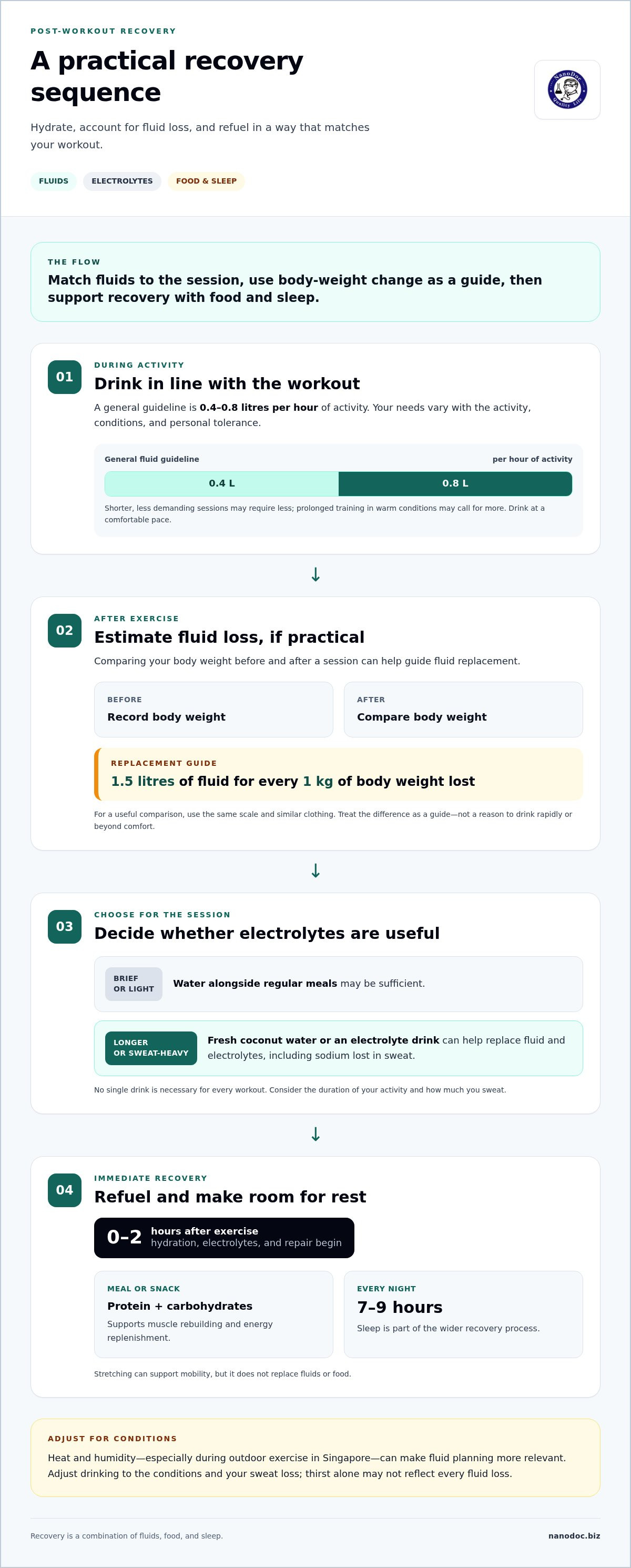
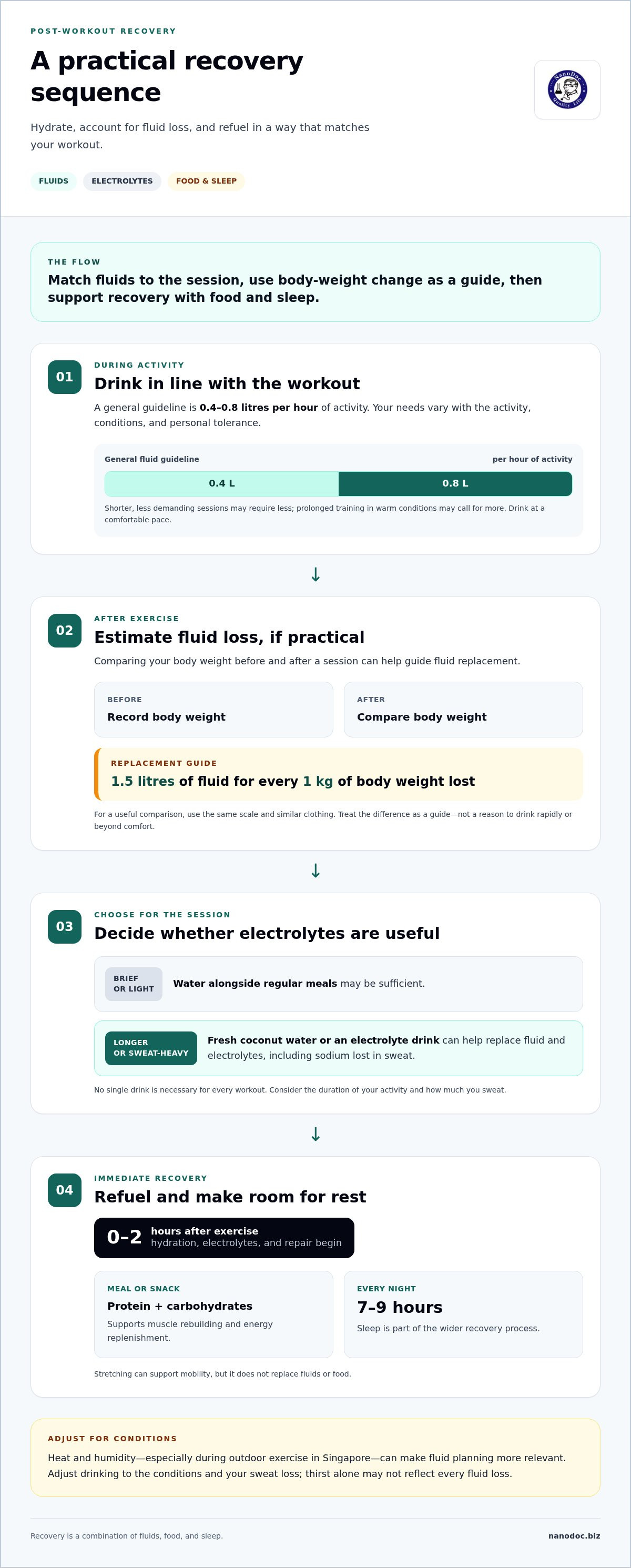
Fluid needs during exercise vary with activity, conditions, and personal tolerance. A general guideline is 0.4 to 0.8 litres per hour of activity. A shorter, less demanding session may require less than prolonged training in warm conditions. Drink in a way that feels comfortable, and consider the workout’s duration and how much you sweat when planning your intake.
After exercise, body-weight change can help estimate fluid loss. The guideline is to drink 1.5 litres of fluid for every kilogram of body weight lost during activity. Weighing before and after a session can offer a practical comparison, especially if you use the same scale and similar clothing. Treat the difference as a guide to replacement, not a reason to drink rapidly or beyond comfort.
Sweat contains electrolytes, including sodium. For a brief or light session, water alongside regular meals may be sufficient. After a longer or sweat-heavy workout, fresh coconut water or an electrolyte drink can help replace fluid and electrolytes. Choose based on the session and what suits you; no single drink is necessary for every workout.
A practical post-workout recovery for sore muscles routine includes fluids, food, and sleep. The immediate post-exercise phase lasts from 0 to 2 hours and includes restoring hydration and electrolytes while repair begins. A meal or snack with protein and carbohydrates supports muscle rebuilding and energy replenishment. Aim for 7 to 9 hours of sleep every night as part of the wider recovery process. Stretching can support mobility, but it doesn’t replace fluids or food.
Use this sequence after training:
- Drink water during the day and take fluids during exercise in line with the session’s demands.
- Compare pre- and post-workout body weight when practical, then use the change to guide fluid replacement.
- Include protein and carbohydrates in a meal or snack, and allow time for sleep.
In Singapore, heat and humidity can make fluid planning especially relevant during outdoor exercise. Adjust your drinking to the conditions and your sweat loss; thirst alone may not reflect every fluid loss. Hydration is one component of post-workout recovery for sore muscles, alongside rest and suitable nutrition. Reassess your routine after demanding sessions so your fluid habits remain aligned with your activity.
3. Active recovery through low-intensity movement
A short walk or leisurely cycle can keep you moving while sore muscles recover. Low-intensity activity increases blood flow and may temporarily ease stiffness. Aim for 10 to 20 minutes of gentle movement, such as walking around the neighbourhood or cycling at an easy pace. The purpose is comfortable motion, not another training stimulus.
Let your symptoms guide the intensity. If walking feels comfortable, keep an easy pace and stop if discomfort becomes sharp or worsens. If soreness changes your gait, limit movement to necessary daily activities rather than adding a walk. This distinction matters: ordinary delayed soreness can affect mobility, while sharp pain or restricted movement may indicate a need for evaluation.
Active recovery doesn’t mean training sore muscles hard. Continue everyday movement, such as climbing stairs when comfortable, but avoid intense exercise focused on sore muscles. If your legs ache after a demanding session, choose easy upper-body movement or rest instead of repeating heavy leg work. Alternating muscle groups can help you maintain a routine while giving affected areas time to recover.
Gentle movement may ease stiffness, but it doesn’t eliminate the tissue-repair process behind soreness. Light activity increases blood circulation, which may help reduce the feeling of tightness. A leisurely bike ride or slow yoga are options. Keep movements controlled and don’t force a stretch into pain. Inflammation or tenderness isn’t a cue to increase intensity.
Stretching has a specific role. A Cochrane review of 14 studies found that stretching doesn’t meaningfully prevent or reduce post-exercise soreness. Use gentle stretches for mobility if they feel comfortable, but don’t rely on them to resolve DOMS. For example, a relaxed calf stretch may maintain comfortable movement after a walk, while pushing deeply into a sore muscle can add irritation.
Try this simple approach on a sore day:
- Choose a comfortable option, such as an easy walk, slow yoga, or a leisurely bike ride.
- Keep the effort low for 10 to 20 minutes, and finish sooner if soreness worsens.
- Check how you move afterward. If normal walking or joint movement feels more difficult, reduce activity and allow more recovery.
Light activity is one recovery strategy, not a requirement to exercise through pain. Your body, fitness level, workout intensity and which muscles are sore all affect what feels manageable. If movement eases stiffness without increasing pain, gentle activity can be part of recovery. If it aggravates symptoms, stop that activity and reassess before returning to strenuous exercise.
4. Can I workout with sore muscles?
Mild delayed-onset muscle soreness doesn’t always prevent exercise. If movement feels normal and soreness is mild, choose moderate activity or train a different muscle group. For example, after a leg session, an easy upper-body workout may let your legs recover. If severe soreness limits your range of motion, wait before training those muscles again.
Use your ability to move normally as a guide. If you’re limping, struggling to bend a joint or changing how you move to avoid pain, skip strenuous exercise for the affected area. People who exercise daily can alternate muscle groups, such as legs one day and arms the next. This lets one area rest while another stays active. Don’t treat fatigue or sharp pain as a reason to push harder.
Massage and foam rolling can help manage stiffness associated with DOMS. Both apply pressure to soft tissue, and may temporarily improve comfort and movement. A foam roller is a self-massage option: roll slowly over a sore muscle, using pressure that remains tolerable. Avoid forcing the roller over a spot that causes sharp pain. A sports massage may be most effective for post-workout soreness about 48 hours after exercise.
For a simple foam-rolling routine, use a roller for 10 to 15 minutes after a workout before stretching. Move gradually over the muscle rather than rushing across it, and stop if symptoms intensify. A percussion device also applies repeated pressure to an area. Use it gently and treat it as a comfort measure, not a substitute for rest or a method to accelerate tissue repair. Massage can ease tightness, but it doesn’t establish whether pain is ordinary soreness or an injury.
Compression garments are another recovery method, though one study’s schedule shouldn’t be treated as a universal prescription. German handball players wore compression garments for 24 hours, alternating 12-hour wearing periods with 12-hour breaks for 96 hours. That describes the study protocol, not a requirement for everyone. Garments may feel supportive, but they don’t replace recovery time or appropriate training choices.
After massage or rolling, reassess the movement that felt restricted. If your range of motion improves and discomfort remains mild, light activity may be reasonable. If pain sharpens, worsens with movement or affects your gait, stop and allow time to recover. Muscle growth depends on training and repair, not pressing harder into sore tissue. Protein supports repair, while massage and percussion mainly address comfort.
5. Nutrition for muscle repair and recovery
Protein, carbohydrates, fluids, and sleep support the body after training. To help sore muscles recover, include protein and carbohydrate foods after exercise, drink to replace sweat losses, and allow time for rest. These choices support repair and energy replenishment; they don’t remove soreness immediately or replace a gradual training routine.
Protein supplies amino acids used to repair and build muscle tissue. A common sports nutrition range for building and maintaining muscle mass is 1.4-2.0 grams of protein per kilogram of body weight. About 1.6 grams per kilogram per day is cited as enough to maximise muscle growth. For example, someone weighing 60 kilograms can use their body weight to estimate a daily target, then distribute protein across meals.
After training, a serving of 20 to 40 grams of complete protein is a practical target. Eggs, dairy foods, soy, fish, and lean meat are examples of protein sources. A snack combining protein and carbohydrates can be convenient if a full meal isn’t available. Skyr, for instance, contains about 10 grams of protein per 100 grams; pair it with fruit or another carbohydrate source for a more balanced snack.
Carbohydrates help replenish energy used during exercise. One guideline is 1.0 to 1.2 grams per kilogram of body weight within the four hours following exercise. Rice with tofu, or bread with eggs, can combine carbohydrate and protein in a familiar meal. The amount and timing can be adapted to workout duration, training intensity, appetite, and how soon another demanding session is planned.
Protein intake can be repeated 3 to 5 times during the day after training, according to sport intensity and training periods. This makes regular meals useful, rather than relying on one large post-workout serving. Pairing nourishment with adequate fluids supports circulation and blood flow, while sleep provides another part of the recovery routine. Muscle repair continues across the 24 to 72 hours after exercise, so consistent eating matters beyond the first meal.
- Include a protein source in meals, such as eggs, tofu, fish, or dairy.
- Pair protein with rice, fruit, bread, or another carbohydrate after training.
- Adjust portions to your body weight, fitness demands, appetite, and training schedule.
A balanced eating pattern supports strength training and the process of becoming stronger over time, but no single food guarantees faster recovery. For readers considering a nutrition product as part of their routine, explore Nano Cellular Essential Nutrition alongside food choices that meet their everyday needs.
NanoDoc International Pte Ltd: Anti-Ageing Skin Care
NanoDoc International Pte Ltd offers Anti-Ageing Skin Care, as well as options more directly relevant to recovery: Nano Cellular Essential Nutrition and Pain Relief Care. Pain Relief Care may suit people seeking help with exercise-related discomfort, while nutrition can complement meals and established recovery habits. Neither replaces rest, appropriate training adjustments or medical evaluation when symptoms are severe or persistent.
Consider these offerings as part of a broader wellness routine, not as a way to speed up muscle repair or guarantee a faster return to training. Choose according to your needs: nutrition support for everyday routines, or Pain Relief Care when managing discomfort is the priority.
Visit nanodoc.biz to explore NanoDoc International Pte Ltd’s offerings.
Build a recovery routine that lasts
Think of post-workout recovery for sore muscles as part of your training plan, not an interruption to it. Notice how your body responds between sessions, then adjust effort, food, rest and movement to support a sustainable return to exercise. A consistent approach can help you make thoughtful choices as your fitness routine changes.
NanoDoc International Pte Ltd offers Nano Cellular Essential Nutrition and Pain Relief Care, which may be relevant if you’re considering nutrition support or help managing discomfort. The company also offers Anti-Ageing Skin Care. These offerings serve different needs, so choose according to yours and keep recovery fundamentals central.
If you’d like to explore these options, contact NanoDoc International Pte Ltd. Keep listening to your body, and let steady, informed training guide your next step.
Frequently Asked Questions
How long does muscle recovery take?
Muscle recovery can take about a day after a light workout or two to three days after a challenging session. The duration depends on exercise intensity, familiarity and how the affected muscles feel during normal movement. For example, if descending stairs remains uncomfortable after leg training, delay another demanding leg session. Recovery means more than waiting for soreness to fade: return to harder training when movement feels comfortable and strength is returning.
Can I workout with sore muscles?
Yes, if soreness is mild and you can move normally, but adjust your workout. Choose an activity that doesn’t heavily load the sore area, such as an easy upper-body session after leg training. Avoid intense exercise for muscles that are significantly sore or have limited range of motion. Stop if pain becomes sharp or changes how you move. Soreness with severe swelling or unusually dark urine needs prompt medical attention.
Delayed onset muscle soreness: How soon does it set in and how long can it last?
Delayed-onset soreness commonly appears 24 to 72 hours after strenuous or unfamiliar exercise and usually eases over a few days. It may peak after the workout rather than during it, which can make the cause less obvious. Think back to recent changes, such as adding slow lowering movements or returning to training after a break. If pain persists beyond a week or repeatedly affects one spot, seek evaluation.
How much should you take to recover properly?
For protein, a useful daily range for building and maintaining muscle mass is 1.4 to 2.0 grams per kilogram of body weight. After training, 20 to 40 grams of complete protein is a common serving target. Carbohydrates also help replenish energy: a guideline is 1.0 to 1.2 grams per kilogram within four hours after exercise. These are nutrition targets, not a dose of a recovery medicine.
What Is DOMS?
DOMS means delayed-onset muscle soreness, the tenderness and stiffness that can follow unfamiliar or strenuous exercise. It is associated with microscopic muscle-fibre damage and the repair process, not lactic acid remaining in the muscles. For example, someone trying a new resistance exercise may feel tenderness when using those muscles later. DOMS can temporarily limit range of motion, so notice whether everyday movements become easier as the discomfort settles.
How long does post-workout muscle soreness usually last?
Ordinary post-workout soreness generally fades within a few days, though it can last from a few days to a week. A harder or unfamiliar workout can extend the time before comfortable movement returns. Track the trend rather than judging by one moment: note whether walking, reaching or bending feels easier each day. Soreness lasting beyond a week, recurring in the same place or worsening with specific movements deserves evaluation.
Is active recovery or complete rest better for sore muscles?
For mild soreness, gentle activity such as walking can help ease stiffness. Severe soreness or restricted movement calls for more rest from strenuous exercise. Let your function guide you: if you can walk normally, keep movement easy and brief. If you’re limping or modifying each step, skip a recovery workout and limit activity to comfortable daily tasks. Rest doesn’t mean staying completely still when ordinary movement feels manageable.
Do stretching, massage, foam rolling, or ice baths reduce muscle soreness?
These methods have different effects. Stretching doesn’t meaningfully prevent or reduce post-exercise soreness, though gentle stretches can support mobility. Massage and foam rolling can help manage stiffness and improve comfort. Cold-water immersion can reduce soreness compared with rest during the 24-96 hours after exercise. Treat these methods as symptom-management options, not ways to guarantee faster tissue repair; stop any technique that increases pain or restricts movement.
Frequently Asked Questions
- How long does muscle recovery take?
- Muscle recovery can take about a day after a light workout or two to three days after a challenging session. The duration depends on exercise intensity, familiarity and how the affected muscles feel during normal movement. For example, if descending stairs remains uncomfortable after leg training, delay another demanding leg session. Recovery means more than waiting for soreness to fade: return to harder training when movement feels comfortable and strength is returning.
- Can I workout with sore muscles?
- Yes, if soreness is mild and you can move normally, but adjust your workout. Choose an activity that doesn’t heavily load the sore area, such as an easy upper-body session after leg training. Avoid intense exercise for muscles that are significantly sore or have limited range of motion. Stop if pain becomes sharp or changes how you move. Soreness with severe swelling or unusually dark urine needs prompt medical attention.
- Delayed onset muscle soreness: How soon does it set in and how long can it last?
- Delayed-onset soreness commonly appears 24 to 72 hours after strenuous or unfamiliar exercise and usually eases over a few days. It may peak after the workout rather than during it, which can make the cause less obvious. Think back to recent changes, such as adding slow lowering movements or returning to training after a break. If pain persists beyond a week or repeatedly affects one spot, seek evaluation.
- How much should you take to recover properly?
- For protein, a useful daily range for building and maintaining muscle mass is 1.4 to 2.0 grams per kilogram of body weight. After training, 20 to 40 grams of complete protein is a common serving target. Carbohydrates also help replenish energy: a guideline is 1.0 to 1.2 grams per kilogram within four hours after exercise. These are nutrition targets, not a dose of a recovery medicine.
- What Is DOMS?
- DOMS means delayed-onset muscle soreness, the tenderness and stiffness that can follow unfamiliar or strenuous exercise. It is associated with microscopic muscle-fibre damage and the repair process, not lactic acid remaining in the muscles. For example, someone trying a new resistance exercise may feel tenderness when using those muscles later. DOMS can temporarily limit range of motion, so notice whether everyday movements become easier as the discomfort settles.
- How long does post-workout muscle soreness usually last?
- Ordinary post-workout soreness generally fades within a few days, though it can last from a few days to a week. A harder or unfamiliar workout can extend the time before comfortable movement returns. Track the trend rather than judging by one moment: note whether walking, reaching or bending feels easier each day. Soreness lasting beyond a week, recurring in the same place or worsening with specific movements deserves evaluation.
- Is active recovery or complete rest better for sore muscles?
- For mild soreness, gentle activity such as walking can help ease stiffness. Severe soreness or restricted movement calls for more rest from strenuous exercise. Let your function guide you: if you can walk normally, keep movement easy and brief. If you’re limping or modifying each step, skip a recovery workout and limit activity to comfortable daily tasks. Rest doesn’t mean staying completely still when ordinary movement feels manageable.
- Do stretching, massage, foam rolling, or ice baths reduce muscle soreness?
- These methods have different effects. Stretching doesn’t meaningfully prevent or reduce post-exercise soreness, though gentle stretches can support mobility. Massage and foam rolling can help manage stiffness and improve comfort. Cold-water immersion can reduce soreness compared with rest during the 24–96 hours after exercise. Treat these methods as symptom-management options, not ways to guarantee faster tissue repair; stop any technique that increases pain or restricts movement.