
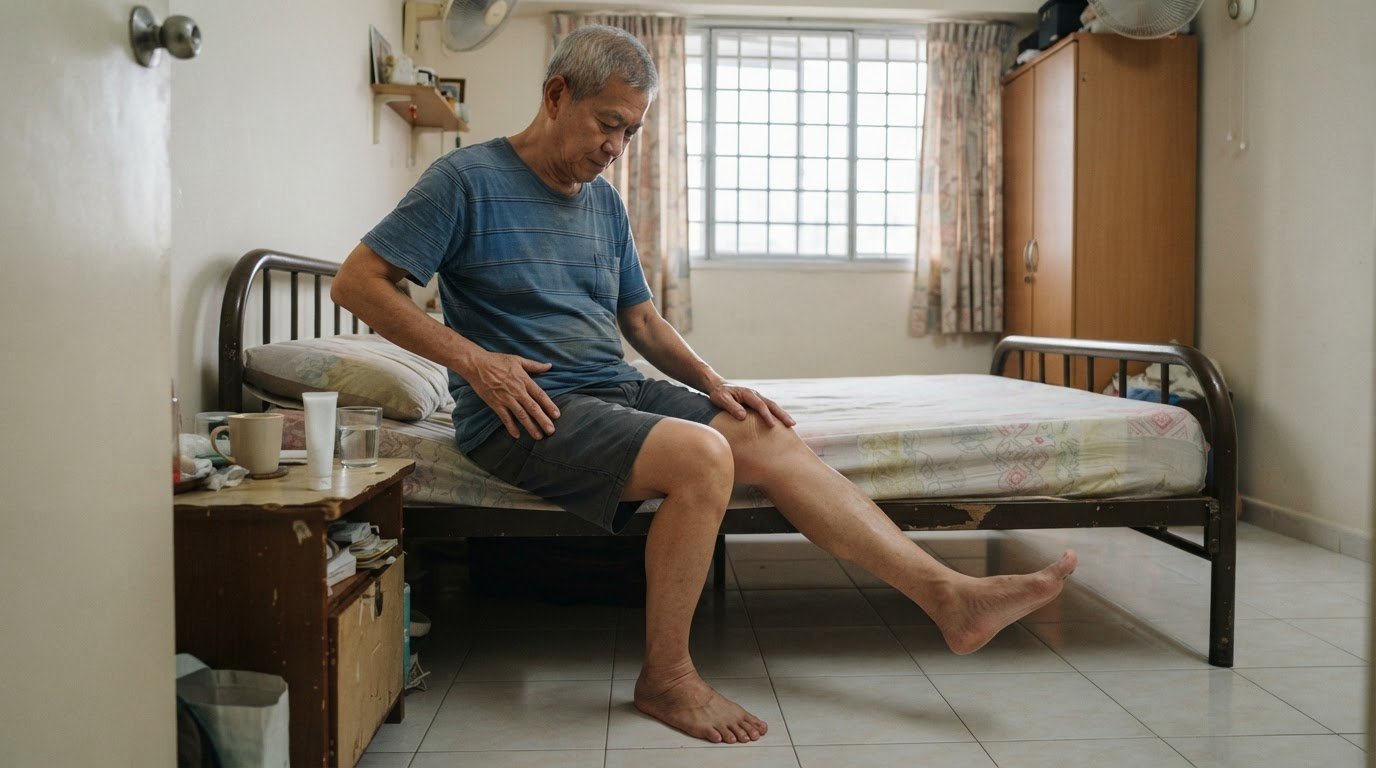
The duration of morning stiffness in fingers and knees can offer a useful clue, but it cannot identify the cause on its own. Osteoarthritis-related stiffness often eases within 30 minutes, while rheumatoid arthritis stiffness can persist beyond one hour. Diet may support overall health, but it isn’t a substitute for understanding the joint pattern or seeking assessment when symptoms persist.
It’s understandable to wonder whether what you eat, how you move, or the way you sleep contributes to morning stiffness in fingers and knees. Stiffness can follow prolonged inactivity, but persistent symptoms may also reflect joint inflammation or other changes that need attention.
This article explains common causes of finger and knee stiffness, how osteoarthritis and rheumatoid arthritis patterns differ, and which signs make medical assessment important. It also covers diet, gentle movement before getting up, and practical ways to protect your joints during the day, helping you understand what may help and when to take symptoms seriously.
Key Takeaways
- How long stiffness lasts and whether it affects matching joints on both sides can help distinguish patterns, but neither feature confirms a diagnosis.
- Diet may support general health, while persistent stiffness still deserves attention to its symptoms and possible causes.
- Stiffness lasting beyond an hour, severe symptoms, or ongoing numbness or tingling are reasons to seek medical assessment.
- Gentle movement and warmth may make it easier to start the day; use a comfortable range of motion rather than forcing a painful joint.
- Regular activity, breaks from prolonged sitting, and simple joint-protection habits can support movement throughout the day.
Table of Contents
Can diet affect morning finger stiffness?
Food choices may support general health, but they cannot explain why fingers feel stiff after sleep. Arthritis symptoms can reflect joint inflammation or structural changes, and no single meal accounts for that pattern. Note whether stiffness affects both hands, the wrists, or the knees, and how long it takes to ease. This record can help a clinician assess whether further evaluation is appropriate.
Arrange medical assessment if morning stiffness lasts more than an hour, is severe, or repeatedly limits daily tasks. Persistent numbness or tingling in your arms or legs alongside joint pain also merits assessment. Stiffness that lasts most of the morning warrants prompt attention. Report swelling, warmth, tenderness, or changes in finger shape, especially if gripping a cup or opening a container becomes difficult.
What tests diagnose rheumatoid arthritis or osteoarthritis in Singapore? Assessment begins with a review of symptoms and a physical examination of the affected joints. A thorough hand examination and X-rays can help identify causes of finger stiffness and guide treatment. Test selection depends on the symptom pattern and examination findings.
Rheumatoid arthritis treatment may combine prescribed medications with movement support. Anti-inflammatory medications are among the possible treatments for finger stiffness, while occupational therapy can help adapt gripping and fine-motor tasks. A guided exercise programme may also focus on comfortable movement and strength. Take prescribed medications as directed, and discuss timing or dosage with the prescribing doctor if stiffness remains concerning.
Corticosteroid injections are another possible treatment for finger stiffness, but suitability depends on the affected joint and symptoms. They are a medical treatment, not a substitute for identifying the cause. A clinician can consider them alongside medication and hand therapy. Describe persistent swelling or difficulty using your hand during assessment, as these details help guide treatment decisions.
Topical creams may ease discomfort for some people, but repeated use may take a couple of weeks before relief is felt. Follow the product directions. Ask a doctor or pharmacist before using an over-the-counter cream, particularly if you already take an oral version of the same medication. Combining topical and oral medicines without advice can create avoidable risks.
Where can I get help for joint stiffness in Singapore, and what are typical consultation costs? A general practitioner or specialist can assess persistent stiffness. Costs depend on the care setting, clinician type, and any investigations needed. Ask about consultation and test charges when arranging an appointment, since these factors shape the total.
Treat food as part of overall wellbeing, not a replacement for assessment or prescribed care. If symptoms continue, record how long they last and which joints are affected, such as fingers, wrists, or knees. This account is more useful for discussing possible arthritis and treatment options than relying on diet alone.
Differences in stiffness duration between osteoarthritis and rheumatoid arthritis
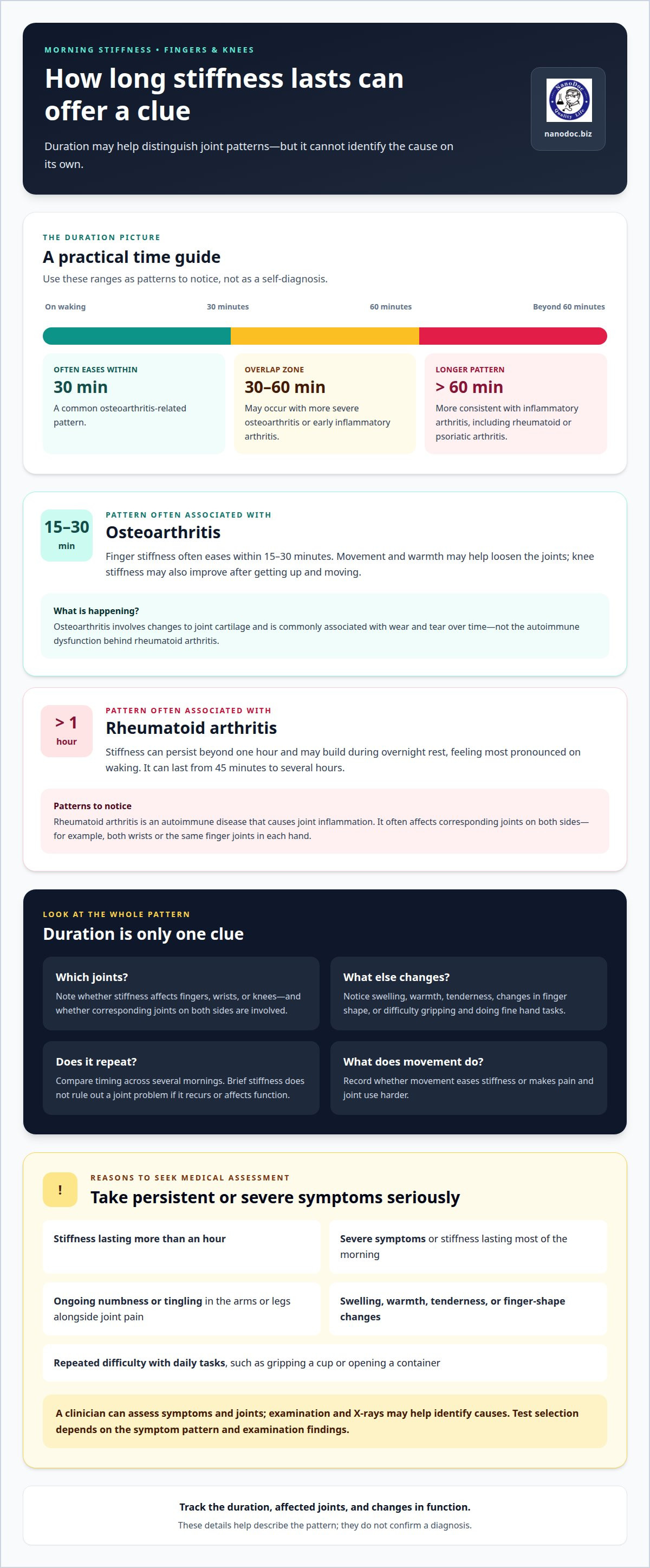
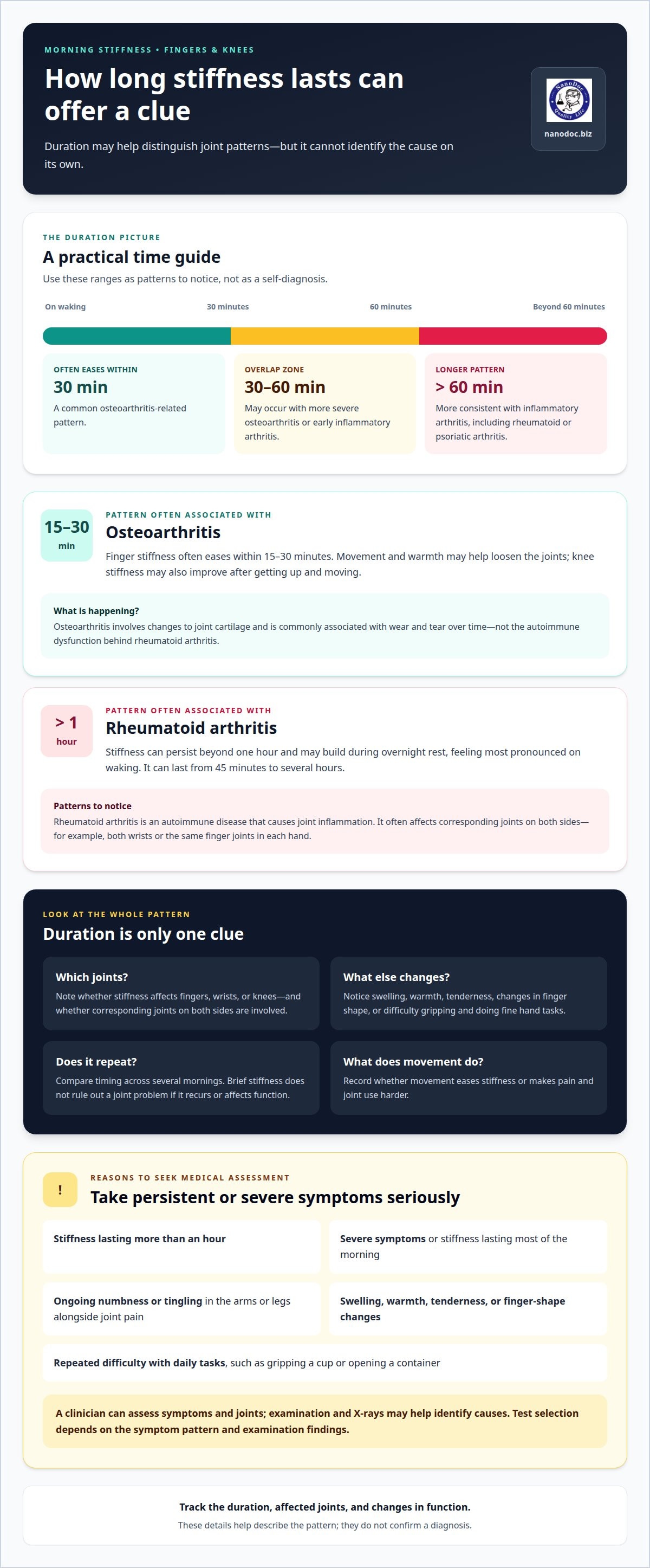
The time stiffness takes to ease can suggest different arthritis patterns. Osteoarthritis-related morning stiffness typically lasts less than 30 minutes, while rheumatoid arthritis stiffness can persist beyond one hour. These ranges are clues, not a diagnosis. Note when stiffness begins, how long it lasts, and which joints are affected. For example, record whether fingers and knees ease at different times after waking.
Rheumatoid arthritis is an autoimmune disease: the immune system attacks joint tissue, causing inflammation. Morning stiffness may build during overnight rest and feel most pronounced on waking. It often affects corresponding joints on both sides, such as both wrists or the same finger joints in each hand. Stiffness lasting 45 minutes to several hours can fit this inflammatory pattern; lasting beyond 60 minutes is more consistent with inflammatory arthritis, including rheumatoid or psoriatic arthritis.
Osteoarthritis follows a different process. It involves changes to joint cartilage and is commonly associated with wear and tear over time, rather than the autoimmune dysfunction behind rheumatoid arthritis. Finger osteoarthritis stiffness often eases within 15-30 minutes as movement and warmth help loosen the joints. Knee stiffness may also improve after getting up and moving. Some osteoarthritis symptoms last longer, so duration alone cannot establish the cause.
The patterns can overlap. Stiffness lasting 30-60 minutes may occur with more severe osteoarthritis or early inflammatory arthritis. A brief episode, even one that eases within a few minutes, does not rule out a joint problem if it recurs or affects function. Compare the timing across several mornings, and note whether movement eases stiffness or pain instead makes it harder to use the joint.
Rheumatoid arthritis may cause swelling, warmth, tenderness, or visible changes in finger shape. It can also affect knees and other joints, and parts of the body beyond joints, including the lungs, eyes, heart, and blood vessels. By contrast, symptoms concentrated in joints affected by cartilage changes may fit osteoarthritis. Difficulty gripping a cup, opening a container, or completing fine hand tasks gives useful context about the impact on daily life.
Early signs matter most when several features appear together. Record how long morning stiffness lasts, whether paired joints are affected, and any swelling or changes in hand strength or movement. Share this pattern during an assessment, especially if stiffness repeatedly lasts beyond an hour or continues for most of the morning. A clinician considers the joint pattern and examination alongside the timeline. Neither a single duration nor one stiff morning can confirm rheumatoid arthritis or osteoarthritis.
Lifestyle and joint-protection tips for seniors in Singapore
Daily movement, comfortable warmth, and sensible pacing can support mobility and make routine tasks easier. The most useful approach considers activity, joint protection, food choices, and possible causes together.
Activity and Joint Protection
Joint protection means reducing avoidable strain while keeping joints moving through comfortable daily activity. Walking, stretching, and changing position after extended sitting can help limit prolonged immobility. During computer use, take regular breaks for gentle hand exercises, such as opening and closing your fingers. If knee discomfort affects a walk, shorten the route or pause rather than forcing painful movement. Weight management may reduce the load on weight-bearing joints, while supportive habits can protect hand mobility during gripping and lifting.
Foods Suggested for Joint Health
A joint-supportive eating pattern means choosing varied, nourishing foods without expecting one ingredient to remove stiffness. Include vegetables, fruit, whole grains, and sources of protein across meals. For example, add vegetables to lunch and fruit to breakfast. These choices support general nutrition, but they don’t diagnose arthritis or replace assessment. Track whether a food pattern coincides with symptoms, rather than removing several foods at once and making the cause harder to identify.
Several causes can affect movement in the morning. Joints may stay still for hours during sleep, and osteoarthritis can involve cartilage changes and reduced smooth movement. Inflammatory arthritis, including rheumatoid arthritis, involves a different process. Sleep position may also matter: curled hands or bent wrists can compress nerves and contribute to stiffness on waking. Note which joints are affected and whether swelling, warmth, or tenderness appears.
Can medications cause morning stiffness or joint pain? Medication-related muscle or joint symptoms are possible, especially when symptoms follow starting or adjusting a medicine. Record the medicine and symptom timing, then discuss the pattern with the prescriber. Don’t stop or change prescribed treatment on your own.
For a practical morning routine, use a warm compress or warm shower to ease tight muscles before dressing. A damp, soft towel can be heated in a microwave for 20 seconds, then wrapped around a stiff joint. Move gently afterwards, and change position during the day if sitting for long periods. These measures support movement, but persistent symptoms still need attention to their pattern and impact.
For older adults, hand stiffness lasting longer than 30 minutes can suggest joint involvement beyond ordinary wear and tear. Seek medical assessment for severe symptoms or stiffness that lasts most of the morning. New swelling, ongoing numbness or tingling, or difficulty gripping a cup are concrete changes to report. Tracking the affected joints and the time stiffness takes to ease can make the discussion more precise.
Gentle range-of-motion exercises before getting up
Gentle movement before standing can help loosen stiff fingers, wrists, knees, and ankles. Try moving each affected joint through a comfortable range of motion five to 10 times. These exercises are not a test of strength: stop short of forcing a joint through pain, and begin with small movements while seated or lying down.
For stiff hands, slowly open and close both hands, then try tendon-glide movements. Bend and straighten the fingers gradually, keeping each motion controlled rather than gripping tightly. The suggested routine is 10 repetitions upon waking. If fingers feel tight, begin with smaller movements and increase their range only as comfort allows. A physiotherapist can tailor movement therapy when arthritis or another disease affects hand function.
- Hands: Slowly open and close them five to 10 times, keeping the movement comfortable.
- Wrists: Make gentle circles in each direction before sitting up.
- Ankles: Try ankle circles and ankle pumps while still in bed.
- Knees and hips: Bend and straighten gently without forcing the joints.
Warm water can make a hand routine more comfortable. Soak stiff hands in warm water for five to 10 minutes, then open and close them 10-15 times during the soak. Another option is a warm shower before dressing. Use warmth as preparation for gentle movement, not as a reason to keep exercising through discomfort.
A prayer stretch can gently lengthen the palms and wrists. Bring the palms together in front of the chest, then lower the hands until a mild stretch is felt. Hold for 30 seconds and repeat three times. Keep the shoulders relaxed; reduce the stretch if it causes pain. This sequence is distinct from tendon glides, which move individual fingers through controlled positions.
Movement can continue after you get out of bed. Daily stretching may help loosen joints and maintain range of motion, while walking adds activity for the knees and hips. Change position after sitting for an extended period, and use a warm towel or heating pad before moving when stiffness is prominent. A simple sequence is warmth, comfortable joint movement, then a gradual transition to standing.
What exercises and home remedies can ease morning joint stiffness? Try comfortable finger opening and closing, wrist circles, ankle pumps, and gentle knee bends before standing. Warm water or a warm shower can prepare stiff joints for movement. Keep each stretch controlled and within a comfortable range.
Causes of morning finger stiffness
Finger stiffness after sleep can arise from joint changes, inflammation, or prolonged inactivity. During the overnight hours, hands may stay still for hours, so stiffness can be more noticeable when you wake. A curled hand or bent wrist position may also compress nerves and limit blood flow. Notice whether symptoms ease once your morning routine makes your hands active.
In osteoarthritis, cartilage covering the ends of bones can break down, and limited movement overnight may reduce joint lubrication. This can make fingers feel tight when you first bend them. Morning stiffness from finger osteoarthritis often eases within 15-30 minutes of movement and warming. If stiffness lasts longer, that timing alone doesn’t identify a different disease, but it adds useful context.
Rheumatoid arthritis has a different cause: the immune system attacks joints, creating inflammation that can damage them over time. Inflammatory stiffness may build during overnight rest and peak in the morning. Rheumatoid arthritis often affects corresponding joints on both sides, such as matching finger joints or wrists. Swelling, warmth, tenderness, or changing finger shape can occur alongside stiffness.
Psoriatic arthritis is another inflammatory condition that may be considered when finger symptoms persist. Stiffness duration alone doesn’t distinguish it from rheumatoid arthritis. Instead, note which joints are affected, whether both hands follow a similar pattern, and whether swelling or tenderness accompanies restricted movement. This record can help describe how symptoms change from waking through the day.
Sleep position can contribute to symptoms without being the only cause. For example, waking with tingling after sleeping with bent wrists may point to nerve compression as one possible factor. Poor or insufficient sleep can also increase pain and its perception. A stressful night may coincide with stronger discomfort, but stress alone doesn’t establish why a joint is stiff.
Compare several mornings rather than relying on one episode. Record which fingers are affected, any wrist or knee symptoms, how long stiffness lasts, and whether movement eases it. Also note changes in grip, such as difficulty turning a key or opening a jar. Persistent stiffness, visible swelling, or reduced hand function calls for assessment. A thorough hand examination and X-rays can help identify the cause and guide treatment.
The key distinction is pattern, not one isolated symptom: overnight inactivity and joint changes can cause stiffness, while persistent inflammation may involve multiple matching joints. If discomfort also affects daily hand use, explore options for joint comfort as part of considering supportive care.
NanoDoc International Pte
NanoDoc International Pte Ltd offers health and personal-care products for readers considering supportive care alongside practical joint-protection habits. Its range includes Pain Relief Care and Nano Cellular Essential Nutrition, as well as Anti-Ageing Skin Care and Oral & Immunity Care. These products do not diagnose a condition or replace medical assessment when stiffness is prolonged, severe, or accompanied by swelling or numbness.
For morning discomfort, Pain Relief Care may suit readers exploring topical support, while nutrition products can complement broader wellness routines. Follow product directions and consider your existing medicines; discuss persistent symptoms with a healthcare professional. Explore NanoDoc International Pte Ltd’s health and personal-care products to find options that may fit your routine.
Take the Next Step Toward More Comfortable Mornings
Use what you’ve noticed to make your next decision deliberate. Changes in how your hands or knees feel can be more informative than one difficult morning, especially when everyday activities such as dressing, preparing breakfast, or holding a cup are affected. Focus on what matters to you: moving more easily and maintaining independence in your routine.
If morning stiffness in fingers and knees continues to affect daily life, share your observations with a healthcare professional for assessment. Personal-care and nutrition products may be considered as supportive options, but they don’t diagnose arthritis or replace medical care. NanoDoc International Pte Ltd offers Anti-Ageing Skin Care, Nano Cellular Essential Nutrition, and Pain Relief Care.
For information about the company’s offerings, contact NanoDoc International Pte Ltd. A thoughtful next step can help you approach mornings with greater clarity and confidence.
Frequently Asked Questions
Why are my fingers stiffer in cold weather?
Cold weather can make finger stiffness feel more noticeable, but cold alone doesn’t identify the cause. If your hands feel tight after being outdoors, warm them gradually and try gentle finger movements before gripping objects. Notice whether stiffness also happens indoors or persists after warming up. Repeated symptoms, especially with swelling or difficulty buttoning a shirt, are worth discussing during a medical assessment.
How to tell if you have arthritis in your hands?
Symptoms alone can’t confirm hand arthritis, but changes in everyday tasks can help reveal a pattern. Note whether turning a key, fastening buttons, or holding a pen has become harder, and whether one or both hands are affected. A clinician assesses the joints and may use X-rays to help identify the cause. Track changes rather than relying on a single difficult morning.
Is RA inherited?
Rheumatoid arthritis isn’t inherited in a simple, guaranteed way. A family history may be relevant, but it can’t establish whether you’ll develop the disease. If a close relative has rheumatoid arthritis, pay attention to persistent joint symptoms rather than assuming they have the same cause. For example, record recurring stiffness or swelling and discuss it during an assessment. Family history is context, not a diagnosis.
Should I push through the stiffness or rest my hands?
Use gentle movement, but don’t force a painful hand through its full range. Slowly opening and closing your fingers can help you gauge what feels comfortable before starting tasks such as making breakfast. If a movement increases pain or swelling, stop and rest the affected hand. Prolonged inactivity can leave joints feeling tighter, so choose comfortable movement over strenuous gripping or complete immobilisation.
What Happens If It’s Ignored?
Ignoring persistent inflammatory symptoms can delay recognition of a condition that may damage joints over time. Ongoing problems can also interfere with practical tasks such as dressing, cooking, or holding a phone. Rheumatoid arthritis may affect parts of the body beyond joints, including the eyes, lungs, heart, and blood vessels. Seek assessment for persistent swelling, worsening function, or symptoms that continue to disrupt daily activities.
What Is Rheumatoid Arthritis?
Rheumatoid arthritis is a chronic autoimmune disease in which the immune system attacks joints, causing inflammation and possible joint damage over time. It can affect fingers, wrists, and knees, and often involves corresponding joints on both sides. For example, symptoms may appear in matching finger joints rather than just one isolated area. The disease can also affect parts of the body beyond joints, so persistent symptoms need proper assessment.
When Does It Usually Begin?
Rheumatoid arthritis commonly begins between ages 40 and 60, though diagnosis can occur later. In Singapore, seniors may be diagnosed in their 50s or 60s, and a later diagnosis is possible. Age alone can’t confirm or rule out rheumatoid arthritis. If recurring joint symptoms affect tasks such as opening containers or walking comfortably, describe the timing and impact during an assessment, whatever your age.
What causes morning stiffness in fingers and knees?
Morning stiffness can follow hours of limited movement during sleep, but joint changes or inflammation may also contribute. In osteoarthritis, cartilage breakdown and reduced movement can affect how smoothly a joint moves. In inflammatory arthritis, inflammation may build during overnight rest. Sleep position matters too: curled hands or bent wrists can compress nerves. Note which joints feel stiff and how symptoms change after you get up.
Frequently Asked Questions
- Why are my fingers stiffer in cold weather?
- Cold weather can make finger stiffness feel more noticeable, but cold alone doesn’t identify the cause. If your hands feel tight after being outdoors, warm them gradually and try gentle finger movements before gripping objects. Notice whether stiffness also happens indoors or persists after warming up. Repeated symptoms, especially with swelling or difficulty buttoning a shirt, are worth discussing during a medical assessment.
- How to tell if you have arthritis in your hands?
- Symptoms alone can’t confirm hand arthritis, but changes in everyday tasks can help reveal a pattern. Note whether turning a key, fastening buttons, or holding a pen has become harder, and whether one or both hands are affected. A clinician assesses the joints and may use X-rays to help identify the cause. Track changes rather than relying on a single difficult morning.
- Is RA inherited?
- Rheumatoid arthritis isn’t inherited in a simple, guaranteed way. A family history may be relevant, but it can’t establish whether you’ll develop the disease. If a close relative has rheumatoid arthritis, pay attention to persistent joint symptoms rather than assuming they have the same cause. For example, record recurring stiffness or swelling and discuss it during an assessment. Family history is context, not a diagnosis.
- Should I push through the stiffness or rest my hands?
- Use gentle movement, but don’t force a painful hand through its full range. Slowly opening and closing your fingers can help you gauge what feels comfortable before starting tasks such as making breakfast. If a movement increases pain or swelling, stop and rest the affected hand. Prolonged inactivity can leave joints feeling tighter, so choose comfortable movement over strenuous gripping or complete immobilisation.
- What Happens If It’s Ignored?
- Ignoring persistent inflammatory symptoms can delay recognition of a condition that may damage joints over time. Ongoing problems can also interfere with practical tasks such as dressing, cooking, or holding a phone. Rheumatoid arthritis may affect parts of the body beyond joints, including the eyes, lungs, heart, and blood vessels. Seek assessment for persistent swelling, worsening function, or symptoms that continue to disrupt daily activities.
- What Is Rheumatoid Arthritis?
- Rheumatoid arthritis is a chronic autoimmune disease in which the immune system attacks joints, causing inflammation and possible joint damage over time. It can affect fingers, wrists, and knees, and often involves corresponding joints on both sides. For example, symptoms may appear in matching finger joints rather than just one isolated area. The disease can also affect parts of the body beyond joints, so persistent symptoms need proper assessment.
- When Does It Usually Begin?
- Rheumatoid arthritis commonly begins between ages 40 and 60, though diagnosis can occur later. In Singapore, seniors may be diagnosed in their 50s or 60s, and a later diagnosis is possible. Age alone can’t confirm or rule out rheumatoid arthritis. If recurring joint symptoms affect tasks such as opening containers or walking comfortably, describe the timing and impact during an assessment, whatever your age.
- What causes morning stiffness in fingers and knees?
- Morning stiffness can follow hours of limited movement during sleep, but joint changes or inflammation may also contribute. In osteoarthritis, cartilage breakdown and reduced movement can affect how smoothly a joint moves. In inflammatory arthritis, inflammation may build during overnight rest. Sleep position matters too: curled hands or bent wrists can compress nerves. Note which joints feel stiff and how symptoms change after you get up.