
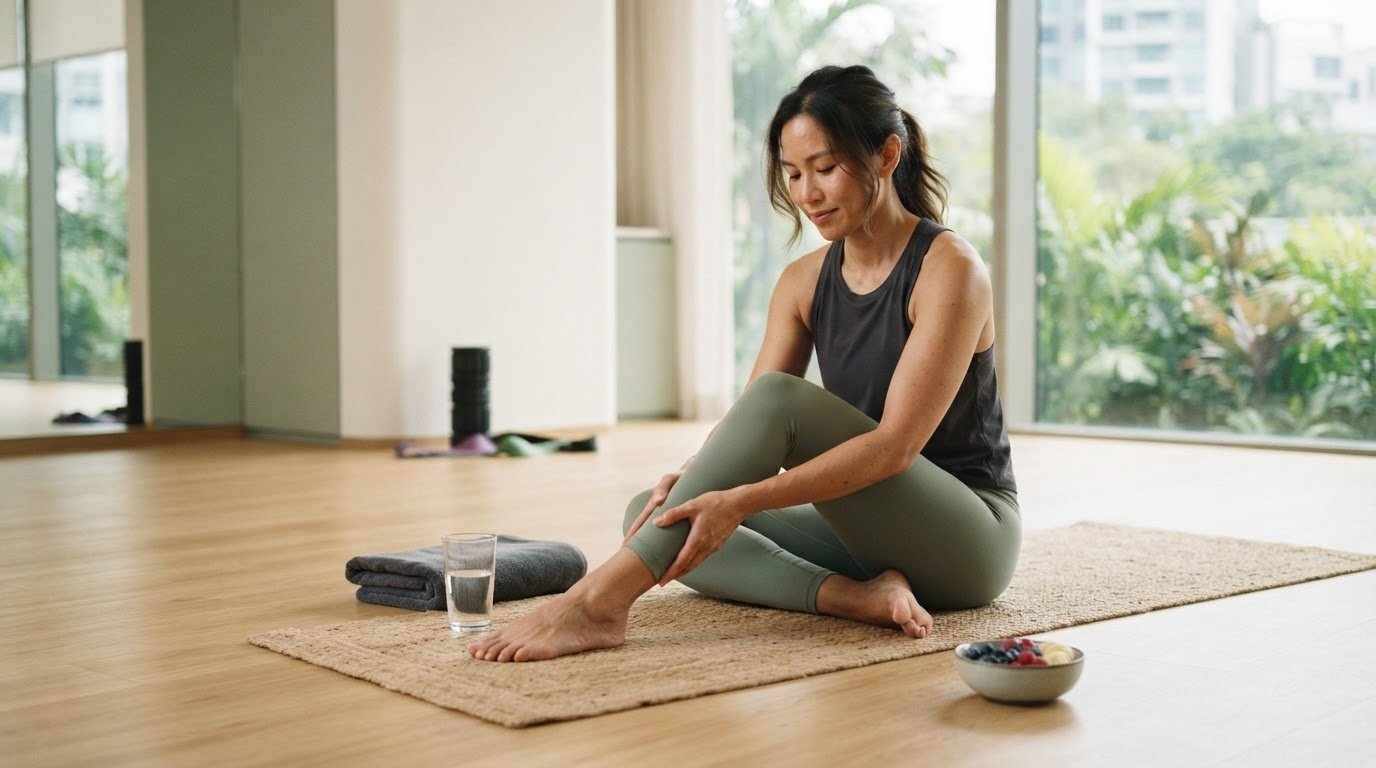
Recovery starts with patience, not another hard workout. Delayed onset muscle soreness (DOMS) commonly begins 24 to 72 hours after strenuous or unfamiliar exercise, usually peaks around 24 to 48 hours, and often eases within a few days. Knowing how to reduce muscle soreness after gym sessions can help you stay active without pushing sore muscles too hard.
That ache can make your next workout feel uncertain, especially when you’re deciding whether to rest, move gently, or try a recovery aid. This guide explains what causes post-workout soreness, how long it may last, and practical ways to manage it. You’ll also learn how massage, everyday foods, and supplements may fit into recovery, and when pain could signal something beyond typical DOMS.
Key Takeaways
- DOMS commonly begins 24 to 72 hours after strenuous or unfamiliar exercise, then eases over the following days.
- Prioritise sleep, hydration, and recovery time, and avoid intense training with muscles that are significantly sore.
- Gentle movement and massage may help manage stiffness, but they don't replace rest while muscles recover.
- Build post-workout meals around protein and carbohydrates, and learn which whole foods may support soreness management.
- Recognise when pain may be more than typical soreness, especially if it is sharp, severe, or persistent.
Table of Contents
- 1. What causes sore muscles after a workout?
- 2. Is there a connection between DOMS and lactic acid?
- 3. Delayed onset muscle soreness: How soon does it set in and how long can it last?
- 4. Massage for muscle tightness
- 5. Foods and supplements for soreness
- NanoDoc International Pte Ltd: Anti-Ageing Skin Care
1. What causes sore muscles after a workout?
Soreness during exercise or immediately afterwards is commonly linked to muscle fatigue. Delayed onset muscle soreness (DOMS), by contrast, develops as muscles recover after unfamiliar or demanding activity. It can affect someone new to training or someone who has changed a routine’s type, intensity, or duration. If you’re wondering how to reduce muscle soreness after gym sessions, first consider whether the discomfort began during exercise or appeared later.
Eccentric exercises are especially likely to trigger DOMS because the muscle produces force while lengthening. Examples include lowering a bicep curl, descending during a pull-up, walking downhill, doing lunges, and landing from a jump. These movements challenge muscle tissue during its lengthening phase. If you’ve added several to one session, soreness may be more noticeable afterwards.
Recovery depends partly on giving the body time to repair. Aim for 7 to 9 hours of sleep, and include at least one rest day per week from training. Rest doesn’t always mean staying still: if soreness is mild, gentle activity can keep you moving without repeating a hard session for the same muscles. If soreness is severe or limits your range of motion, allow more recovery before training those muscles again.
Nutrition supports the work muscles do after exercise. Include protein for muscle repair and carbohydrates to fuel your next workout. One practical step is eating both within one hour of exercise. For example, pair a protein source with rice, fruit, or another carbohydrate-rich food. Healthy fats can also be part of a balanced diet. No single meal replaces sleep, hydration, and suitable recovery time.
Light movement can ease stiffness without adding another intense workout. Try 10 to 20 minutes of gentle activity, such as an easy walk, comfortable stretching, or relaxed yoga. A 20-minute walk is one option when ordinary movement feels manageable. Warm up for 10 to 15 minutes before exercise, then cool down with easy movement for around 5 to 10 minutes. Increase training demands gradually rather than making several major changes at once.
Heat and ice can help in different ways: cold therapy may reduce pain and inflammation, while heat can increase blood flow and relieve stiffness. Choose cold when pain or inflammation is the main concern, and heat when stiffness is more prominent. To reduce muscle soreness after gym sessions, combine rest, sleep, hydration, and gentle movement, and avoid intense exercise while muscles are sore. Seek medical care for severe swelling, unusually dark or bloody urine, sharp constant pain, or soreness lasting more than a week, as these can signal a serious problem.
2. Is there a connection between DOMS and lactic acid?
Lactic acid is often blamed for soreness that appears after exercise, but the timing matters. Muscle fatigue is associated with discomfort during or just after activity, while delayed onset muscle soreness (DOMS) is linked to muscle recovery. A hard set may leave muscles tired immediately, while soreness that develops later follows a different process. Hydration supports exercise and recovery, but drinking water does not erase DOMS.
For a practical hydration routine, drink fluids during exercise rather than waiting until the session ends. One suggestion is 8 ounces of water every 15 to 30 minutes of exercise. Another simple cue is to take a sip after each set or every five minutes of cardio. These steps help make drinking part of the workout, especially during a longer session.
After exercise, drink fluids and replace electrolytes, particularly after a session that leaves you sweating heavily. One recommendation is 8 ounces of water for every pound lost during a workout. Treat that as a recovery guide, not a reason to force large amounts quickly. Rehydrate steadily, and include a meal or snack that supplies protein and carbohydrates.
A suggested post-workout combination is 25 grams of protein and 50 grams of carbohydrates. For example, pair eggs or tofu with rice, or yoghurt with fruit and oats. The specific foods can vary; the useful step is including both nutrients after training. Magnesium supplements are another consideration, but consult a healthcare provider or dietitian before starting one. Supplements shouldn’t replace food, fluids, or a suitable training routine.
To prevent soreness when starting or increasing gym workouts, add new activity gradually and change one training demand at a time. For running, increase weekly volume by 10% or less. Before a session, warm up with easy movement followed by dynamic stretches; after it, cool down with relaxed movement. These steps prepare the body for exercise and help make changes to your fitness routine more manageable.
Keep hydration simple: bring a water bottle, take regular sips, and drink after your session. If exercise is prolonged or sweat loss is substantial, include fluids that replace electrolytes. Muscle soreness that feels sharp, worsens with movement, or alters how you walk may point to injury rather than routine DOMS. Nutrition also matters beyond workout timing; explore nutrition support as one option alongside balanced meals and recovery habits.
3. Delayed onset muscle soreness: How soon does it set in and how long can it last?
Delayed onset muscle soreness, usually shortened to DOMS, typically develops 24 to 72 hours after strenuous or unfamiliar exercise. You may finish a workout feeling tired but notice muscle tenderness the next day. Its delayed onset distinguishes it from discomfort during exercise or immediately afterwards, which is more closely associated with muscle fatigue.
DOMS commonly peaks around 24 to 48 hours after activity. It may continue past 72 hours, then usually improves over a few days and rarely lasts more than five days. The timing can make it difficult to connect soreness with a particular session, especially after a new routine or a change in training intensity, duration, or type.
DOMS is associated with muscle recovery after demanding activity. Eccentric movements are a common trigger because the muscle produces force while lengthening. Examples include lowering into a squat, descending stairs, lunging, or landing after a jump. These actions challenge muscle tissue differently from movements where the muscle shortens, so unfamiliar repetitions can leave the affected area tender.
As DOMS develops, ordinary movements such as sitting down, climbing stairs, or lifting your arms may feel uncomfortable. Mild soreness can improve with moderate activity, but avoid intense exercise that targets sore muscles. If pain limits your range of motion, give those muscles more time to recover. An intense session can require more than 24 hours of recovery, and severe DOMS may call for a day or multiple days of complete rest.
Gentle stretching or easy movement can help you stay mobile, but don’t force a stretch through sharp pain. Soreness should generally improve over time rather than become progressively more painful. Pain that persists beyond three days may mean the muscles were overworked or an injury is present. Pain lasting more than a week may also indicate injury rather than typical DOMS.
Pay attention to symptoms beyond a dull muscle ache. Seek medical care if pain lasts more than a week, remains sharp and constant, or occurs with severe muscle swelling. Unusually dark or bloody urine also requires medical attention. Sharp pain that worsens with movement, muscle spasms, or numbness and tingling differs from ordinary soreness. If you repeatedly need pain medicine for DOMS, consult a healthcare provider. Joint pain or difficulty moving a limb without pain after a couple of days can also warrant prompt evaluation.

4. Massage for muscle tightness
Massage may help manage stiffness after a demanding workout by increasing blood flow to sore muscles. It can ease tightness and make ordinary movement feel more comfortable. That is symptom relief, not proof that muscle tissue has healed faster. Treat massage as one part of recovery, alongside rest and suitably gentle activity.
Timing can influence how massage feels. A research review identified about 48 hours after a workout as the timing with the highest efficacy for massage to relieve DOMS. This is a useful point to consider if soreness builds the day after training. Avoid pressure that intensifies pain, particularly if the discomfort is sharp or movement is restricted.
Foam rolling offers a practical self-massage option. The cylindrical tool uses body weight to apply pressure across muscles. After a workout, roll slowly over large muscle groups such as the quads, hamstrings, calves, and glutes. One suggested routine is 10 to 15 minutes of foam rolling before stretching. Keep the pressure manageable rather than forcing the roller across painful areas.
Evidence has limits: foam rolling after exercise isn’t supported as a way to change normal muscle healing or reduce soreness in a way that improves performance. It may still help manage stiffness. For a gentle approach, roll a muscle group briefly, pause on a tender area without pressing hard, then move on. Stop if you feel sharp pain, tingling, or numbness.
Self-massage with your hands can target a small area, such as a tight calf or shoulder. Use steady, comfortable pressure and short strokes. Don’t press directly on a joint or force a muscle through painful movement. Sports massage may use more focused techniques for training-related tightness. Keep the session tolerable, especially when fatigue or DOMS has made the area sensitive.
In Singapore, gym or clinic recovery options may include sports massage and guided recovery sessions; fees depend on the service type and session length. Ask what the session includes before booking, and choose pressure that suits your current soreness. Massage is not appropriate for every problem: severe swelling, persistent sharp pain, or symptoms suggesting an injury need medical attention rather than deeper pressure.
For a simple sequence, wait until post-workout tightness is apparent, use gentle foam rolling or massage, then follow with comfortable stretching. Foam rolling soon after exercise and every 24 hours thereafter is another suggested approach for soreness management. Keep the goal modest: reduce stiffness and support motion while your body completes its normal recovery process.
5. Foods and supplements for soreness
Food supports muscle repair, but no single ingredient removes soreness immediately. A suggested post-workout intake is 25 grams of protein and 50 grams of carbohydrates. Pair tofu or eggs with rice, or yoghurt with fruit and oats. For readers asking how to reduce muscle soreness after gym sessions, this balanced combination offers a practical starting point rather than relying on one “recovery” food.
Timing can make post-workout nutrition easier to plan. One recommendation is to eat protein and carbohydrates within one hour after training. Choose familiar options that suit your routine, such as fish with rice and leafy greens or beans with bread and fruit. The meal can vary with your appetite and preferences; the key is including both nutrients after exercise.
Some everyday foods have anti-inflammatory properties that may help reduce muscle soreness. These include tomatoes, olive oil, green leafy vegetables, nuts, fatty fish, and fruits, especially berries. Add tomatoes and leafy greens to a meal, use olive oil in cooking, or have nuts and berries as snacks. A varied diet makes these foods practical choices, rather than treating any single ingredient as a cure.
Take a considered approach to supplements. Consult a healthcare provider or dietitian before starting magnesium supplements, particularly if you take medicine or have health concerns. Supplements don’t replace balanced meals, fluids, or recovery time. Review your usual food choices first, then discuss whether magnesium is appropriate for your circumstances. This is especially relevant if you’re considering supplements because soreness keeps returning.
Pain relievers can ease discomfort, but they don’t speed muscle healing. Using them to continue training at the same intensity may mask soreness without making your muscles ready for another demanding session. If you often need pain medicine because DOMS recurs, consult a healthcare provider. Don’t use reduced pain alone as a signal to return to heavy lifting or intense exercise.
For a practical decision, match your activity to how your muscles feel. If ordinary movement is comfortable, gentle activity may be suitable; if soreness limits your range of motion, allow more time to recover. Rolling or stretching shouldn’t become another high-intensity session. An easy walk, for example, requires less strength and effort than a hard workout. Stop if movement causes sharp pain or worsens discomfort.
A useful way to think about how to reduce muscle soreness after gym training is to combine steady meal habits with appropriate recovery, rather than expecting a supplement to act alone. Pair protein with carbohydrates after exercise, then include vegetables, fruit, nuts, or fatty fish in regular meals. Explore nutrition support as one option alongside food-based recovery habits.
NanoDoc International Pte Ltd: Anti-Ageing Skin Care
NanoDoc International Pte Ltd offers Pain Relief Care and Nano Cellular Essential Nutrition for readers considering product support alongside established recovery habits. Pain Relief Care is relevant when post-workout discomfort is part of the concern; nutrition products may complement a balanced approach to nourishment. Neither replaces rest, gradual training changes, or medical attention for sharp pain, severe swelling, or unusually dark urine. Anti-Ageing Skin Care is another area of the company’s range, but it does not address muscle soreness directly. Choose recovery steps according to the problem: use gentle movement for manageable stiffness, allow sore muscles time to recover, and seek medical care for concerning symptoms. For more information about NanoDoc International Pte Ltd’s offerings, visit nanodoc.biz.
Build a Recovery Routine That Supports Your Next Session
Use your next workout as a chance to learn how your body responds. Note which movements feel comfortable, which areas remain sore, and whether daily activities become easier over time. That simple record can help you adjust exercise intensity and choose a sensible return to demanding movements. Knowing how to reduce muscle soreness after gym sessions isn’t about finding one shortcut; it’s about making recovery choices that suit your training and how your body responds.
For product support alongside those habits, NanoDoc International Pte Ltd offers Pain Relief Care and Nano Cellular Essential Nutrition. Its range also includes Anti-Ageing Skin Care. These products complement a focus on recovery and wellbeing, while rest, appropriate movement, and balanced meals remain part of a considered routine.
Explore the options or contact NanoDoc International Pte to learn more. Keep your next step measured, and give your training the time and consistency needed to move forward.
Frequently Asked Questions
Delayed onset muscle soreness: How soon does it set in and how long can it last?
DOMS usually starts 24 to 72 hours after strenuous or unfamiliar exercise, peaks around 24 to 48 hours, and often improves over a few days. It rarely lasts more than five days. If you’re tracking recovery, note when discomfort begins and whether it eases during everyday tasks, such as climbing stairs. Pain that worsens or persists beyond a week needs medical attention.
What Is DOMS?
DOMS is muscle soreness that develops after demanding or unfamiliar exercise, rather than during the activity itself. For example, your legs might feel tender the day after trying a new class, even if the session felt manageable at the time. Muscle fatigue can cause discomfort during or just after exercise; DOMS develops later as muscles recover. The timing and pattern help distinguish the two.
How sore is too sore?
A dull ache that eases as you recover differs from sharp, constant, or worsening pain. Seek medical care for severe muscle swelling, unusually dark or bloody urine, or pain lasting more than a week. Sharp pain, spasms, numbness, or tingling also warrant prompt advice. If soreness persists beyond three days alongside restricted movement or an altered gait, seek an evaluation.
Do over-the-counter pain relievers help?
Pain relievers can ease discomfort, but they don’t speed muscle healing. Relief may make daily activities feel more manageable, yet it doesn’t show that sore muscles are ready for intense training. Avoid using reduced pain as your only guide for returning to heavy lifting or high-effort exercise. If you often need pain medicine for post-workout soreness, consult a healthcare provider about the recurring pattern.
Does lactic acid cause soreness?
Lactic acid isn’t considered the cause of DOMS that appears later. Discomfort during or immediately after a hard set is more closely associated with muscle fatigue, while delayed soreness develops on a different timeline. For example, feeling tired after cycling and noticing tenderness the following day are not necessarily the same process. Hydration supports recovery, but drinking water doesn’t directly remove delayed soreness.
Is there a connection between DOMS and lactic acid?
They’re associated with different aspects of exercise; DOMS is not caused by lactic acid. Muscle fatigue may accompany strenuous activity, while DOMS appears later, often after unfamiliar movements or a change in training demands. Use timing as a practical clue: discomfort during a workout differs from tenderness that develops later. If pain is sharp or progressively worsening, don’t assume it’s ordinary DOMS.
Muscle Soreness After a Workout: Can It Be Prevented?
You can reduce the chance of pronounced soreness by introducing new exercises gradually, warming up, and avoiding sudden increases in training demand. Before a session, use 10 to 15 minutes of warm-up activity. For running, increase weekly volume by 10% or less. Include a rest day from training each week, and change your routine progressively rather than increasing duration, intensity, and load all at once.
What Helps Muscles Recover More Quickly?
Support recovery with sleep, fluids, and a suitable meal after exercise. Pair protein with carbohydrates, and avoid another intense session for muscles that remain significantly sore. For example, if your legs are tender, train a different muscle group or choose gentle activity instead. Massage or foam rolling may help manage stiffness, but neither replaces recovery time. Sharp pain, severe swelling, or dark urine calls for medical attention.
Frequently Asked Questions
- Delayed onset muscle soreness: How soon does it set in and how long can it last?
- DOMS usually starts 24 to 72 hours after strenuous or unfamiliar exercise, peaks around 24 to 48 hours, and often improves over a few days. It rarely lasts more than five days. If you’re tracking recovery, note when discomfort begins and whether it eases during everyday tasks, such as climbing stairs. Pain that worsens or persists beyond a week needs medical attention.
- What Is DOMS?
- DOMS is muscle soreness that develops after demanding or unfamiliar exercise, rather than during the activity itself. For example, your legs might feel tender the day after trying a new class, even if the session felt manageable at the time. Muscle fatigue can cause discomfort during or just after exercise; DOMS develops later as muscles recover. The timing and pattern help distinguish the two.
- How sore is too sore?
- A dull ache that eases as you recover differs from sharp, constant, or worsening pain. Seek medical care for severe muscle swelling, unusually dark or bloody urine, or pain lasting more than a week. Sharp pain, spasms, numbness, or tingling also warrant prompt advice. If soreness persists beyond three days alongside restricted movement or an altered gait, seek an evaluation.
- Do over-the-counter pain relievers help?
- Pain relievers can ease discomfort, but they don’t speed muscle healing. Relief may make daily activities feel more manageable, yet it doesn’t show that sore muscles are ready for intense training. Avoid using reduced pain as your only guide for returning to heavy lifting or high-effort exercise. If you often need pain medicine for post-workout soreness, consult a healthcare provider about the recurring pattern.
- Does lactic acid cause soreness?
- Lactic acid isn’t considered the cause of DOMS that appears later. Discomfort during or immediately after a hard set is more closely associated with muscle fatigue, while delayed soreness develops on a different timeline. For example, feeling tired after cycling and noticing tenderness the following day are not necessarily the same process. Hydration supports recovery, but drinking water doesn’t directly remove delayed soreness.
- Is there a connection between DOMS and lactic acid?
- They’re associated with different aspects of exercise; DOMS is not caused by lactic acid. Muscle fatigue may accompany strenuous activity, while DOMS appears later, often after unfamiliar movements or a change in training demands. Use timing as a practical clue: discomfort during a workout differs from tenderness that develops later. If pain is sharp or progressively worsening, don’t assume it’s ordinary DOMS.
- Muscle Soreness After a Workout: Can It Be Prevented?
- You can reduce the chance of pronounced soreness by introducing new exercises gradually, warming up, and avoiding sudden increases in training demand. Before a session, use 10 to 15 minutes of warm-up activity. For running, increase weekly volume by 10% or less. Include a rest day from training each week, and change your routine progressively rather than increasing duration, intensity, and load all at once.
- What Helps Muscles Recover More Quickly?
- Support recovery with sleep, fluids, and a suitable meal after exercise. Pair protein with carbohydrates, and avoid another intense session for muscles that remain significantly sore. For example, if your legs are tender, train a different muscle group or choose gentle activity instead. Massage or foam rolling may help manage stiffness, but neither replaces recovery time. Sharp pain, severe swelling, or dark urine calls for medical attention.