

Rebuilding facial collagen calls for a combination of protective skincare, adequate nutrients and, where appropriate, cosmetic treatments. If you’re exploring how to rebuild collagen in the face, practical steps include daily sun protection, vitamin C, protein-rich foods and treatments such as microneedling, laser or focused ultrasound, which may stimulate collagen production. No single step restores collagen overnight.
It’s understandable to look for a clear way to support firmer-looking skin, particularly as collagen production gradually slows with age. A useful approach is to understand collagen’s role and how different strategies work, then weigh everyday care against professional treatments.
This article explains collagen’s role in skin, why vitamin C and other dietary nutrients matter, and what skincare can realistically contribute. It also covers cosmetic treatments that aim to stimulate collagen, how they work and what to consider when choosing an approach for your concerns.
Key Takeaways
- Make daily sun protection part of your routine to help limit collagen damage from UV exposure.
- Vitamin C supports collagen production, while skincare ingredients such as retinol and peptides may support skin repair.
- Collagen creams may improve the skin’s surface hydration, but they don’t replace collagen in deeper skin layers.
- Build meals around varied, protein-rich foods and nutrients that support the body’s collagen-making process.
- Cosmetic options such as microneedling, laser and focused ultrasound work differently; the right approach depends on your skin concerns and treatment goals.
Table of Contents
1. What Promotes Collagen Production in Your Skin?
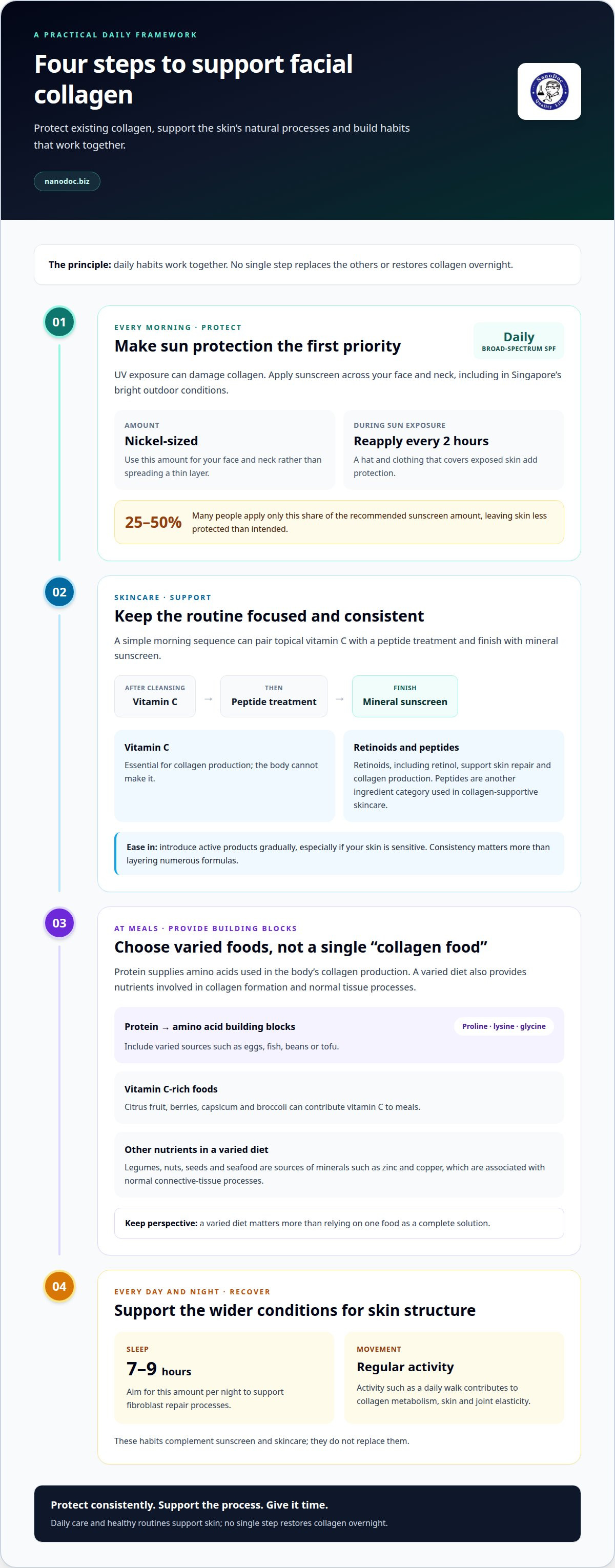
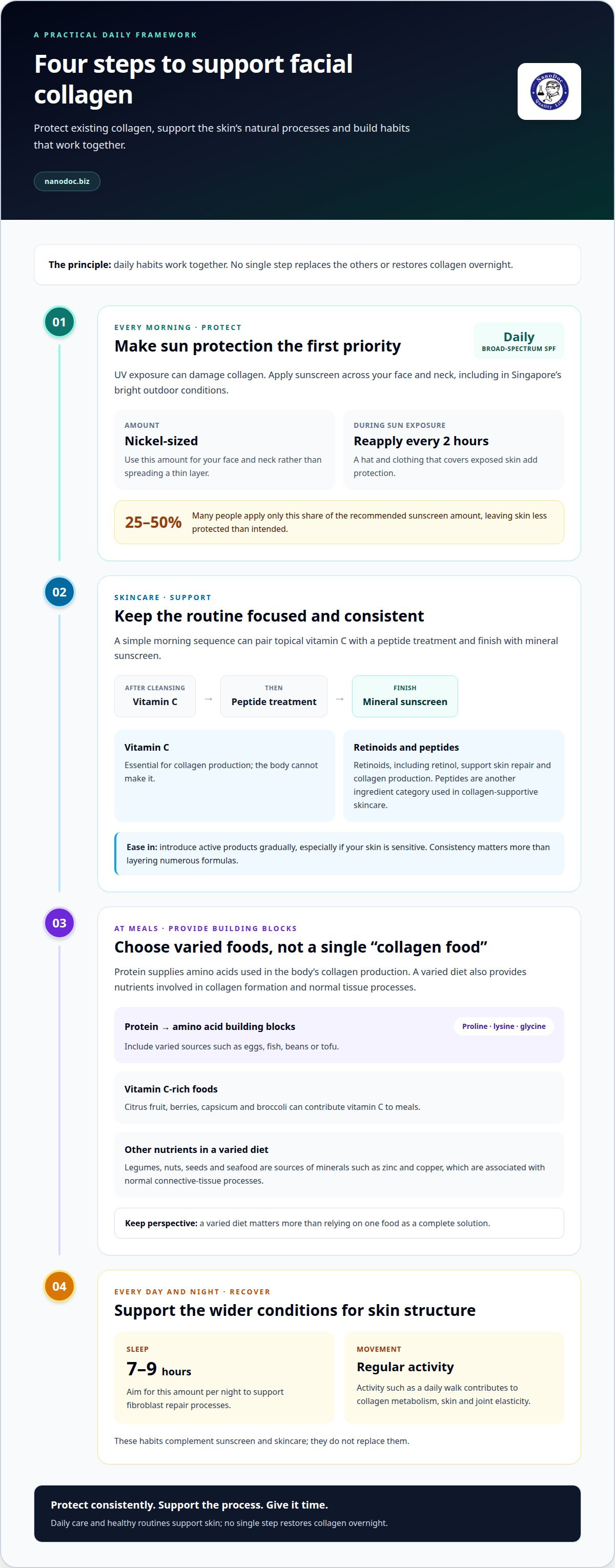
Collagen forms a structural framework that helps facial skin feel firm and look plump. Sun exposure and lifestyle choices can accelerate collagen depletion, contributing to changes such as wrinkles. A practical plan for how to rebuild collagen in face starts with protecting existing collagen and supporting the body’s ability to produce it. Daily habits work together; no single step replaces the others.
Use a broad-spectrum sunscreen with SPF every day, including in Singapore’s bright outdoor conditions. Apply a nickel-sized amount across your face and neck, rather than spreading a thin layer. During sun exposure, reapply every two hours. Many people use only 25-50% of the recommended sunscreen amount, leaving facial skin less protected than intended. A hat and clothing that covers exposed skin provide additional protection.
Skincare ingredients can support processes related to collagen. Retinoids, including retinol, are used to support skin repair and stimulate collagen production, while peptides are another ingredient category found in collagen-supportive skincare. Vitamin C is essential for collagen production, and the body cannot make it. A routine might pair vitamin C after cleansing with a peptide treatment, then finish with mineral sunscreen in the morning. Introduce active products gradually, especially if your skin is sensitive.
Food supplies building blocks for collagen. Protein-rich foods provide amino acids, including proline, lysine and glycine, that contribute to the body’s collagen production. Include varied sources in your meals, such as eggs, fish, beans or tofu. These foods support general skin health while providing materials for collagen synthesis. A varied diet matters more than relying on one food as a complete solution.
Recovery habits also play a role. Aim for 7-9 hours of sleep per night to support fibroblast repair processes. Regular physical activity, such as a daily walk, contributes to collagen metabolism, skin and joint elasticity. These habits don’t replace sunscreen or skincare, but they support the wider conditions involved in maintaining skin structure. For anyone exploring how to rebuild collagen in face, a practical starting point is sunscreen each morning, protein at meals and a consistent sleep routine.
2. Vitamin C and collagen production
Vitamin C is essential for collagen production, and the body cannot produce it. It supports collagen synthesis, the process by which the body forms collagen fibres. Regular dietary sources therefore matter to skin structure as well as general nutrition. Citrus fruit, berries, capsicum and broccoli can all contribute vitamin C to meals. Including a variety of fruit and vegetables helps make this part of an established eating pattern.
Topical and dietary vitamin C serve different roles. A vitamin C serum is applied to the skin, while food supplies the vitamin through digestion. You can apply a vitamin C product after cleansing, followed by other chosen products. Consistency matters more than layering numerous formulas. If a product irritates your skin, simplify your routine rather than adding more active ingredients.
Collagen formation also depends on a varied supply of nutrients. Protein provides amino acids used as building blocks, while vitamins and minerals support processes involved in tissue formation. Zinc and copper are among the minerals associated with normal connective-tissue processes. Legumes, nuts, seeds and seafood are some sources to include alongside other foods in a varied diet. No single nutrient replaces the broader mix needed for normal bodily function.
Microneedling takes a different approach from nutrition or topical care. This cosmetic treatment creates controlled micro-injuries in the skin, activating fibroblasts and supporting collagen rebuilding. It doesn’t supply vitamin C or amino acids; instead, it prompts a local skin response. Its suitability depends on skin condition, sensitivity and treatment goals, so consider it as a distinct option rather than a replacement for daily care.
Oral collagen supplements have also been studied for skin health. A clinical trial reported skin improvements after daily intake of hydrolysed collagen for 12 weeks. A 2023 meta-analysis examined 26 studies and concluded that oral collagen could have positive effects on skin health, while noting that more research is needed. These findings describe study outcomes, not a guaranteed result for every person or supplement.
Before choosing supplements, consider whether your usual meals already provide protein and varied nutrient sources. Supplements don’t replace a balanced diet, and formulations can differ in ingredients and intended use. Check the product label for its contents and follow its directions. If you’re weighing food-based nutrition alongside topical care, explore skin and nutrition support as part of your research.
3. Do skin creams containing collagen get rid of wrinkles?
Collagen production gradually slows by about 1% to 1.5% each year as a person gets older. Skin firmness can start to shift around the mid-thirties, although changes vary between individuals. As the skin’s supportive structure changes, fine lines and wrinkles may become more noticeable. A cream cannot reverse the body’s age-related collagen decline simply by placing collagen on the skin’s surface.
Collagen is a large structural protein, so a cream containing collagen mainly acts at the skin’s surface rather than rebuilding its deeper support network. It can help the skin feel moisturised, which may temporarily make its texture appear smoother. This surface effect is different from stimulating the skin’s own collagen production. Read ingredient lists carefully and distinguish hydration claims from claims about restoring collagen.
Some skincare ingredients are used to support skin repair and collagen production. Retinol is a non-prescription option for people who find tretinoin too harsh, including those with very sensitive skin or conditions such as redness or rosacea. Peptides are another ingredient category used in collagen-supportive skincare. These ingredients don’t work like collagen applied in a cream; they are intended to influence skin processes through regular topical use.
Consistency shapes what may appear in the mirror. Skin texture improvements may become noticeable after 4-6 weeks of consistent collagen-stimulating skincare use. Visible changes in firmness and line depth typically appear around 12 weeks of consistent use. These timelines help set expectations, but they don’t mean every formula produces the same effect. Ingredient choice, regular application and skin tolerance all matter.
Daily habits also influence how skin responds to a routine. Sun exposure can accelerate collagen depletion, so sunscreen remains important even when using a retinol or peptide product. A vitamin C product may complement your routine because vitamin C is essential for collagen production. These steps support skin health, but they don’t stop natural age-related changes or instantly erase established wrinkles.
Collagen supplements are a separate approach from collagen creams. A 2023 meta-analysis examining 26 studies concluded that oral collagen could have positive effects on skin health, while noting that more research is needed. Neither supplements nor topical products should be treated as a direct way to restore collagen to a precise facial area. For a practical assessment, track texture and firmness over time, rather than judging a routine after a few applications.
4. Dietary nutrients for collagen formation
Collagen synthesis depends on the materials available to the body, so build meals around varied nutrient sources. Protein foods supply amino acids, while fruit and vegetables provide vitamins that support normal body processes. For example, combine beans or tofu with vegetables, or serve fish with a side of greens. This approach supports the body’s tissue maintenance without relying on one supposed collagen-boosting food.
Dietary collagen is one possible source of collagen-related amino acids, but it isn’t delivered intact to facial skin. The digestive system breaks food proteins into smaller components, which the body uses according to its needs. A 2023 meta-analysis examined 26 studies and found oral collagen could have positive effects on skin health, while noting that more research is needed. Those findings don’t establish that every supplement improves facial elasticity.
Bone broth is often promoted as a concentrated collagen source. However, a 2019 study found that bone broth usually doesn’t contain enough collagen to make a noticeable difference. It can still be part of a meal, but don’t treat it as a reliable substitute for a varied diet. Protein levels and collagen content can differ with ingredients and preparation.
Hyaluronic acid and collagen play different roles in skin. Hyaluronic acid helps retain moisture, while collagen provides structural support. Eating foods associated with hyaluronic acid doesn’t directly rebuild facial collagen or determine skin levels. Topical skincare has its own role, too: creams and serums act on the skin, while dietary nutrients support bodily processes from within.
Choose dietary changes that are sustainable. Include protein at meals, add varied vegetables and fruit, and limit excessive sugar and refined carbohydrates such as white bread and pastries. Drinking about 2 litres of water daily can support fibroblasts and collagen regeneration. Water supports hydration, but it doesn’t replace protein or other nutrients needed for collagen formation.
A practical day might include eggs and fruit at breakfast, tofu with vegetables at lunch, and fish with greens at dinner. These examples provide variety rather than relying on a single “superfood.” If considering collagen supplements, assess their ingredients and directions, and remember that evidence on skin benefits is still developing. Dietary choices can support collagen formation, but they cannot target production to the face alone.
5. Cosmetic treatments for collagen stimulation
Cosmetic treatments can stimulate collagen by creating a controlled response in skin tissue. Microneedling, laser therapy and radiofrequency can activate fibroblasts and support collagen rebuilding. They differ in how they deliver energy or create stimulation, so the right option depends on concerns such as texture, laxity and desired firmness.
HIFU uses focused ultrasound energy to reach deeper skin layers and stimulate collagen production. It may suit lifting concerns around the cheeks, jawline and brows. Light therapy offers another approach, with sessions typically taking around 30 minutes. Red light therapy is often used across 3-5 sessions per week for visible improvements. These methods have different mechanisms and schedules, so they aren’t interchangeable.
Dermal fillers work differently from collagen-stimulating treatments. Fillers add volume to targeted areas, while treatments such as microneedling or laser aim to prompt the skin’s collagen response. Filler results can last six to 24 months, depending on filler type and injection area. The choice rests on whether the priority is immediate volume or gradual support for skin structure.
Singapore treatment costs depend on the modality, treatment area, number of sessions and intensity. A focused treatment plan and the equipment or materials used also affect the overall expense. Compare options by what they address, how many sessions are proposed and the expected recovery, rather than treating unlike procedures as equivalent.
Retinoids can support collagen-related skin repair, but introduce them gradually. Start with a small amount and use it sparingly, then adjust based on your skin’s tolerance. Avoid starting several new active products at once, as this makes irritation harder to identify. People with very sensitive skin or redness may prefer a gentler, non-prescription retinol formula over tretinoin.
Risks and recovery vary with treatment type and intensity. Chemical peel healing can take one to 21 days, depending on peel strength. Energy-based procedures and microneedling also prompt a deliberate skin response, so treatment depth and individual skin condition influence downtime and side effects. Before treatment, discuss expected recovery, aftercare and signs that need follow-up.
In Singapore, discuss facial procedures with a suitably qualified aesthetic medical professional whose training matches the treatment. Assessment of skin type, concerns and medical history helps determine whether a procedure fits your goals. A specialist can also explain the technique, likely recovery and alternatives before you decide.
For a non-procedural complement to professional treatments, explore anti-ageing skin care for routine facial care.
NanoDoc International Pte Ltd: Anti-Ageing Skin Care
NanoDoc International Pte Ltd offers Anti-Ageing Skin Care for people building a consistent facial skincare routine. Its formulations use nano-encapsulation technology designed to enhance absorption through the skin. This offers an option to consider alongside daily sun protection and other evidence-informed habits, not as a substitute for them.
For nutritional support, Nano Cellular Essential Nutrition is another option. Choose skincare and nutrition based on the role each can play in your routine, without expecting either to reverse age-related changes on its own.
Contact NanoDoc International Pte Ltd to learn more about its Anti-Ageing Skin Care and Nano Cellular Essential Nutrition.
Choose a Sustainable Next Step for Your Skin
Deciding how to rebuild collagen in your face starts with identifying the change you want to address, such as uneven texture, fine lines or reduced firmness. Let that concern guide a realistic routine, then give it time before adding more products or procedures. A measured approach makes it easier to notice what suits your skin and what does not.
If you’re considering an aesthetic treatment, discuss your goals and current skincare routine with a qualified medical professional. Their assessment can help you understand whether a procedure fits your needs or whether consistent home care is a more suitable next step. Individual responses vary, so focus on informed choices rather than quick fixes.
For a skincare-focused next step, contact NanoDoc International Pte Ltd to explore its offerings. Keep your routine considered, your expectations grounded and your choices aligned with your skin’s needs. Firmer-looking skin is best approached with patience and a plan you can sustain.
Frequently Asked Questions
What is collagen?
Collagen is a structural protein that helps support skin and connective tissue. In facial skin, its framework contributes to firmness and a plump appearance. Collagen also exists elsewhere in the body, including tissues that support joints. Think of facial collagen as part of the skin’s underlying structure, not a surface layer that a cream can simply replace.
Can any natural methods boost collagen?
Natural approaches can support the body’s collagen-making processes, but they don’t selectively rebuild collagen in one area of the face. Practical steps include eating varied meals with protein sources, getting vitamin C from foods such as berries or capsicum, and protecting exposed skin from sunlight. Treat these as consistent habits rather than quick fixes, and avoid relying on one food or supplement as a complete solution.
Do skin creams containing collagen get rid of wrinkles?
Collagen creams don’t directly replace the deeper structural collagen associated with facial firmness. A moisturising formula can make the skin’s surface feel more comfortable and look temporarily smoother, which may soften the appearance of fine lines. When comparing products, distinguish hydration claims from claims about collagen production, and consider the full ingredient list rather than focusing on “collagen” alone.
What Promotes Collagen Production in Your Skin?
Protecting skin from sunlight and supplying nutrients used in tissue formation can support collagen production. A useful daily routine pairs sunscreen with meals containing protein and varied produce. Skincare ingredients such as retinol, peptides and vitamin C can complement those habits. Keep the routine manageable: introduce one new active product at a time so you can identify how your skin responds.
What causes collagen loss in facial skin and can it be reversed?
Ageing and sun exposure are associated with declining facial collagen, and lifestyle choices can also contribute. Existing collagen loss can’t simply be reset to an earlier state, but protective habits and collagen-supportive skincare can help support skin health and appearance. Focus on preserving the structure that remains, rather than expecting a cream, food or supplement to restore a precise amount.
Do sunscreen, smoking cessation, diet, or supplements affect facial collagen?
Sunscreen helps protect collagen from sun-related damage, while a varied diet supplies protein and other nutrients used in normal bodily processes. Research on oral collagen has reported possible skin benefits, though further study is needed. Stopping smoking supports broader health, but it shouldn’t be treated as a targeted facial collagen treatment. A balanced routine is more useful than relying on supplements alone.
What clinical treatments stimulate facial collagen, including microneedling, lasers, and radiofrequency?
Microneedling, laser therapy and radiofrequency can activate fibroblasts and support collagen rebuilding. They use different techniques, so they aren’t interchangeable. A qualified aesthetic professional can assess your skin concern, treatment area and desired outcome before recommending an approach. Ask how the proposed treatment works, what aftercare involves and what recovery could look like for your skin.
How effective are collagen-stimulating facial treatments, and how long do results take?
Results depend on the treatment, skin concern and individual response. These procedures prompt skin processes rather than adding immediate volume, so changes in texture or firmness can develop gradually. For collagen-stimulating skincare, texture changes may appear after consistent use over 4-6 weeks, while visible firmness changes typically take around 12 weeks. Clinical procedures have different timelines and recovery needs.
Frequently Asked Questions
- What is collagen?
- Collagen is a structural protein that helps support skin and connective tissue. In facial skin, its framework contributes to firmness and a plump appearance. Collagen also exists elsewhere in the body, including tissues that support joints. Think of facial collagen as part of the skin’s underlying structure, not a surface layer that a cream can simply replace.
- Can any natural methods boost collagen?
- Natural approaches can support the body’s collagen-making processes, but they don’t selectively rebuild collagen in one area of the face. Practical steps include eating varied meals with protein sources, getting vitamin C from foods such as berries or capsicum, and protecting exposed skin from sunlight. Treat these as consistent habits rather than quick fixes, and avoid relying on one food or supplement as a complete solution.
- Do skin creams containing collagen get rid of wrinkles?
- Collagen creams don’t directly replace the deeper structural collagen associated with facial firmness. A moisturising formula can make the skin’s surface feel more comfortable and look temporarily smoother, which may soften the appearance of fine lines. When comparing products, distinguish hydration claims from claims about collagen production, and consider the full ingredient list rather than focusing on “collagen” alone.
- What Promotes Collagen Production in Your Skin?
- Protecting skin from sunlight and supplying nutrients used in tissue formation can support collagen production. A useful daily routine pairs sunscreen with meals containing protein and varied produce. Skincare ingredients such as retinol, peptides and vitamin C can complement those habits. Keep the routine manageable: introduce one new active product at a time so you can identify how your skin responds.
- What causes collagen loss in facial skin and can it be reversed?
- Ageing and sun exposure are associated with declining facial collagen, and lifestyle choices can also contribute. Existing collagen loss can’t simply be reset to an earlier state, but protective habits and collagen-supportive skincare can help support skin health and appearance. Focus on preserving the structure that remains, rather than expecting a cream, food or supplement to restore a precise amount.
- Do sunscreen, smoking cessation, diet, or supplements affect facial collagen?
- Sunscreen helps protect collagen from sun-related damage, while a varied diet supplies protein and other nutrients used in normal bodily processes. Research on oral collagen has reported possible skin benefits, though further study is needed. Stopping smoking supports broader health, but it shouldn’t be treated as a targeted facial collagen treatment. A balanced routine is more useful than relying on supplements alone.
- What clinical treatments stimulate facial collagen, including microneedling, lasers, and radiofrequency?
- Microneedling, laser therapy and radiofrequency can activate fibroblasts and support collagen rebuilding. They use different techniques, so they aren’t interchangeable. A qualified aesthetic professional can assess your skin concern, treatment area and desired outcome before recommending an approach. Ask how the proposed treatment works, what aftercare involves and what recovery could look like for your skin.
- How effective are collagen-stimulating facial treatments, and how long do results take?
- Results depend on the treatment, skin concern and individual response. These procedures prompt skin processes rather than adding immediate volume, so changes in texture or firmness can develop gradually. For collagen-stimulating skincare, texture changes may appear after consistent use over 4–6 weeks, while visible firmness changes typically take around 12 weeks. Clinical procedures have different timelines and recovery needs.