

Symptoms alone can’t confirm whether your body is absorbing vitamins. To understand how to know if your body is absorbing vitamins, look at the broader picture: persistent digestive problems or signs of deficiency can point to an issue, while blood tests can identify low levels of specific nutrients. Results need context, because a low level doesn’t by itself prove malabsorption.
If you’re taking supplements but still feel unwell, it’s understandable to wonder whether they’re working. Absorption depends on more than the supplement itself: digestion, gut health, nutrient interactions and whether a vitamin needs dietary fat can all affect how the body uses it.
This article explains common causes of poor absorption, why nutrient levels may remain low despite supplements, and which conditions support vitamin uptake. You’ll also learn which symptoms deserve medical attention and how testing can help distinguish a possible absorption problem from other reasons for a deficiency.
Key Takeaways
- Digestive symptoms and signs of deficiency can raise concern about absorption, but they don’t confirm the cause.
- Conditions affecting the gut, digestion, or nutrient breakdown can interfere with absorption in different ways.
- Low nutrient levels may persist despite supplements because of absorption problems, nutrient interactions, or other factors.
- Vitamin uptake depends on healthy digestion and the right conditions, including dietary fat for fat-soluble vitamins.
- Testing can help identify specific deficiencies and guide the next steps when symptoms or low levels continue.
Table of Contents
What Causes Poor Nutrient Absorption?
Symptoms that suggest malabsorption include chronic diarrhoea, fatty stools, unintentional weight loss, and signs of nutrient deficiencies. A combination of digestive changes and physical symptoms can indicate that the digestive system isn’t absorbing nutrients effectively.
Malabsorption means the body can’t absorb enough nutrients from food. The small intestine plays a central role, so intestinal damage or digestive problems can affect several nutrient groups. Diarrhoea may worsen absorption by moving food too quickly through the bowels. Persistent loose stools are more concerning when they occur alongside weight loss or signs of deficiency.
Fat malabsorption can produce light-coloured, soft, bulky stools with a foul smell. These stools may float, stick to the toilet bowl or be difficult to flush. Poor fat absorption can also interfere with vitamins A, D, E and K, which are fat-soluble. Night blindness can signal vitamin A deficiency, while weak bones or bone pain can be associated with low vitamin D. Bleeding gums or nosebleeds can be signs of vitamin K deficiency.
Protein-related symptoms may include dry hair, hair loss, or fluid retention. Poor absorption of certain sugars can cause bloating, gas, or explosive diarrhoea. These digestive symptoms can have different causes, but recurring patterns may help explain why deficiencies develop. A sore, red tongue can be a sign of vitamin B12 deficiency. Tingling or numbness in the hands or feet may also occur with low B12, which supports nerve health.
Other signs can affect more than digestion. Malnutrition associated with malabsorption may cause anaemia, low blood pressure, muscle wasting and unintentional weight loss. In children, poor absorption can affect growth, with weight or weight gain falling well below that of children of a similar age. Symptoms vary depending on which nutrients the body isn’t absorbing.
See a doctor if chronic diarrhoea, persistent digestive problems, nutrient deficiencies or significant weight loss continue, especially despite eating a balanced diet. These patterns may lead a doctor to suspect malabsorption syndrome. Fatty stools alongside weight loss or signs of deficiency also deserve medical attention, as they can point to impaired fat absorption.
One symptom alone doesn’t identify the cause. Fatigue or hair loss, for example, can have several explanations, and a low nutrient level doesn’t necessarily mean malabsorption syndrome. A recurring combination is more informative: digestive symptoms, such as chronic diarrhoea or bulky stools, together with signs such as weight loss, muscle wasting or a known deficiency. Recording when symptoms occur and which changes persist can help clarify the pattern during a medical assessment.
What are the main causes of malabsorption syndrome?
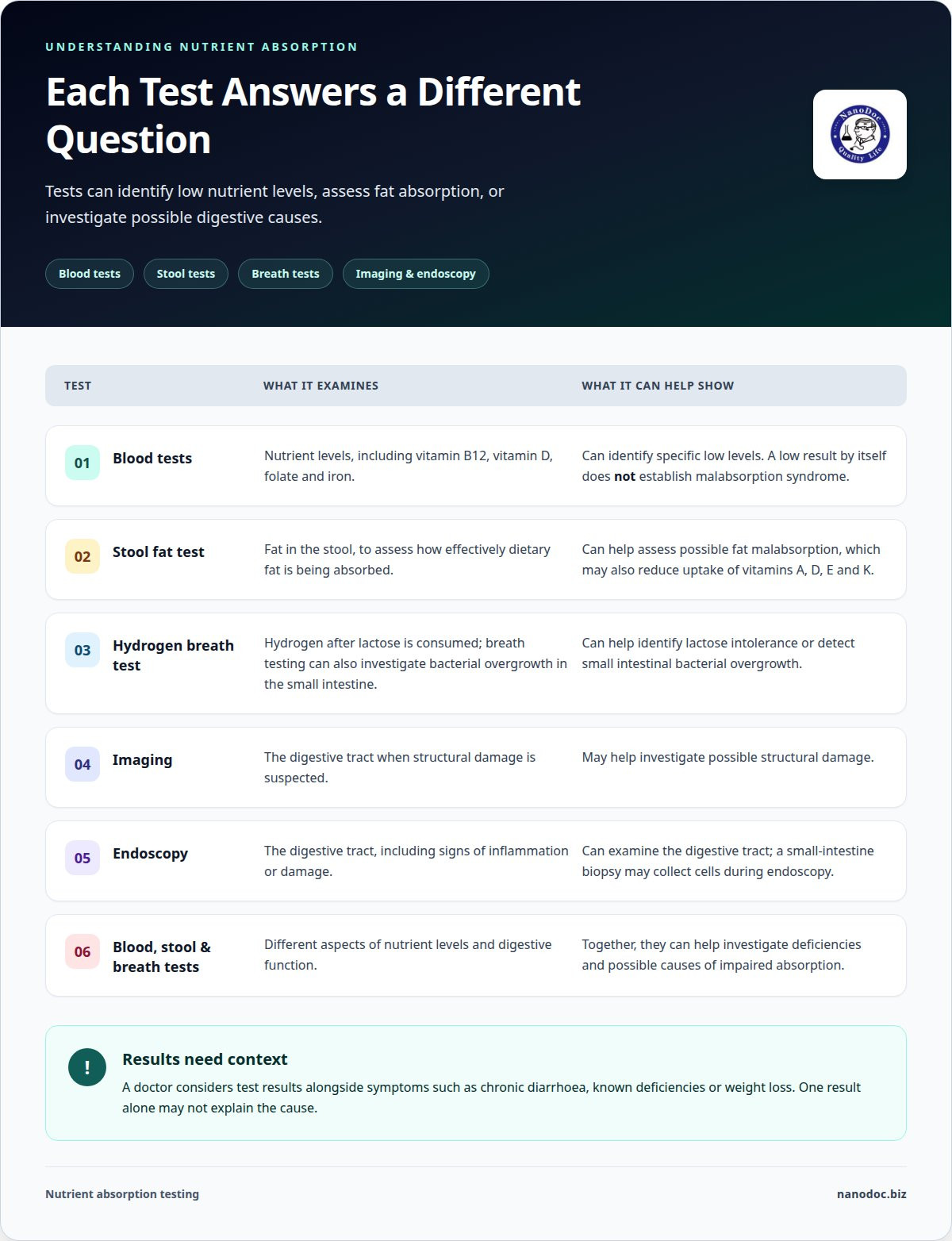
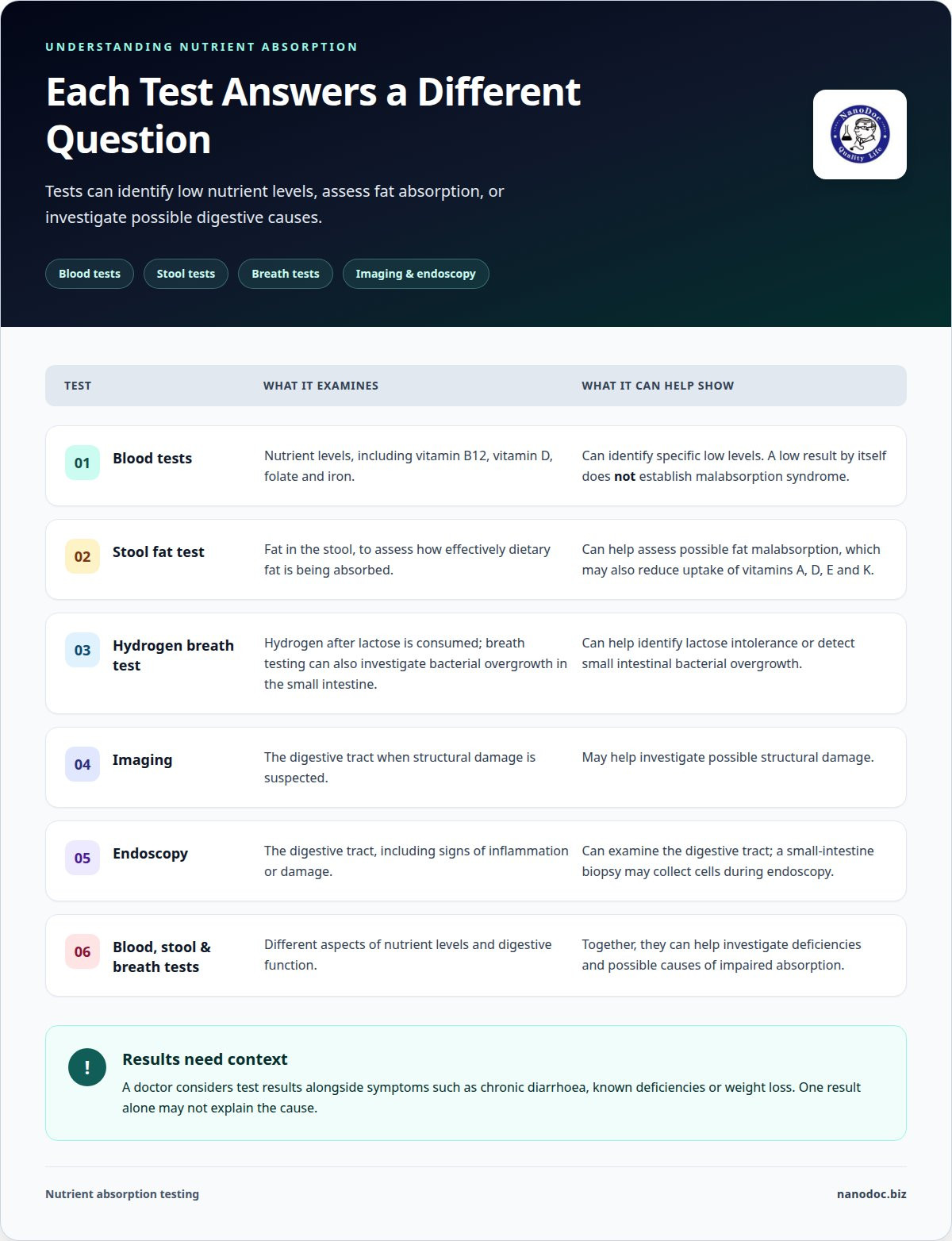
Malabsorption can result from intestinal damage, digestive disorders or medicines that affect nutrient processing. Blood, stool and breath tests can help identify deficiencies and investigate possible causes.
Blood tests can check levels of vitamin B12, vitamin D, folate, and iron. These results show specific nutrient deficiencies, but a low level alone doesn’t establish malabsorption syndrome.
Underlying Causes of Malabsorption
Malabsorption occurs when the small intestine cannot absorb enough nutrients and fluids, often because disease or damage disrupts digestion. Celiac disease, Crohn’s disease and small intestinal bacterial overgrowth can affect nutrient absorption. Infection, inflammation, injury or intestinal surgery may also interfere with normal function. Identifying the underlying cause matters because treatment depends on what is disrupting absorption and which deficiencies have developed.
Fat Absorption and Fat-Soluble Vitamins
Fat malabsorption means the digestive system isn’t absorbing dietary fat effectively, which can also reduce uptake of vitamins A, D, E and K. Dietary fat normally supports absorption of these fat-soluble vitamins. A stool test can measure fat in the stool and help assess the problem. The result can help a doctor distinguish a broader digestive issue from a deficiency that needs targeted attention.
Testing depends on the symptoms and suspected cause. Stool tests can measure fat and help doctors assess digestive function. A hydrogen breath test can help identify lactose intolerance by detecting excess hydrogen after lactose is consumed. Breath testing can also help detect bacterial overgrowth in the small intestine. If a doctor suspects structural damage, imaging may help investigate it; endoscopy can examine the digestive tract for inflammation or damage. A small-intestine biopsy may collect cells during endoscopy.
Each test answers a different question. Blood tests identify low nutrient levels, while stool fat testing examines fat absorption. Breath tests investigate specific carbohydrate intolerance or bacterial overgrowth. A doctor considers these results alongside symptoms such as chronic diarrhoea, known deficiencies or weight loss. This helps connect a finding to a possible cause rather than treating one result in isolation.
Treatment depends on the underlying disease and its effects. It may include vitamin supplements or other nutrients to replace what the intestine isn’t absorbing. Supplemental nutrition can be given orally, through a feeding tube or through a vein when needed. Treatment may also address symptoms such as diarrhoea, while care for conditions such as celiac disease or Crohn’s disease targets the cause of impaired absorption. Discuss a prescribed nutrient-rich diet with a doctor, nurse or dietitian.
Why do I still have low vitamin levels even with supplements?
Taking supplements doesn’t ensure that nutrients reach the bloodstream at useful levels. Absorption, supplement form, interactions and the reason for a deficiency all matter. Understanding how to know if your body is absorbing vitamins starts with looking beyond the supplement itself and considering what happens during digestion and nutrient uptake.
Reasons Supplements May Not Raise Levels
Vitamin levels may remain low when digestion, absorption, or nutrient use is impaired. A low blood level doesn’t necessarily mean malabsorption syndrome; the underlying cause may differ. For example, poor absorption of iron, vitamin B12, or folate can contribute to anaemia, while an ongoing digestive problem may limit uptake despite regular supplements.
Enzymes and vitamins serve different roles. Digestive enzymes break down carbohydrates, proteins and fats so the body can absorb nutrients. People with pancreatic insufficiency or enzyme deficiencies may need enzyme replacement. Enzymes don’t replace a vitamin supplement, and a supplement doesn’t correct an enzyme problem. This distinction matters when levels stay low despite eating a varied diet and taking nutrients consistently.
Supplement Timing and Mineral Interactions
Timing can affect how vitamins and minerals interact during absorption. Iron is commonly advised on an empty stomach with a little vitamin C, which helps the body absorb non-heme iron from plant foods. Calcium and iron are advised at separate times because they can compete during uptake. These combinations can influence how much of each nutrient becomes available.
Minerals can also compete with one another. Zinc and copper can compete for uptake in the gut, while high calcium intake may reduce zinc or magnesium absorption. Taking copper and zinc at different times can limit this competition. Vitamin D and omega-3 are advised with the fattiest meal of the day, since dietary fat supports absorption of fat-soluble nutrients.
Supplement Forms and Bioavailability
Bioavailability describes how readily a nutrient form can be absorbed and used by the body. Supplement forms differ: methylated B vitamins, chelated minerals, magnesium glycinate and liposomal vitamin C are examples of forms identified as bioavailable. Active vitamin compounds may also be considered when selecting a supplement. The form can matter, especially when nutrient levels remain low despite intake.
Liposomal or micellized forms may have greater absorption and bioavailability. Calcium citrate is preferred over calcium carbonate for people with low stomach acid, because calcium carbonate requires stomach acid for absorption. Older adults may absorb calcium carbonate less effectively, as may people taking acid-reducing medication. Vitamin B12 may also be better absorbed by injection than orally by older adults.
If you’re trying to understand how to know if your body is absorbing vitamins, review the supplement routine alongside test results and health context. Acid-reducing medicines, such as omeprazole, can affect vitamin B12 and magnesium absorption with long-term use. A doctor can interpret nutrient results alongside the medication list and digestive history, then assess whether the likely issue involves intake, absorption, or another cause.
Digestive and other factors that can impair absorption
Absorption depends on digestion, stomach acid, enzymes, bile, gut flora and the intestinal lining. Changes in any of these can affect how nutrients move from food into the body.
Digestive Factors That Affect Absorption
Digestive factors are conditions or changes that disrupt nutrient breakdown or uptake in the intestine. Celiac disease and Crohn’s disease can affect the gut lining, while low stomach acid can hinder food breakdown and absorption of vitamin B12, iron, and calcium. Enzyme deficiencies can also limit digestion. These mechanisms matter because the same eating pattern may provide nutrients without ensuring the body absorbs them effectively.
Inflammation and structural damage can affect the intestinal surface where nutrients are absorbed. Endoscopy lets a doctor examine the digestive tract for inflammation or damage. During endoscopy, a small-intestine biopsy can collect cells for assessment. Imaging, such as a CT scan, may help identify structural changes, including thickening of the small-intestine wall associated with Crohn’s disease.
Medications and Vitamin Absorption
Some medicines affect absorption by changing stomach acid, gut flora, or nutrient metabolism. Proton pump inhibitors, antacids, antibiotics, and laxatives can disrupt gut flora and influence nutrient absorption. Long-term use of acid-reducing medicines, such as omeprazole, may affect vitamin B12 and magnesium absorption. This matters when a deficiency appears alongside regular medication use or digestive changes.
Medicines shouldn’t be stopped or changed without medical guidance. A doctor can consider the medicine, duration of use, symptoms, and nutrient test results together. For example, acid-reducing treatment and a low B12 result provide relevant context for assessing absorption, but the result alone doesn’t identify the cause.
Diet, Hydration, and Digestion
Diet and hydration influence the conditions in which digestion and absorption occur. Fermented foods such as yogurt, kimchi and sauerkraut may support healthy gut bacteria. Water carries nutrients across the intestinal barrier, while dehydration can affect the absorption and use of water-soluble vitamins, including vitamin C and B vitamins. These factors support digestion but don’t resolve an underlying intestinal disorder.
Digestive enzymes break down carbohydrates, proteins and fats. People with pancreatic insufficiency or enzyme deficiencies may need enzyme replacement to support digestion. Enzyme supplements don’t treat every cause of impaired absorption; their relevance depends on whether digestion lacks specific enzymes. Persistent diarrhoea also deserves attention, because it can move food through the bowels too quickly for effective nutrient uptake.
Age-related digestive changes can also alter absorption. Changes in stomach acid, the gut lining and beneficial bacteria may make nutrient uptake harder for older adults. Celiac disease, Crohn’s disease, ulcerative colitis and other digestive disorders can involve different parts of digestion. Persistent symptoms alongside low nutrient levels can indicate when the gut needs further assessment.
Conditions needed for vitamin absorption
Vitamin absorption relies on several connected processes, not just one supplement or meal. If you’re asking how to know if your body is absorbing vitamins, consider whether digestion can break nutrients down and whether the intestine can take them up. The answer depends on the vitamin, its form and the digestive conditions that support its passage into the bloodstream.
The small intestine is the main site of nutrient absorption. Its lining contains villi and cells that take up nutrients from digested food. An intact intestinal surface helps this process work; inflammation or damage can interfere with uptake. For example, celiac disease can inflame the gut wall and cause absorption problems. This is why the digestive system’s condition matters alongside the nutrients in a meal.
Digestion prepares nutrients for uptake. Stomach acid helps break down food, while digestive enzymes process carbohydrates, proteins, and fats. Vitamin B12 also requires intrinsic factor for proper absorption. Bile supports fat digestion, which is relevant to the uptake of fat-soluble vitamins. If you’re considering how to know if your body is absorbing vitamins, these different requirements help explain why one sign or supplement cannot answer the question for every nutrient.
Diet can provide the conditions some vitamins need. Vitamins A, D, E and K are fat-soluble, so dietary fat supports their absorption. A meal containing fat can therefore help provide a suitable environment for these vitamins. Water also carries nutrients across the intestinal barrier. Hydration supports this process, though water alone cannot replace a nutrient or correct a digestive problem.
Normal movement through the digestive tract gives the intestine an opportunity to absorb nutrients. Diarrhoea can speed food through the bowels and interfere with uptake. Gut bacteria contribute to the digestive environment, while inflammation can affect the lining. Fermented foods such as yogurt, kimchi and sauerkraut may support healthy gut bacteria, but they don’t repair intestinal damage or treat the cause of persistent digestive symptoms.
The key is to consider the full absorption pathway: food is broken down, nutrients move through the small intestine, and the body takes them up. Fat supports vitamins A, D, E and K; water helps carry nutrients across the intestinal barrier. The relevant conditions differ by nutrient, so persistent symptoms or low test results call for attention to the specific nutrient and digestive process involved.
Explore nano-delivery approaches to nutrient absorption to learn how delivery technology relates to nutrient uptake.
NanoDoc International Pte
NanoDoc International Pte Ltd offers Nano Cellular Essential Nutrition for people considering supplements as part of broader nutrition decisions. Its formulations use nano-encapsulation, which reduces active ingredients to a fraction of their original size, enabling faster and more complete absorption through gut membranes. This supports nutrient delivery, but it doesn’t diagnose or treat the causes of malabsorption.
If tests show low nutrient levels or digestive symptoms persist, medical assessment remains important for identifying the cause. Nano Cellular Essential Nutrition may be relevant when you’re exploring nutrition products as part of your routine. NanoDoc International Pte Ltd also offers Anti-Ageing Skin Care, Pain Relief Care and Oral & Immunity Care for their respective needs.
For information about Nano Cellular Essential Nutrition, contact NanoDoc International Pte Ltd.
Make Your Next Nutrition Decision With Clarity
Knowing how to tell whether your body is absorbing vitamins is a useful starting point, but your next step should reflect your health priorities. If you’re tracking a deficiency or persistent symptoms, focus on understanding the cause and choosing support that fits your needs. A supplement can be part of a nutrition routine, but it doesn’t replace medical assessment when symptoms continue.
NanoDoc International Pte Ltd offers Nano Cellular Essential Nutrition, alongside Anti-Ageing Skin Care and Pain Relief Care. These products serve different needs, so consider which aligns with the support you’re seeking rather than treating them as interchangeable solutions.
For information about NanoDoc International Pte’s offerings, contact NanoDoc International Pte. A considered next step can help you move forward with greater confidence and a clearer sense of what suits your routine.
Frequently Asked Questions
What is malabsorption?
Malabsorption is impaired uptake of nutrients from food through the digestive tract. It can affect one nutrient or several, depending on the cause. For instance, difficulty absorbing dietary fat can also affect vitamins A, D, E and K. A low nutrient result alone doesn’t establish malabsorption, so clinicians interpret test results alongside symptoms, eating patterns and digestive history.
Can your genes affect how you process vitamins?
Yes, gene variants can influence how the body transports or processes particular nutrients. For example, MTHFR affects folate metabolism, while TCN2 helps transport vitamin B12 into cells. SLC23A1 encodes vitamin C transporters, and GC affects vitamin D binding and transport in the bloodstream. These examples relate to specific nutrient pathways; they don’t show, by themselves, whether a person has a deficiency or needs supplements.
How do I know if my body absorbs nutrients well?
Symptoms can raise suspicion, but nutrient tests provide more direct information about specific levels. A practical example is comparing a blood test with the nutrient being supplemented, such as vitamin D or B12. A doctor can interpret the result alongside the dose, supplement form, diet, medicines, and symptoms. A single result or symptom isn’t a complete measure of how well the digestive system absorbs nutrients.
Nutrient Absorption & Genetics: Are Your Supplements Working?
Genetic information may explain why a nutrient pathway differs, but it can’t establish on its own whether a supplement is working. For example, TCN2 variants may affect vitamin B12 transport into cells, while HFE variants can cause excessive iron buildup. Supplement decisions should account for measured nutrient levels and the individual’s health context. Genetics is one piece of information, not a substitute for assessing a deficiency.
What are signs of vitamin deficiency despite taking supplements?
Possible signs depend on the nutrient involved and aren’t specific to one deficiency. For example, a sore, red tongue can occur with low B12, and tingling or numbness may accompany B12 deficiency. Weak bones can be associated with low vitamin D. If symptoms persist while taking supplements, note the nutrient, product form, and timing; this context can help interpret test results and identify other possible causes.
How is vitamin absorption tested by a doctor?
A doctor may begin with blood tests for nutrients such as B12, vitamin D, folate, iron, or magnesium. The next test depends on the suspected problem: stool testing can measure fat, while breath testing can investigate lactose intolerance or bacterial overgrowth. If intestinal damage is suspected, endoscopy may examine the digestive tract, and a biopsy can collect small-intestine cells for assessment.
What can cause poor absorption of vitamins and nutrients?
Potential causes include diseases affecting the intestine, such as celiac disease or Crohn’s disease, and damage from inflammation, infection, injury or surgery. Low stomach acid and enzyme problems can also disrupt digestion. Medicines may affect stomach acid, gut bacteria or nutrient uptake. The likely cause depends on the affected digestive process, symptoms, medicines and test findings, rather than one factor alone.
How can diet and supplement timing improve vitamin absorption?
Pairing a nutrient with suitable food can support its uptake. Dietary fat helps the body absorb vitamins A, D, E and K, while vitamin C supports absorption of non-heme iron from plant foods. Iron and calcium are often taken at separate times to limit competition. Check supplement directions and discuss combinations with a doctor or pharmacist, especially if you take medicines or several minerals.
Frequently Asked Questions
- What is malabsorption?
- Malabsorption is impaired uptake of nutrients from food through the digestive tract. It can affect one nutrient or several, depending on the cause. For instance, difficulty absorbing dietary fat can also affect vitamins A, D, E and K. A low nutrient result alone doesn’t establish malabsorption, so clinicians interpret test results alongside symptoms, eating patterns and digestive history.
- Can your genes affect how you process vitamins?
- Yes, gene variants can influence how the body transports or processes particular nutrients. For example, MTHFR affects folate metabolism, while TCN2 helps transport vitamin B12 into cells. SLC23A1 encodes vitamin C transporters, and GC affects vitamin D binding and transport in the bloodstream. These examples relate to specific nutrient pathways; they don’t show, by themselves, whether a person has a deficiency or needs supplements.
- How do I know if my body absorbs nutrients well?
- Symptoms can raise suspicion, but nutrient tests provide more direct information about specific levels. A practical example is comparing a blood test with the nutrient being supplemented, such as vitamin D or B12. A doctor can interpret the result alongside the dose, supplement form, diet, medicines, and symptoms. A single result or symptom isn’t a complete measure of how well the digestive system absorbs nutrients.
- Nutrient Absorption & Genetics: Are Your Supplements Working?
- Genetic information may explain why a nutrient pathway differs, but it can’t establish on its own whether a supplement is working. For example, TCN2 variants may affect vitamin B12 transport into cells, while HFE variants can cause excessive iron buildup. Supplement decisions should account for measured nutrient levels and the individual’s health context. Genetics is one piece of information, not a substitute for assessing a deficiency.
- What are signs of vitamin deficiency despite taking supplements?
- Possible signs depend on the nutrient involved and aren’t specific to one deficiency. For example, a sore, red tongue can occur with low B12, and tingling or numbness may accompany B12 deficiency. Weak bones can be associated with low vitamin D. If symptoms persist while taking supplements, note the nutrient, product form, and timing; this context can help interpret test results and identify other possible causes.
- How is vitamin absorption tested by a doctor?
- A doctor may begin with blood tests for nutrients such as B12, vitamin D, folate, iron, or magnesium. The next test depends on the suspected problem: stool testing can measure fat, while breath testing can investigate lactose intolerance or bacterial overgrowth. If intestinal damage is suspected, endoscopy may examine the digestive tract, and a biopsy can collect small-intestine cells for assessment.
- What can cause poor absorption of vitamins and nutrients?
- Potential causes include diseases affecting the intestine, such as celiac disease or Crohn’s disease, and damage from inflammation, infection, injury or surgery. Low stomach acid and enzyme problems can also disrupt digestion. Medicines may affect stomach acid, gut bacteria or nutrient uptake. The likely cause depends on the affected digestive process, symptoms, medicines and test findings, rather than one factor alone.
- How can diet and supplement timing improve vitamin absorption?
- Pairing a nutrient with suitable food can support its uptake. Dietary fat helps the body absorb vitamins A, D, E and K, while vitamin C supports absorption of non-heme iron from plant foods. Iron and calcium are often taken at separate times to limit competition. Check supplement directions and discuss combinations with a doctor or pharmacist, especially if you take medicines or several minerals.