

Eating more nutrient-rich foods doesn’t automatically mean your body absorbs more nutrients. If you’re wondering how to improve nutrient absorption, there usually isn’t one perfect food pairing or supplement that guarantees results. Digestion breaks food down, and absorption depends on factors such as the nutrient’s form, what you eat with it, and how your digestive system is functioning.
It can be hard to tell which food combinations matter and which claims are overstated. Some choices may support uptake, such as pairing plant-based iron with vitamin C, but no single tip works the same way for everyone.
This guide explains how digestion and nutrient uptake work, then covers practical food choices and daily habits. You’ll also learn how to assess supplement claims, including nano-encapsulation, without treating technical testing as proof of a health benefit. If digestive symptoms persist or you suspect a deficiency, seek clinical advice to help identify the cause and next steps.
Key Takeaways
- Understand the difference between nutrient intake, digestion, absorption, and utilization to better identify where nutrition concerns may arise.
- Learn practical meal and food-preparation choices that may support nutrient uptake, without treating any one pairing as a guaranteed fix.
- Separate useful everyday habits from broad claims about probiotics, prebiotics, hydration, and food peels.
- Assess supplement directions and evidence for a specific formulation. Nano-encapsulation and quality testing alone don’t establish a clinical benefit.
- Know when persistent digestive symptoms or suspected nutrient gaps call for clinical advice rather than self-directed supplements.
Table of Contents
- How to Improve Nutrient Absorption Starts with Understanding What It Means
- How Digestion and Nutrient Type Shape Absorption
- How to Improve Nutrient Absorption Through Everyday Food Choices
- Which Absorption Habits Help, and When Should You Seek Medical Advice?
- How to Evaluate Supplements and Nano-Delivery Claims Responsibly
How to Improve Nutrient Absorption Starts with Understanding What It Means
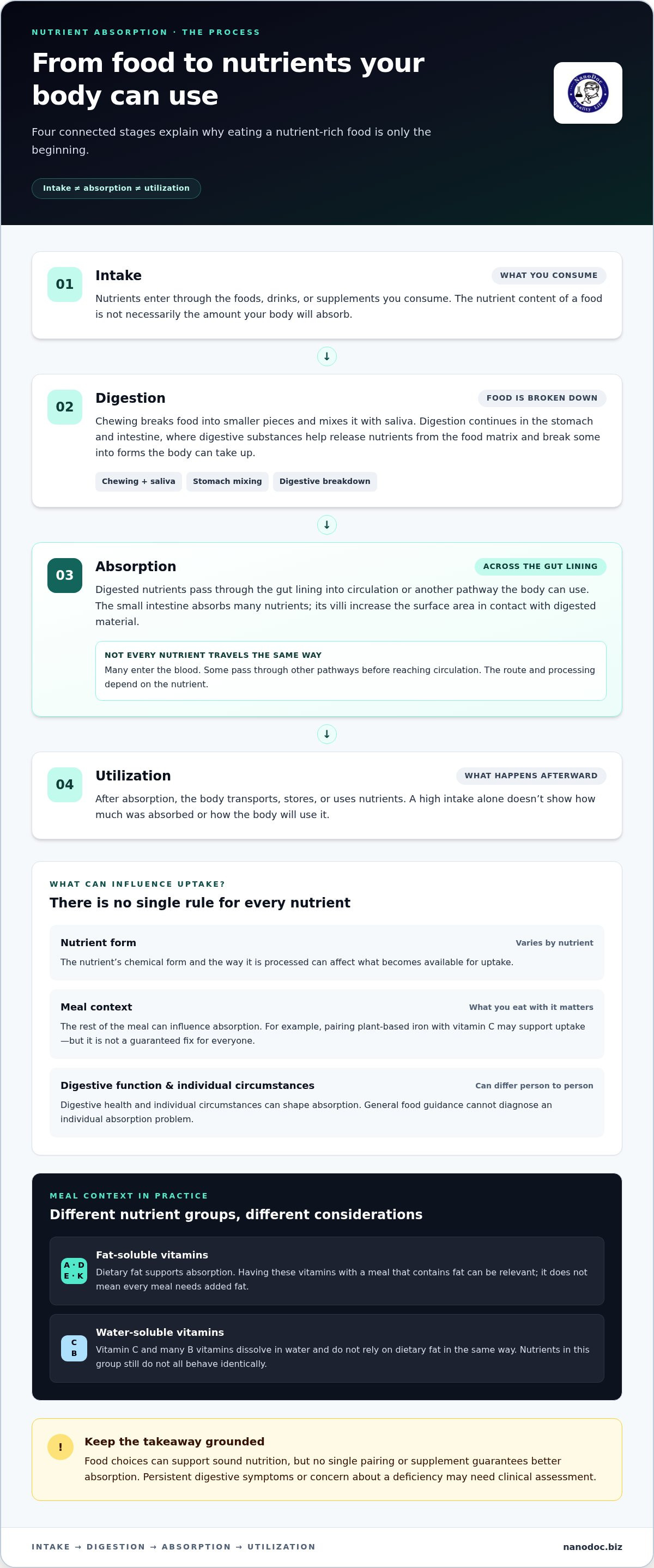
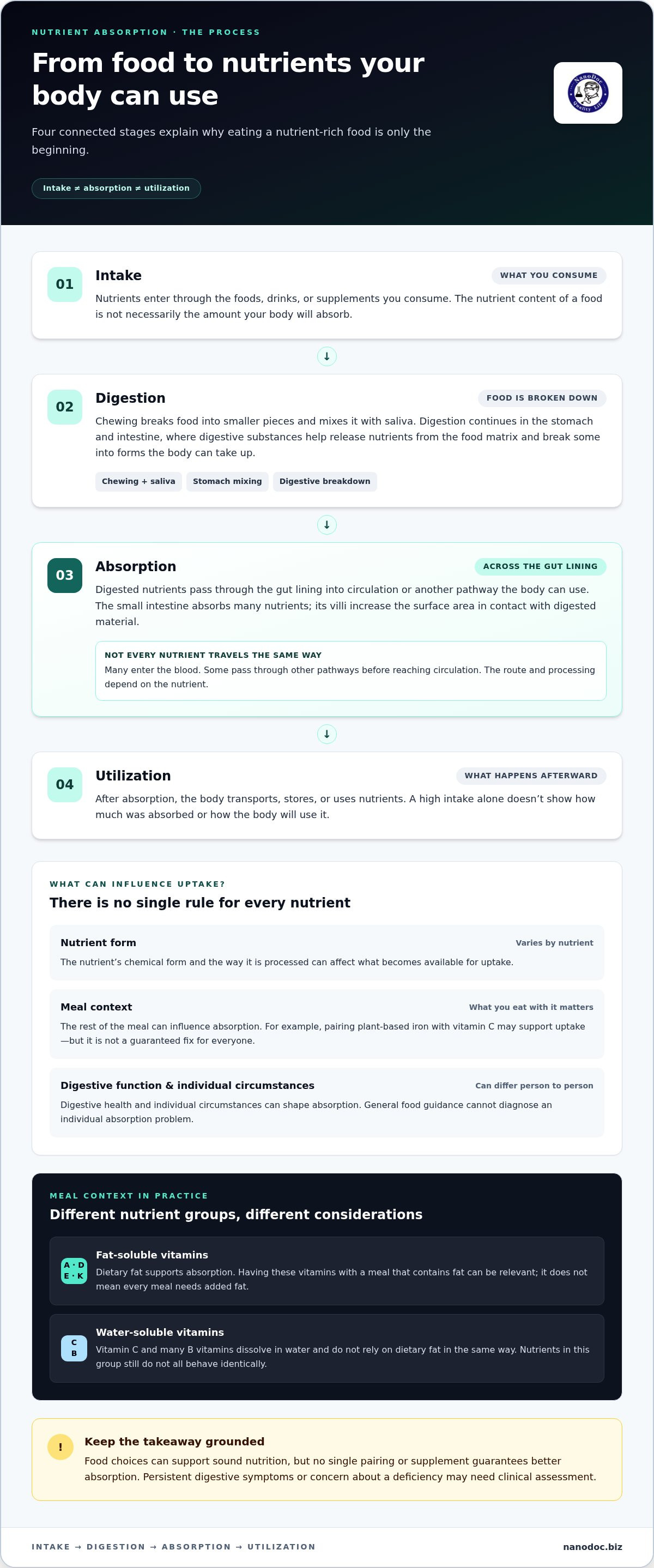
Eating a nutrient-rich food is only the first step. Intake is what you consume; digestion breaks food down into smaller components; absorption moves digested nutrients from the gut into circulation or other pathways the body can use. Utilization happens later, as the body transports, stores, or uses those nutrients. These stages are connected, but they are not interchangeable. A high intake alone doesn’t show how much of a nutrient has been absorbed or how the body will use it.
Absorption depends on the nutrient, the meal it’s part of, digestive function, and individual circumstances. Some nutrients need particular conditions or transport mechanisms, while others follow different routes. That’s why how to improve nutrient absorption isn’t a matter of applying one rule to every meal. Practical food habits can support sound nutrition without requiring a perfect diet or complicated combinations.
- Intake: the nutrients in the foods, drinks, or supplements you consume.
- Digestion: the physical and chemical breakdown that makes food components available for uptake.
- Absorption: the passage of digested nutrients through the gut lining into circulation or another usable pathway.
- Utilization: how the body processes, uses, or stores absorbed nutrients.
What happens between eating food and absorbing its nutrients?
Chewing breaks food into smaller pieces and mixes it with saliva. Digestion continues in the stomach and intestine, helping release nutrients from the food matrix and break some of them into forms the body can take up. The small intestine is the main site for absorbing many nutrients. Its lining contains villi, small projections that increase the surface area in contact with digested material and support nutrient uptake.
After crossing the intestinal lining, nutrients don’t all travel in the same way. Many enter the blood, while some pass through other pathways before reaching circulation. The route and processing depend on the nutrient, which is one reason general digestion advice can’t describe every nutrient’s journey in equal detail.
Why does absorption matter beyond choosing nutrient-rich foods?
Nutrient absorption is the transfer of digested nutrients across the gut lining into circulation or other pathways the body can use. Food composition and digestion can influence how much is available for uptake, so the nutrient content listed for a food isn’t necessarily the amount your body absorbs. This doesn’t make nutrient-rich food choices less useful. It simply gives a fuller picture of how nutrition works.
General guidance can explain the process and suggest sensible eating habits, but it can’t diagnose an individual absorption problem. Persistent digestive symptoms or concern about a deficiency may have causes that need clinical assessment. For everyday eating, start with varied, nourishing meals rather than assuming one food, pairing, or supplement will resolve a complex issue.
How Digestion and Nutrient Type Shape Absorption
Absorption depends on more than where food travels. Chewing breaks food into smaller pieces, then stomach acid and digestive enzymes help break it down further. In the small intestine, nutrients pass through the intestinal lining into blood or other transport pathways. Many nutrients are absorbed there, although the exact route and processing depend on the nutrient.
Nutrient type and meal context influence how much becomes available for uptake, so there isn’t one food rule for every nutrient. The nutrient’s chemical form, the rest of the meal, and digestive health can all play a role. Michigan State University Extension describes these influences in its discussion of Factors Affecting Nutrient Bioavailability. These mechanisms explain why uptake can vary, but they can’t establish an individual’s nutrient status or determine treatment needs.
How are fat-soluble and water-soluble nutrients absorbed differently?
Vitamins A, D, E, and K are fat-soluble. Dietary fat supports their absorption, so having these vitamins as part of a meal that contains fat can be relevant. That doesn’t mean every meal needs added fat or that increasing fat intake will always improve uptake. The food source, amount, and overall meal matter, and individual needs vary.
Water-soluble vitamins, including vitamin C and many B vitamins, behave differently. They dissolve in water and don’t rely on dietary fat in the same way. This distinction can help when planning meals, but it doesn’t mean all water-soluble nutrients are absorbed identically. Nutrient form and digestive conditions still matter.
What roles do the stomach and small intestine play?
The stomach mixes food and helps digest it, while the small intestine continues digestion and absorbs many of the resulting nutrients. Digestive substances help release nutrients from food and prepare them for uptake. Different nutrients may use different transport processes, and some are absorbed in other parts of the digestive tract. The small intestine is central, but it isn’t the only consideration in every nutrient’s journey.
For practical decisions, match the advice to the nutrient instead of assuming one strategy applies to all. A meal containing a source of fat may support uptake of fat-soluble vitamins, but that’s not a reason to add extra fat indiscriminately. If you’re exploring nutrition products, NanoDoc’s nano-nutrient supplements use nano-encapsulation as a delivery approach. That formulation method doesn’t replace varied eating or individualized clinical guidance.
Understanding these differences is a useful foundation for how to improve nutrient absorption: consider the nutrient, the food matrix, and the person, rather than relying on a single shortcut.
How to Improve Nutrient Absorption Through Everyday Food Choices
A practical routine is more useful than a strict list of food-combining rules. To improve nutrient absorption through everyday meals, focus first on variety and consistency. Then consider pairings and preparation methods that suit the foods you already enjoy.
- Build varied meals. Include different whole foods across the week so meals supply a range of nutrients instead of relying on one ingredient to do everything.
- Pair foods thoughtfully. Combine plant sources of iron with vitamin C-rich foods, or serve some plant compounds with a suitable source of fat.
- Prepare food in ways that suit it. Raw, cooked, chopped, or blended options can each work in different meals. There’s no single best method for every ingredient.
- Look at your eating pattern over time. Consider whether your meals are varied and realistic to repeat, rather than judging one meal as a success or failure.
This keeps the focus on your overall eating pattern. A useful pairing may support nutrient availability, but it doesn’t guarantee a measurable change in an individual’s nutrient status or treat a deficiency.
Which food pairings may support nutrient uptake?
Try spinach with citrus, such as lemon or orange, to combine a plant source of iron with vitamin C. Vitamin C can support absorption of non-haem iron from plant foods. Tomatoes served with olive oil are another practical combination: fat can support uptake of certain fat-soluble plant compounds, including carotenoids. These are meal ideas, not guaranteed effects for every person or substitutes for assessment of a suspected deficiency.
Use pairings as flexible options, not rules. If citrus doesn’t suit a meal, other vitamin C-containing foods can add variety. Olive oil is one possible accompaniment to tomatoes, not a requirement to add fat to every vegetable dish. Personal preference and the overall meal matter.
How can cooking, chewing, and meal variety make a difference?
Preparation can change how accessible some nutrients are, but the effect depends on the food and compound. Cooking tomatoes and carrots, for example, can increase the bioavailability of lycopene and beta-carotene. If you prefer vitamin C-rich vegetables cooked, brief cooking can be an option. Raw servings can also fit into a varied diet. Avoid treating “raw is always better” or “cooked is always better” as universal guidance.
Chewing thoroughly helps break food into smaller pieces as digestion begins. It’s a sensible eating habit, not a treatment for an absorption problem. Aim for variety across familiar foods and preparation styles, including vegetables, fruits, grains, and protein sources that suit your needs. A routine you can maintain is generally more useful than complicated combinations that make meals harder to enjoy.
Keep your approach adaptable: make a pairing when it fits, prepare produce in ways you like, and aim for consistency across meals. If digestive symptoms persist or you suspect a nutrient deficiency, food adjustments alone may not identify the cause or provide the right next step.
Which Absorption Habits Help, and When Should You Seek Medical Advice?
Useful absorption habits are usually ordinary nutrition habits, not quick fixes. A varied diet, preparation methods that suit the food, and careful supplement use can support a sound approach to eating. They can’t guarantee that a particular nutrient will be absorbed in a certain amount, and they shouldn’t be used to explain away ongoing symptoms.
For a practical routine, focus on habits you can apply consistently:
- Eat a variety of foods. Rotate food types over time instead of relying on a single “superfood” or ingredient.
- Choose preparation you tolerate and enjoy. Cooking, peeling, or keeping a peel can each make sense depending on the food and your preference. Peels aren’t a universal way to improve absorption.
- Use supplements as directed. Follow the label and don’t take extra or combine products on the assumption that more will improve uptake. If you have a diagnosed condition or take medication, discuss supplement use with a qualified clinician or pharmacist.
Can hydration, fibre, or probiotics improve absorption for everyone?
Hydration supports normal bodily function, but drinking extra water isn’t a standalone way to boost nutrient absorption. Fibre is part of a balanced diet and supports normal digestive function, though tolerance varies. Adjust fibre according to what suits you rather than treating it as an absorption treatment. Probiotics and prebiotics aren’t necessary for everyone; their role depends on individual circumstances and the specific product or food.
These habits can contribute to overall wellbeing, but they aren’t universal fixes. If a food or supplement consistently causes discomfort, note the pattern and seek appropriate advice rather than adding more products to counteract it.
When might digestive symptoms need professional assessment?
Occasional changes in digestion can happen, but symptoms that persist, recur, or interfere with eating and daily life deserve attention. Ongoing diarrhoea, abdominal discomfort, or a suspected nutrient deficiency are reasons to seek advice from a qualified clinician. The same applies if you have a diagnosed digestive condition, take medication that may affect nutrient handling, or are considering supplements alongside treatment.
General food guidance can help shape everyday choices; only a qualified clinician can assess persistent symptoms or investigate a suspected absorption problem. An online symptom list can’t establish a diagnosis, and changing your diet or starting supplements may not address the underlying cause. Keep track of what you eat, any supplements and medicines you use, and how long symptoms have been present. This information can support a more informed clinical discussion.
If you’re considering a nutrition supplement, review its ingredients and directions, and keep it separate from medical advice. NanoDoc’s nano-nutrient supplements are one nutrition option to consider alongside a varied diet, not as a substitute for clinical assessment when symptoms warrant it.
How to Evaluate Supplements and Nano-Delivery Claims Responsibly
Supplements may have a role in a nutrition plan, but they don’t replace a varied diet or individualized clinical advice. A claim that a product “supports absorption” needs context: which nutrient, which formulation, and what evidence supports the specific intended effect? A delivery technology may change how an ingredient is presented, but the technology alone doesn’t establish a health benefit.
Before considering a supplement, look for clear information about:
- Ingredients: Identify the nutrients or other ingredients and their stated amounts.
- Directions: Follow the label and consider whether the instructions fit your circumstances and any advice you’ve received.
- Evidence: Check whether research relates to the exact formulation and claim. Don’t assume results for one ingredient apply to every product containing it.
- Purpose: Distinguish a general wellness statement from evidence that a product addresses a specific deficiency or condition.
This keeps the question of how to improve nutrient absorption grounded in evidence rather than marketing language. If you have a diagnosed condition, take medication, or suspect a deficiency, discuss supplement use with a qualified clinician.
What can laboratory testing tell you about a supplement?
NanoDoc’s formulations are independently laboratory-tested for nanoparticle size and quality. This testing addresses those product characteristics; it doesn’t, by itself, demonstrate that a formulation improves absorption, changes nutrient status, or produces a clinical outcome.
Evidence for a health claim needs to match the formulation and the outcome being discussed. For example, data about an ingredient in one form or dose may not establish the same effect for a different formulation. A useful claim should be specific enough to evaluate, and supporting research should relate to that claim rather than rely on the appeal of a technical term.
How does nano-encapsulation fit into a nutrition routine?
Nano-encapsulation is a delivery approach in which an ingredient is carried within very small structures. Its presence describes a formulation method, not a guarantee that the body will absorb more of a nutrient or that a person will experience a particular result. Suitability depends on the ingredient, formulation, evidence, and individual needs. Supplements are one consideration within a broader nutrition routine, not a replacement for varied eating or clinical care.
For a deeper explanation of delivery science, explore High Bioavailability Nutrients: The Clinical Guide to Cellular Absorption. NanoDoc’s nano-nutrient supplements use nano-encapsulation as a delivery approach to consider alongside the principles in this guide. Explore NanoDoc’s nutrition range to learn more.
Make Your Next Nutrition Choice With Confidence
Take a measured approach: choose a sustainable eating pattern and treat supplement decisions as specific questions rather than promises of a quick fix. If you’re considering how to improve nutrient absorption, focus on what applies to your own diet and health, and seek qualified clinical advice for persistent symptoms or suspected nutrient gaps.
For supplements, distinguish product-quality information from evidence of a health effect. NanoDoc’s nano-encapsulation formulations are independently laboratory-tested for nanoparticle size and quality. These checks describe product characteristics; they don’t establish a clinical outcome. NanoDoc’s nano-nutrient supplements are one option to consider alongside, not instead of, varied eating and individualized advice.
Review the formulation, directions, and evidence for the claim that matters to you. A thoughtful choice is more useful than following every new absorption trend. Explore NanoDoc’s nutrition range as you consider your next step toward informed nutrition choices.
Frequently Asked Questions
Can I improve nutrient absorption naturally?
Yes, everyday food choices can support a balanced approach to how to improve nutrient absorption. For example, add a vitamin C-containing fruit or vegetable to a meal with beans, or include an appropriate fat source in a meal containing fat-soluble vitamins. Treat these as flexible meal ideas, not targets you must meet at every sitting. They can’t confirm your nutrient levels or replace medical advice if symptoms persist.
Does eating fat help you absorb vitamins?
Dietary fat can support absorption of vitamins A, D, E, and K. Including a suitable fat-containing food in the same meal may be practical, but adding extra oil or choosing a high-fat meal isn’t automatically better. The amount and type of fat should fit your overall dietary needs. If a clinician has given you specific guidance about fat intake or a medical condition, follow that advice.
Does vitamin C help the body absorb iron from food?
Yes, vitamin C can help the body absorb non-haem iron from plant foods when both are eaten in the same meal. For instance, add capsicum or tomato to a meal containing beans or lentils. This pairing can support everyday eating, but it can’t establish whether you have iron deficiency or treat it. If you’re concerned about deficiency or have ongoing symptoms, seek advice from a qualified healthcare professional.
Can cooking vegetables reduce nutrient absorption?
Cooking can affect nutrient content and availability, but the result depends on the vegetable and cooking method. Prolonged heating may reduce some heat-sensitive nutrients, while cooking can make certain other compounds more accessible. For a practical balance, serve vegetables raw when suitable and include cooked options such as lightly steamed greens or roasted vegetables. Neither raw nor cooked produce is universally superior, and preparation should also suit your appetite and digestion.
Do probiotics improve nutrient absorption?
Probiotics aren’t a universal way to improve nutrient absorption, and they aren’t necessary for everyone. Their effects can vary by strain, individual circumstances, and reason for use. You don’t need to add a probiotic simply because you’re trying to improve your diet. If you’re considering one for a specific concern, especially with a diagnosed condition or ongoing digestive symptoms, discuss its suitability with a qualified clinician rather than self-treating.
Can supplements improve nutrient absorption?
They may be useful in some circumstances, but a supplement’s value depends on its ingredients, formulation, quality, and your needs. Check the label for ingredient amounts and directions, and look for evidence that relates to the specific formulation and claim. A laboratory check of product characteristics doesn’t prove a health benefit. Follow the stated directions, and ask a qualified clinician about possible interactions or personal concerns before adding a supplement.
What happens if your body does not absorb nutrients properly?
Difficulty absorbing nutrients can have different causes and effects, so symptoms alone can’t confirm the problem. If digestive symptoms persist or you suspect a deficiency, arrange an assessment with a qualified clinician rather than cutting out more foods or starting several supplements. A clinician can consider your symptoms and medical history, then decide whether tests or follow-up are appropriate. General food tips can’t identify or treat an underlying digestive condition.
Frequently Asked Questions
- What happens between eating food and absorbing its nutrients?
- Chewing breaks food into smaller pieces and mixes it with saliva. Digestion continues in the stomach and intestine, helping release nutrients from the food matrix and break some of them into forms the body can take up. The small intestine is the main site for absorbing many nutrients. Its lining contains villi, small projections that increase the surface area in contact with digested material and support nutrient uptake. After crossing the intestinal lining, nutrients don’t all travel in the same way. Many enter the blood, while some pass through other pathways before reaching circulation. The route and processing depend on the nutrient, which is one reason general digestion advice can’t describe every nutrient’s journey in equal detail.
- Why does absorption matter beyond choosing nutrient-rich foods?
- Nutrient absorption is the transfer of digested nutrients across the gut lining into circulation or other pathways the body can use. Food composition and digestion can influence how much is available for uptake, so the nutrient content listed for a food isn’t necessarily the amount your body absorbs. This doesn’t make nutrient-rich food choices less useful. It simply gives a fuller picture of how nutrition works. General guidance can explain the process and suggest sensible eating habits, but it can’t diagnose an individual absorption problem. Persistent digestive symptoms or concern about a deficiency may have causes that need clinical assessment. For everyday eating, start with varied, nourishing meals rather than assuming one food, pairing, or supplement will resolve a complex issue. Absorption depends on more than where food travels. Chewing breaks food into smaller pieces, then stomach acid and digestive enzymes help break it down further. In the small intestine, nutrients pass through the intestinal lining into blood or other transport pathways. Many nutrients are absorbed there, although the exact route and processing depend on the nutrient. Nutrient type and meal context influence how much becomes available for uptake, so there isn’t one food rule for every nutrient. The nutrient’s chemical form, the rest of the meal, and digestive health can all play a role. Michigan State University Extension describes these influences in its discussion of Factors Affecting Nutrient Bioavailability. These mechanisms explain why uptake can vary, but they can’t establish an individual’s nutrient status or determine treatment needs.
- How are fat-soluble and water-soluble nutrients absorbed differently?
- Vitamins A, D, E, and K are fat-soluble. Dietary fat supports their absorption, so having these vitamins as part of a meal that contains fat can be relevant. That doesn’t mean every meal needs added fat or that increasing fat intake will always improve uptake. The food source, amount, and overall meal matter, and individual needs vary. Water-soluble vitamins, including vitamin C and many B vitamins, behave differently. They dissolve in water and don’t rely on dietary fat in the same way. This distinction can help when planning meals, but it doesn’t mean all water-soluble nutrients are absorbed identically. Nutrient form and digestive conditions still matter.
- What roles do the stomach and small intestine play?
- The stomach mixes food and helps digest it, while the small intestine continues digestion and absorbs many of the resulting nutrients. Digestive substances help release nutrients from food and prepare them for uptake. Different nutrients may use different transport processes, and some are absorbed in other parts of the digestive tract. The small intestine is central, but it isn’t the only consideration in every nutrient’s journey. For practical decisions, match the advice to the nutrient instead of assuming one strategy applies to all. A meal containing a source of fat may support uptake of fat-soluble vitamins, but that’s not a reason to add extra fat indiscriminately. If you’re exploring nutrition products, NanoDoc’s nano-nutrient supplements use nano-encapsulation as a delivery approach. That formulation method doesn’t replace varied eating or individualized clinical guidance. Understanding these differences is a useful foundation for how to improve nutrient absorption: consider the nutrient, the food matrix, and the person, rather than relying on a single shortcut. A practical routine is more useful than a strict list of food-combining rules. To improve nutrient absorption through everyday meals, focus first on variety and consistency. Then consider pairings and preparation methods that suit the foods you already enjoy. This keeps the focus on your overall eating pattern. A useful pairing may support nutrient availability, but it doesn’t guarantee a measurable change in an individual’s nutrient status or treat a deficiency.
- Which food pairings may support nutrient uptake?
- Try spinach with citrus, such as lemon or orange, to combine a plant source of iron with vitamin C. Vitamin C can support absorption of non-haem iron from plant foods. Tomatoes served with olive oil are another practical combination: fat can support uptake of certain fat-soluble plant compounds, including carotenoids. These are meal ideas, not guaranteed effects for every person or substitutes for assessment of a suspected deficiency. Use pairings as flexible options, not rules. If citrus doesn’t suit a meal, other vitamin C-containing foods can add variety. Olive oil is one possible accompaniment to tomatoes, not a requirement to add fat to every vegetable dish. Personal preference and the overall meal matter.
- How can cooking, chewing, and meal variety make a difference?
- Preparation can change how accessible some nutrients are, but the effect depends on the food and compound. Cooking tomatoes and carrots, for example, can increase the bioavailability of lycopene and beta-carotene. If you prefer vitamin C-rich vegetables cooked, brief cooking can be an option. Raw servings can also fit into a varied diet. Avoid treating “raw is always better” or “cooked is always better” as universal guidance. Chewing thoroughly helps break food into smaller pieces as digestion begins. It’s a sensible eating habit, not a treatment for an absorption problem. Aim for variety across familiar foods and preparation styles, including vegetables, fruits, grains, and protein sources that suit your needs. A routine you can maintain is generally more useful than complicated combinations that make meals harder to enjoy. Keep your approach adaptable: make a pairing when it fits, prepare produce in ways you like, and aim for consistency across meals. If digestive symptoms persist or you suspect a nutrient deficiency, food adjustments alone may not identify the cause or provide the right next step. Useful absorption habits are usually ordinary nutrition habits, not quick fixes. A varied diet, preparation methods that suit the food, and careful supplement use can support a sound approach to eating. They can’t guarantee that a particular nutrient will be absorbed in a certain amount, and they shouldn’t be used to explain away ongoing symptoms. For a practical routine, focus on habits you can apply consistently:
- Can hydration, fibre, or probiotics improve absorption for everyone?
- Hydration supports normal bodily function, but drinking extra water isn’t a standalone way to boost nutrient absorption. Fibre is part of a balanced diet and supports normal digestive function, though tolerance varies. Adjust fibre according to what suits you rather than treating it as an absorption treatment. Probiotics and prebiotics aren’t necessary for everyone; their role depends on individual circumstances and the specific product or food. These habits can contribute to overall wellbeing, but they aren’t universal fixes. If a food or supplement consistently causes discomfort, note the pattern and seek appropriate advice rather than adding more products to counteract it.
- When might digestive symptoms need professional assessment?
- Occasional changes in digestion can happen, but symptoms that persist, recur, or interfere with eating and daily life deserve attention. Ongoing diarrhoea, abdominal discomfort, or a suspected nutrient deficiency are reasons to seek advice from a qualified clinician. The same applies if you have a diagnosed digestive condition, take medication that may affect nutrient handling, or are considering supplements alongside treatment. General food guidance can help shape everyday choices; only a qualified clinician can assess persistent symptoms or investigate a suspected absorption problem. An online symptom list can’t establish a diagnosis, and changing your diet or starting supplements may not address the underlying cause. Keep track of what you eat, any supplements and medicines you use, and how long symptoms have been present. This information can support a more informed clinical discussion. If you’re considering a nutrition supplement, review its ingredients and directions, and keep it separate from medical advice. NanoDoc’s nano-nutrient supplements are one nutrition option to consider alongside a varied diet, not as a substitute for clinical assessment when symptoms warrant it. Supplements may have a role in a nutrition plan, but they don’t replace a varied diet or individualized clinical advice. A claim that a product “supports absorption” needs context: which nutrient, which formulation, and what evidence supports the specific intended effect? A delivery technology may change how an ingredient is presented, but the technology alone doesn’t establish a health benefit. Before considering a supplement, look for clear information about: This keeps the question of how to improve nutrient absorption grounded in evidence rather than marketing language. If you have a diagnosed condition, take medication, or suspect a deficiency, discuss supplement use with a qualified clinician.
- What can laboratory testing tell you about a supplement?
- NanoDoc’s formulations are independently laboratory-tested for nanoparticle size and quality. This testing addresses those product characteristics; it doesn’t, by itself, demonstrate that a formulation improves absorption, changes nutrient status, or produces a clinical outcome. Evidence for a health claim needs to match the formulation and the outcome being discussed. For example, data about an ingredient in one form or dose may not establish the same effect for a different formulation. A useful claim should be specific enough to evaluate, and supporting research should relate to that claim rather than rely on the appeal of a technical term.
- How does nano-encapsulation fit into a nutrition routine?
- Nano-encapsulation is a delivery approach in which an ingredient is carried within very small structures. Its presence describes a formulation method, not a guarantee that the body will absorb more of a nutrient or that a person will experience a particular result. Suitability depends on the ingredient, formulation, evidence, and individual needs. Supplements are one consideration within a broader nutrition routine, not a replacement for varied eating or clinical care. For a deeper explanation of delivery science, explore High Bioavailability Nutrients: The Clinical Guide to Cellular Absorption. NanoDoc’s nano-nutrient supplements use nano-encapsulation as a delivery approach to consider alongside the principles in this guide. Explore NanoDoc’s nutrition range to learn more. Take a measured approach: choose a sustainable eating pattern and treat supplement decisions as specific questions rather than promises of a quick fix. If you’re considering how to improve nutrient absorption, focus on what applies to your own diet and health, and seek qualified clinical advice for persistent symptoms or suspected nutrient gaps. For supplements, distinguish product-quality information from evidence of a health effect. NanoDoc’s nano-encapsulation formulations are independently laboratory-tested for nanoparticle size and quality. These checks describe product characteristics; they don’t establish a clinical outcome. NanoDoc’s nano-nutrient supplements are one option to consider alongside, not instead of, varied eating and individualized advice. Review the formulation, directions, and evidence for the claim that matters to you. A thoughtful choice is more useful than following every new absorption trend. Explore NanoDoc’s nutrition range as you consider your next step toward informed nutrition choices.
- Can I improve nutrient absorption naturally?
- Yes, everyday food choices can support a balanced approach to how to improve nutrient absorption. For example, add a vitamin C-containing fruit or vegetable to a meal with beans, or include an appropriate fat source in a meal containing fat-soluble vitamins. Treat these as flexible meal ideas, not targets you must meet at every sitting. They can’t confirm your nutrient levels or replace medical advice if symptoms persist.
- Does eating fat help you absorb vitamins?
- Dietary fat can support absorption of vitamins A, D, E, and K. Including a suitable fat-containing food in the same meal may be practical, but adding extra oil or choosing a high-fat meal isn’t automatically better. The amount and type of fat should fit your overall dietary needs. If a clinician has given you specific guidance about fat intake or a medical condition, follow that advice.
- Does vitamin C help the body absorb iron from food?
- Yes, vitamin C can help the body absorb non-haem iron from plant foods when both are eaten in the same meal. For instance, add capsicum or tomato to a meal containing beans or lentils. This pairing can support everyday eating, but it can’t establish whether you have iron deficiency or treat it. If you’re concerned about deficiency or have ongoing symptoms, seek advice from a qualified healthcare professional.
- Can cooking vegetables reduce nutrient absorption?
- Cooking can affect nutrient content and availability, but the result depends on the vegetable and cooking method. Prolonged heating may reduce some heat-sensitive nutrients, while cooking can make certain other compounds more accessible. For a practical balance, serve vegetables raw when suitable and include cooked options such as lightly steamed greens or roasted vegetables. Neither raw nor cooked produce is universally superior, and preparation should also suit your appetite and digestion.
- Do probiotics improve nutrient absorption?
- Probiotics aren’t a universal way to improve nutrient absorption, and they aren’t necessary for everyone. Their effects can vary by strain, individual circumstances, and reason for use. You don’t need to add a probiotic simply because you’re trying to improve your diet. If you’re considering one for a specific concern, especially with a diagnosed condition or ongoing digestive symptoms, discuss its suitability with a qualified clinician rather than self-treating.
- Can supplements improve nutrient absorption?
- They may be useful in some circumstances, but a supplement’s value depends on its ingredients, formulation, quality, and your needs. Check the label for ingredient amounts and directions, and look for evidence that relates to the specific formulation and claim. A laboratory check of product characteristics doesn’t prove a health benefit. Follow the stated directions, and ask a qualified clinician about possible interactions or personal concerns before adding a supplement.
- What happens if your body does not absorb nutrients properly?
- Difficulty absorbing nutrients can have different causes and effects, so symptoms alone can’t confirm the problem. If digestive symptoms persist or you suspect a deficiency, arrange an assessment with a qualified clinician rather than cutting out more foods or starting several supplements. A clinician can consider your symptoms and medical history, then decide whether tests or follow-up are appropriate. General food tips can’t identify or treat an underlying digestive condition.