
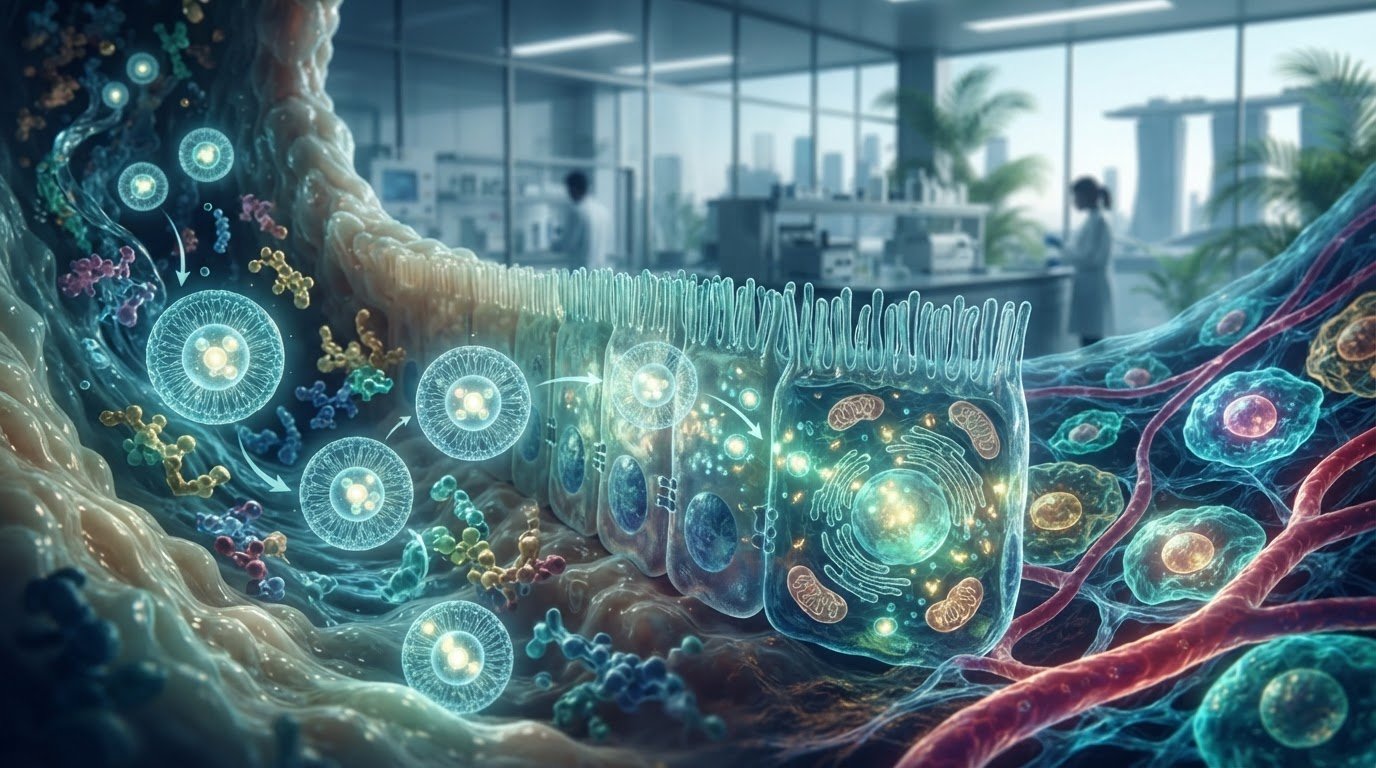
An estimated 80% of standard oral supplements are degraded by the gastrointestinal environment before the body can ever absorb them. If you have invested in compressed daily tablets and high-dose regimens only to experience negligible physical results, you aren't imagining the deficit; traditional digestive pathways routinely destroy delicate compounds before they reach target tissues. Achieving measurable physiological efficacy doesn't rely on passive digestive megadosing, but on high bioavailability nutrients specifically engineered to survive enzymatic breakdown and cross critical biological membranes intact.
It's understandable to feel frustrated by ambiguous marketing labels like "liposomal" or "nano-emulsified," especially when products fail to produce noticeable health outcomes. In this clinical guide, you'll discover how advanced nutrient delivery systems overcome gastrointestinal barriers to maximize actual cellular uptake. We examine the exact biological mechanics governing cellular transport, identify which essential compounds suffer from severe absorption bottlenecks, and establish the independent laboratory benchmarks necessary to evaluate next-generation formulations with absolute technical confidence.
Key Takeaways
- Understand why cellular uptake, rather than gross ingested dosage, defines the true clinical performance of high bioavailability nutrients within human tissue.
- Uncover the precise biological gauntlet, from destructive enzymatic activity to tight epithelial junctions, that renders standard compressed formulations largely ineffective.
- Compare conventional tablet delivery with advanced nano-encapsulation to see how sub-microscopic carrier systems preserve compound integrity through digestive transit.
- Identify which critical molecules, including endogenous antioxidants and hydrophobic vitamins, experience the most severe absorption bottlenecks without engineered protection.
- Learn the analytical verification standards, such as dynamic light scattering and particle size distribution data, required to validate manufacturer claims before purchasing.
Table of Contents
- What Are High Bioavailability Nutrients and Why Does Uptake Matter?
- The Physiological Gauntlet: Why Standard Nutrients Fail to Absorb
- Delivery System Comparison: Traditional Tablets vs. Nano-Encapsulation
- Crucial Nutrients That Require High Bioavailability Engineering
- How to Identify and Select Scientifically Verified Formulations
What Are High Bioavailability Nutrients and Why Does Uptake Matter?
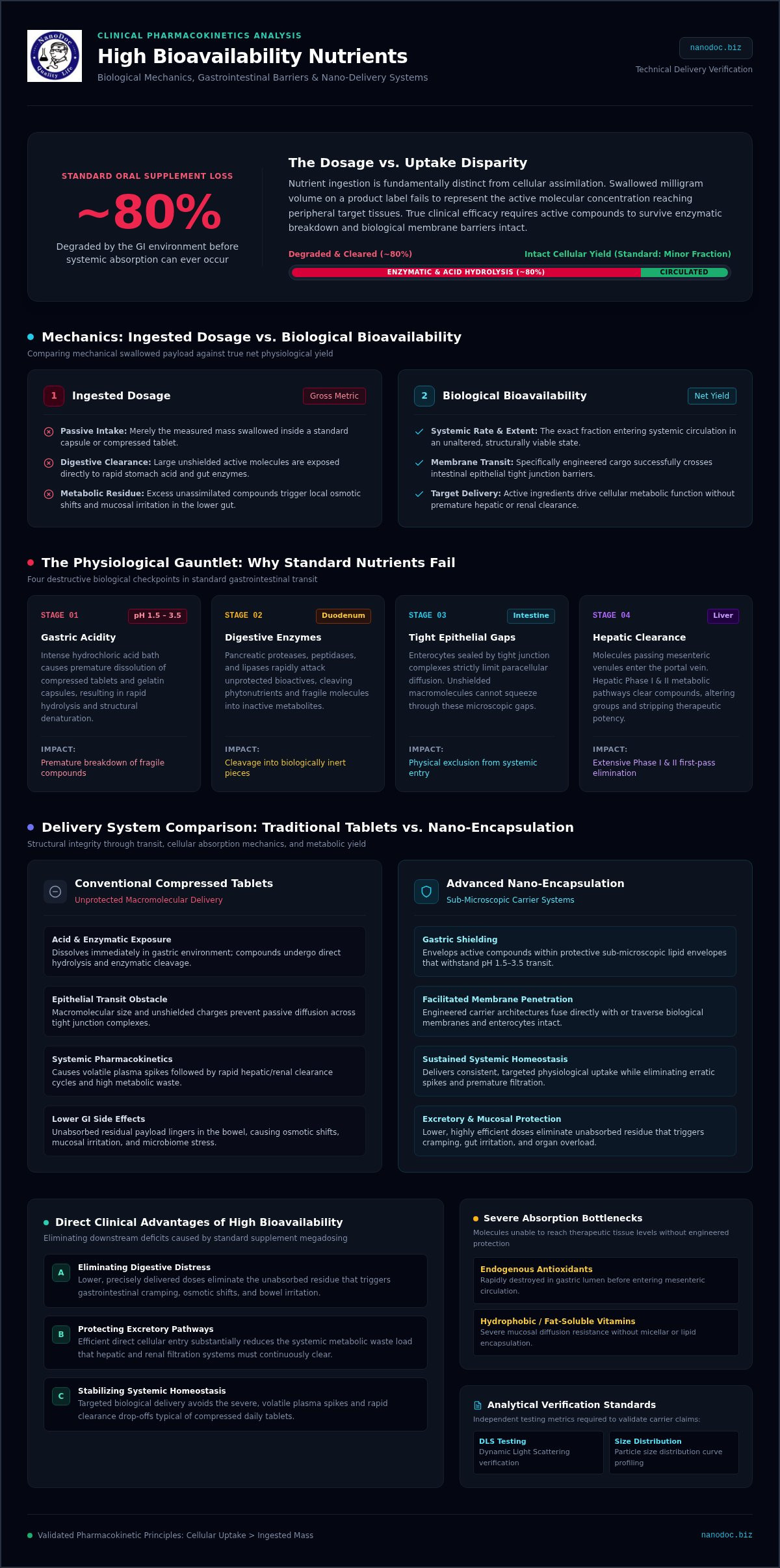
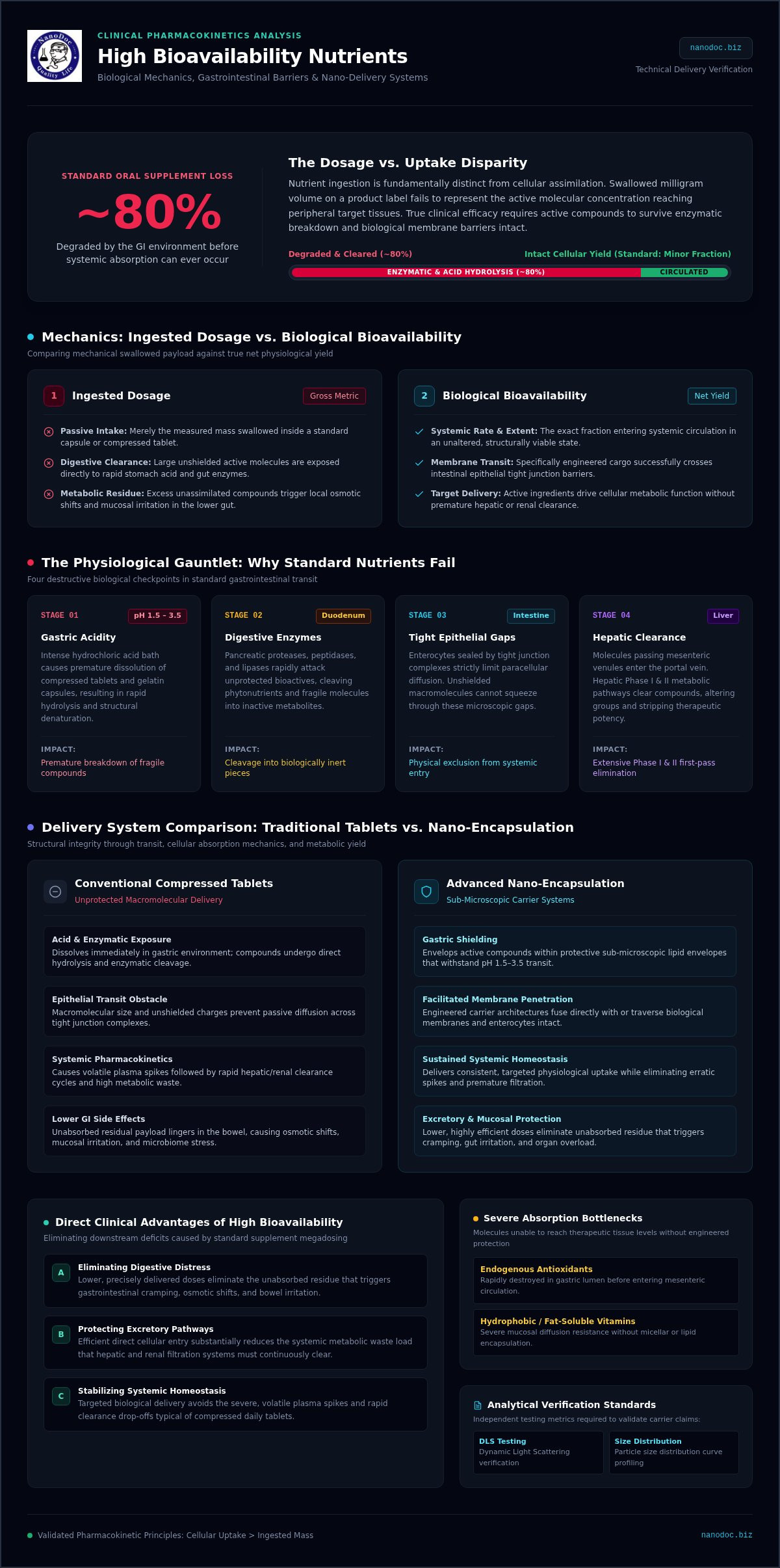
Nutrient ingestion is fundamentally distinct from cellular assimilation. While a supplement label outlines the gross milligram mass inside a capsule, this number fails to represent the actual concentration that reaches peripheral target tissues. When evaluating what is bioavailability in clinical pharmacokinetics, the focus shifts entirely to the rate and extent to which an active substance enters systemic circulation in an unaltered state. Without specialized molecular protection, the human gastrointestinal tract actively degrades and eliminates large, unshielded compounds through renal and digestive pathways before biological utilization can occur.
Defining Biological Bioavailability vs. Ingested Dosage
Ingested dosage is merely a mechanical metric of swallowed volume; biological bioavailability represents the net physiological yield that successfully crosses the intestinal epithelium to drive metabolic function. When an active molecule enters the gut lumen, it faces immediate enzymatic clearance and hepatic first-pass metabolism. True cellular absorption efficiency is not measured by the concentration entering the stomach, but by the precise fraction of intact molecular cargo that reaches target cells without structural degradation. Engineering high bioavailability nutrients addresses this disparity directly, ensuring active ingredients remain structurally viable until reaching target intracellular sites.
The Clinical Consequence of Low Compound Uptake
When formulations demonstrate poor uptake, the unabsorbed payload doesn't simply disappear. Large quantities of unassimilated compounds linger in the lower digestive tract, where they frequently induce local osmotic shifts, trigger gut mucosal irritation, and disrupt the commensal microbiome. At the same time, compounds that manage to cross into the bloodstream in unstable forms place unnecessary filtration stress on the kidneys and liver. Prioritizing high bioavailability nutrients mitigates these clinical drawbacks through distinct metabolic advantages:
- Eliminating digestive distress: Lower, precisely delivered doses eliminate the unabsorbed residue that triggers gastrointestinal discomfort and cramping.
- Protecting excretory pathways: Efficient cellular entry reduces the systemic waste load that renal and hepatic systems must continuously process and eliminate.
- Stabilizing systemic homeostasis: Consistent, targeted uptake prevents the volatile plasma spikes and rapid clearance cycles typical of compressed mineral tablets.
The Physiological Gauntlet: Why Standard Nutrients Fail to Absorb
Before an active compound can reach target peripheral tissues, it must survive an aggressive biochemical obstacle course designed primarily to neutralize foreign substances. Standard supplements rarely account for these hostile checkpoints, resulting in widespread degradation long before any cellular interaction occurs. Ensuring systemic efficacy requires engineering high bioavailability nutrients capable of withstanding each stage of this digestive sequence intact.
Gastric Acidity and Digestive Enzyme Breakdown
The human stomach maintains an acidic environment with a pH typically between 1.5 and 3.5. This intense bath of hydrochloric acid denatures fragile molecular configurations almost immediately upon contact. Conventional compressed tablets and standard gelatin capsules dissolve prematurely in the gastric chamber, leaving exposed bioactives vulnerable to rapid hydrolysis. As the mixture enters the duodenum, pancreatic proteases, peptidases, and lipases cleave unprotected phytonutrients into biologically inactive metabolites, rendering the original dose ineffective.
Intestinal Epithelial Permeability and First-Pass Clearance
Surviving gastric transit does not guarantee absorption. The intestinal wall is lined with enterocytes sealed by tight junction complexes that strictly limit paracellular diffusion. Unshielded macromolecules simply cannot squeeze through these microscopic gaps. Molecules that manage transcellular passage enter the mesenteric venules and flow directly through the portal vein into the liver. Here, hepatic Phase I and Phase II metabolic pathways clear a large percentage of active compounds, altering their functional groups and eliminating therapeutic potency before systemic circulation begins.
The Hydrophobic Barrier of the Cellular Membrane
Target cells present the ultimate physical obstacle: a densely packed phospholipid bilayer with a hydrophobic core. This architecture systematically repels unshielded, large, or unstable particles. Polar water-soluble nutrients rely on specialized membrane transporter proteins that saturate quickly at standard dosages, capping absorption capacity. Conversely, lipophilic compounds aggregate into insoluble clusters within the aqueous fluids of the gut, preventing proper dispersion across the mucosal surface. Developing authentic high bioavailability nutrients demands engineered carrier architectures that traverse both aqueous intestinal fluids and lipid cellular membranes. For individuals seeking reliable physiological uptake, exploring targeted delivery platforms like Nano Cellular Essential Nutrition demonstrates how sub-microscopic shielding protects delicate active ingredients against these cellular defenses.
Delivery System Comparison: Traditional Tablets vs. Nano-Encapsulation
A nutrient's delivery format determines its clinical survival. While consumers often assume active ingredients operate independently of their carrier, physical architecture dictates whether a molecule reaches target tissues or breaks down prematurely. Formulating authentic high bioavailability nutrients requires moving beyond crude mechanical compression toward engineered encapsulation platforms designed for cellular uptake.
The Mechanical Limits of Standard Compressed Tablets
Conventional compressed tablets rely on synthetic binders, lubricants, and excipients to consolidate powdered active ingredients. These additives often delay tablet dissolution past the proximal jejunum, pushing compounds beyond optimal upper-intestinal absorption windows. In addition, the industrial compaction process generates substantial friction and mechanical heat, which degrades delicate botanicals and cofactors before packaging. When these solid tablets finally disintegrate in the gut, they release coarse crystalline particles that are far too large for enterocyte pinocytosis, leaving the bulk of the dose unassimilated.
Evaluating Liposomal Formulations vs. Patented Nano-Delivery
Liposomal carriers represented an initial step forward by shielding nutrients within phospholipid spheres. Even so, conventional liposomal manufacturing frequently yields inconsistent vesicle diameters spanning several hundred nanometers, making them unstable against bile salts and gastric shear. Advanced nano-emulsions solve this structural instability by engineering uniform, sub-100-nanometer envelopes that remain resilient throughout transit. This structural principle aligns directly with modern anti-ageing dermal technology, where controlled nanoscale dimensions are equally vital for penetrating dense biological barriers without carrier collapse.
Nanoparticle Scale and Direct Cellular Translocation
Reducing carrier size to a true nanometer scale exponentially expands compound surface area relative to its mass, accelerating biochemical interface dynamics. Sub-100-nanometer envelopes don't compete for saturated membrane transporter channels; instead, they utilize direct endocytosis and enterocyte transcellular transport. Nanoscale geometry drives cellular membrane translocation by facilitating rapid, non-destructive fusion across the phospholipid bilayer. By protecting delicate active ingredients inside uniform nano-vesicles, engineered high bioavailability nutrients achieve intracellular delivery that standard mechanical tablets simply can't replicate.
Crucial Nutrients That Require High Bioavailability Engineering
Certain biological molecules possess molecular structures that make unassisted digestive assimilation virtually impossible. While simple minerals or synthetic compounds sometimes manage passive gut transit, delicate cofactors and hydrophobic botanicals demand advanced delivery solutions. Identifying these compounds reveals why relying on standard manufacturing methods leaves critical biochemical pathways unsupported, highlighting the necessity of high bioavailability nutrients in modern wellness regimens.
Master Cellular Antioxidants: The Glutathione Challenge
Glutathione serves as the primary endogenous intracellular antioxidant within human physiology, yet oral administration of standard glutathione presents an extreme biological hurdle. In its raw crystalline state, stomach hydrochloric acid and intestinal peptidases cleave the delicate tripeptide chain into its basic precursor amino acids before it ever reaches cellular membranes. Advanced nano-encapsulation encloses the complete tripeptide inside a protective lipid envelope, preserving structural integrity during transit. This shield permits direct intracellular delivery, directly supporting mitochondrial respiration and neutralizing reactive oxygen species without systemic degradation.
Fat-Soluble Compounds and Plant Polyphenols
Hydrophobic bioactives illustrate another severe delivery bottleneck. Fat-soluble molecules like Coenzyme Q10 and botanical polyphenols such as curcumin exhibit near-zero native solubility in aqueous gastrointestinal fluids, causing them to aggregate into unabsorbable clusters. Through precision nano-emulsification, these dense lipophilic compounds are restructured into thermodynamically stable, water-dispersible colloidal formations. This drastic physical reorganization allows much lower gross doses to achieve elevated circulating concentrations across target peripheral tissues, maximizing clinical impact while eliminating compound waste.
Targeted Oral-Immune and Mucosal Nutrients
Oral mucosa delivery provides a proven shortcut around gastrointestinal clearance mechanisms entirely. The sublingual and buccal membranes feature dense subepithelial vascular networks that allow nano-sized carriers to enter systemic circulation directly. Research exploring the link between oral hygiene for immunity confirms that mucosal barriers represent the primary protective gateway for the entire human immune network. Delivering active immunomodulators through mucosal nano-carriers avoids hepatic first-pass metabolism, ensuring rapid physiological action. To access these direct delivery benefits, explore the advanced solutions available within the Nano Cellular Essential Nutrition collection.
How to Identify and Select Scientifically Verified Formulations
The wellness market frequently relies on unregulated scientific terminology. Terms like "liposomal" and "nano-emulsified" often appear on supplement packaging without formal regulatory oversight or standardized definitions. Because dietary supplement oversight generally operates post-market, consumers cannot rely on marketing descriptions alone. Identifying authentic high bioavailability nutrients requires analyzing verifiable laboratory metrics rather than accepting unsubstantiated package claims.
Evaluating Laboratory Certification and Particle Uniformity
Legitimate manufacturers substantiate their structural claims through independent analytical testing. The primary benchmark for evaluating nanoscale solutions is Dynamic Light Scattering (DLS) analysis, which measures particle diameter and dispersity. When reviewing manufacturer documentation, prioritize these specific technical parameters:
- Sub-100-nanometer particle sizing: True nano-delivery requires that active carrier structures consistently measure below 100 nanometers to facilitate direct cellular entry.
- A low Polydispersity Index (PDI): A PDI below 0.2 indicates a highly uniform distribution, confirming that particles won't agglomerate into unabsorbable clusters in liquid suspensions.
- Physiological pH stability: Verified formulations, such as those engineered with patented LG Bionano delivery technology, demonstrate documented resistance against structural collapse when exposed to simulated gastric acid.
Strategic Implementation for Long-Term Cellular Vitality
Upgrading your nutritional regimen is an exercise in biological efficiency. Shifting away from standard compressed tablets laden with synthetic binders and lubricants relieves unnecessary metabolic stress on your liver and kidneys. By delivering active ingredients inside stable, uniform nano-vesicles, you establish predictable plasma concentrations using significantly lower gross dosages.
Long-term cellular support depends on consistency and structural integrity. Rather than cycling through massive, unabsorbed doses that trigger digestive distress, select delivery platforms validated by independent laboratory analysis. Investing in verified solutions like Nano Cellular Essential Nutrition ensures your body receives high bioavailability nutrients engineered specifically to bypass physiological barriers and fuel cellular performance.
Advancing Beyond Passive Ingestion to Measurable Cellular Uptake
True nutritional efficacy requires closing the gap between swallowed milligram mass and direct intracellular assimilation. Overcoming the digestive gauntlet of stomach acid, destructive enzymes, and tight epithelial junctions demands engineering innovation rather than passive megadosing. Through precision sub-100-nanometer carrier architectures, high bioavailability nutrients protect fragile bioactives from premature degradation and enable seamless transcellular transport across dense biological barriers.
Achieving measurable physiological vitality begins with demanding objective analytical verification over ambiguous marketing claims. Formulations engineered with patented LG Bionano nano-delivery technology bridge advanced laboratory science and proactive personal health. Every formulation undergoes independent laboratory verification to confirm uniform nanoscale particle sizing, structural stability against digestive stress, and optimal cellular uptake. You don't have to accept standard compressed tablets that pass through your system unabsorbed. Take the definitive step toward biological efficiency and Explore Advanced Nano Cellular Essential Nutrition to optimize your daily cellular potential with confidence.
Frequently Asked Questions
What does the term high bioavailability mean when referring to nutritional supplements?
Bioavailability refers to the proportion of an active compound that enters systemic circulation intact and becomes accessible for intracellular uptake. Rather than reflecting the total swallowed milligram mass on a supplement label, high bioavailability nutrients focus on net physiological yield. Formulations with verified bioavailability survive stomach acid, navigate intestinal tight junctions, and reach peripheral target tissues without undergoing premature metabolic breakdown or rapid renal clearance.
Why do standard multivitamin tablets often demonstrate poor biological absorption in clinical trials?
Standard tablets fail primarily due to aggressive physical compaction, synthetic binders, and poor solubility. Dense tablet binders delay disintegration until compounds pass the upper intestine, missing prime absorption windows. Additionally, unshielded active ingredients face direct degradation from stomach acid and digestive enzymes. Without specialized delivery architectures, coarse crystalline powders cannot penetrate the intestinal mucosal layer, causing most of the dose to pass unassimilated through excretory pathways.
How does nano-encapsulation differ fundamentally from conventional liposomal delivery methods?
Nano-encapsulation differs primarily in particle uniformity, size scale, and kinetic stability. While standard liposomes often produce irregular vesicle diameters ranging from 200 to over 500 nanometers, patented bionano delivery platforms engineer uniform sub-100-nanometer envelopes. These ultra-small dimensions prevent carrier aggregation, ensure stability across fluctuating gastrointestinal pH levels, and allow direct transcellular endocytosis rather than relying on saturated digestive protein transporters.
Can high bioavailability nutrients cause toxicity or mineral overload within the body?
High bioavailability nutrients actually lower the risk of tissue overload by eliminating the need for crude megadosing. Conventional supplements often pack excessive elemental doses to compensate for poor uptake, which burdens liver and kidney clearance pathways. Engineered nano-formulations deliver precise, physiological doses that cells readily assimilate. The body regulates these lower, intact concentrations naturally, avoiding the localized digestive irritation and systemic stress associated with unabsorbed synthetic megadoses.
Does taking standard supplements with a high-fat meal achieve the same result as nano-formulations?
Dietary fats trigger bile secretion to aid micelle formation, but they cannot replicate the clinical efficiency of nano-encapsulation. Co-ingesting fat only slightly improves lipid dispersion; it doesn't protect vulnerable molecules from gastric acid hydrolysis or enzymatic cleaving. Furthermore, digestive transit variations and bile production differences make dietary absorption highly erratic. Nano-formulations provide thermodynamically stable, water-dispersible carriers that bypass digestive variables entirely for consistent uptake.
What laboratory tests verify whether a supplement actually possesses true nanoscale particle dimensions?
Dynamic Light Scattering (DLS) is the gold standard laboratory analysis used to measure nanoscale particle diameter and distribution. DLS testing establishes the Polydispersity Index (PDI), confirming whether particles remain uniformly suspended below 100 nanometers without clustering. Independent testing laboratories also utilize Transmission Electron Microscopy (TEM) and Nanoparticle Tracking Analysis (NTA) to visually verify particle morphology, membrane encapsulation integrity, and structural stability across gastric acid simulations.
Which specific vitamins and minerals experience the lowest natural absorption rates in the human gut?
Master antioxidants like glutathione face near-total enzymatic degradation in the stomach, rendering raw oral doses largely ineffective. Hydrophobic botanicals such as curcumin and coenzyme Q10 exhibit baseline absorption rates well below 5% due to water insolubility. Similarly, inorganic mineral forms like magnesium oxide demonstrate poor cellular uptake, often under 4%, frequently causing osmotic intestinal cramping rather than delivering restorative systemic benefits.
Frequently Asked Questions
- What does the term high bioavailability mean when referring to nutritional supplements?
- Bioavailability refers to the proportion of an active compound that enters systemic circulation intact and becomes accessible for intracellular uptake. Rather than reflecting the total swallowed milligram mass on a supplement label, high bioavailability nutrients focus on net physiological yield. Formulations with verified bioavailability survive stomach acid, navigate intestinal tight junctions, and reach peripheral target tissues without undergoing premature metabolic breakdown or rapid renal clearance.
- Why do standard multivitamin tablets often demonstrate poor biological absorption in clinical trials?
- Standard tablets fail primarily due to aggressive physical compaction, synthetic binders, and poor solubility. Dense tablet binders delay disintegration until compounds pass the upper intestine, missing prime absorption windows. Additionally, unshielded active ingredients face direct degradation from stomach acid and digestive enzymes. Without specialized delivery architectures, coarse crystalline powders cannot penetrate the intestinal mucosal layer, causing most of the dose to pass unassimilated through excretory pathways.
- How does nano-encapsulation differ fundamentally from conventional liposomal delivery methods?
- Nano-encapsulation differs primarily in particle uniformity, size scale, and kinetic stability. While standard liposomes often produce irregular vesicle diameters ranging from 200 to over 500 nanometers, patented bionano delivery platforms engineer uniform sub-100-nanometer envelopes. These ultra-small dimensions prevent carrier aggregation, ensure stability across fluctuating gastrointestinal pH levels, and allow direct transcellular endocytosis rather than relying on saturated digestive protein transporters.
- Can high bioavailability nutrients cause toxicity or mineral overload within the body?
- High bioavailability nutrients actually lower the risk of tissue overload by eliminating the need for crude megadosing. Conventional supplements often pack excessive elemental doses to compensate for poor uptake, which burdens liver and kidney clearance pathways. Engineered nano-formulations deliver precise, physiological doses that cells readily assimilate. The body regulates these lower, intact concentrations naturally, avoiding the localized digestive irritation and systemic stress associated with unabsorbed synthetic megadoses.
- Does taking standard supplements with a high-fat meal achieve the same result as nano-formulations?
- Dietary fats trigger bile secretion to aid micelle formation, but they cannot replicate the clinical efficiency of nano-encapsulation. Co-ingesting fat only slightly improves lipid dispersion; it doesn't protect vulnerable molecules from gastric acid hydrolysis or enzymatic cleaving. Furthermore, digestive transit variations and bile production differences make dietary absorption highly erratic. Nano-formulations provide thermodynamically stable, water-dispersible carriers that bypass digestive variables entirely for consistent uptake.
- What laboratory tests verify whether a supplement actually possesses true nanoscale particle dimensions?
- Dynamic Light Scattering (DLS) is the gold standard laboratory analysis used to measure nanoscale particle diameter and distribution. DLS testing establishes the Polydispersity Index (PDI), confirming whether particles remain uniformly suspended below 100 nanometers without clustering. Independent testing laboratories also utilize Transmission Electron Microscopy (TEM) and Nanoparticle Tracking Analysis (NTA) to visually verify particle morphology, membrane encapsulation integrity, and structural stability across gastric acid simulations.
- Which specific vitamins and minerals experience the lowest natural absorption rates in the human gut?
- Master antioxidants like glutathione face near-total enzymatic degradation in the stomach, rendering raw oral doses largely ineffective. Hydrophobic botanicals such as curcumin and coenzyme Q10 exhibit baseline absorption rates well below 5% due to water insolubility. Similarly, inorganic mineral forms like magnesium oxide demonstrate poor cellular uptake, often under 4%, frequently causing osmotic intestinal cramping rather than delivering restorative systemic benefits.