

A full night in bed doesn’t always mean restorative sleep. Adults generally need 7 to 9 hours, yet stress, allergy symptoms, disrupted sleep and nutrient deficiencies may still leave you tired. If you’re wondering why you’re always tired even with enough sleep, sleep quality and other contributing factors matter as much as time spent in bed.
Waking unrefreshed can be frustrating, especially when you’ve made time for what seems like enough rest. This article explores how stress and anxiety, allergies, poor-quality sleep and possible nutrient deficiencies may affect daytime energy, and why persistent tiredness can have several contributing factors. You’ll find practical ways to consider each one, understand why sleep duration may not tell the whole story, and recognise when ongoing fatigue warrants medical attention. The aim is to help you make sense of the pattern without assuming that one cause explains every case.
Key Takeaways
- Build a calmer pre-sleep routine and review caffeine timing, since stress and stimulants can interfere with restorative sleep.
- Notice whether allergy symptoms, such as congestion, are disturbing your rest and contributing to daytime fatigue.
- Look beyond hours slept: repeated awakenings, sleep environment and possible sleep disorders can affect how refreshed you feel.
- Distinguish ordinary tiredness from persistent fatigue that disrupts daily life, and seek medical assessment when it continues or has no clear cause.
- Consider low iron or vitamin D as possible contributors, but avoid assuming a deficiency is the cause without appropriate assessment.
Table of Contents
1. Stress, anxiety and pain affecting sleep
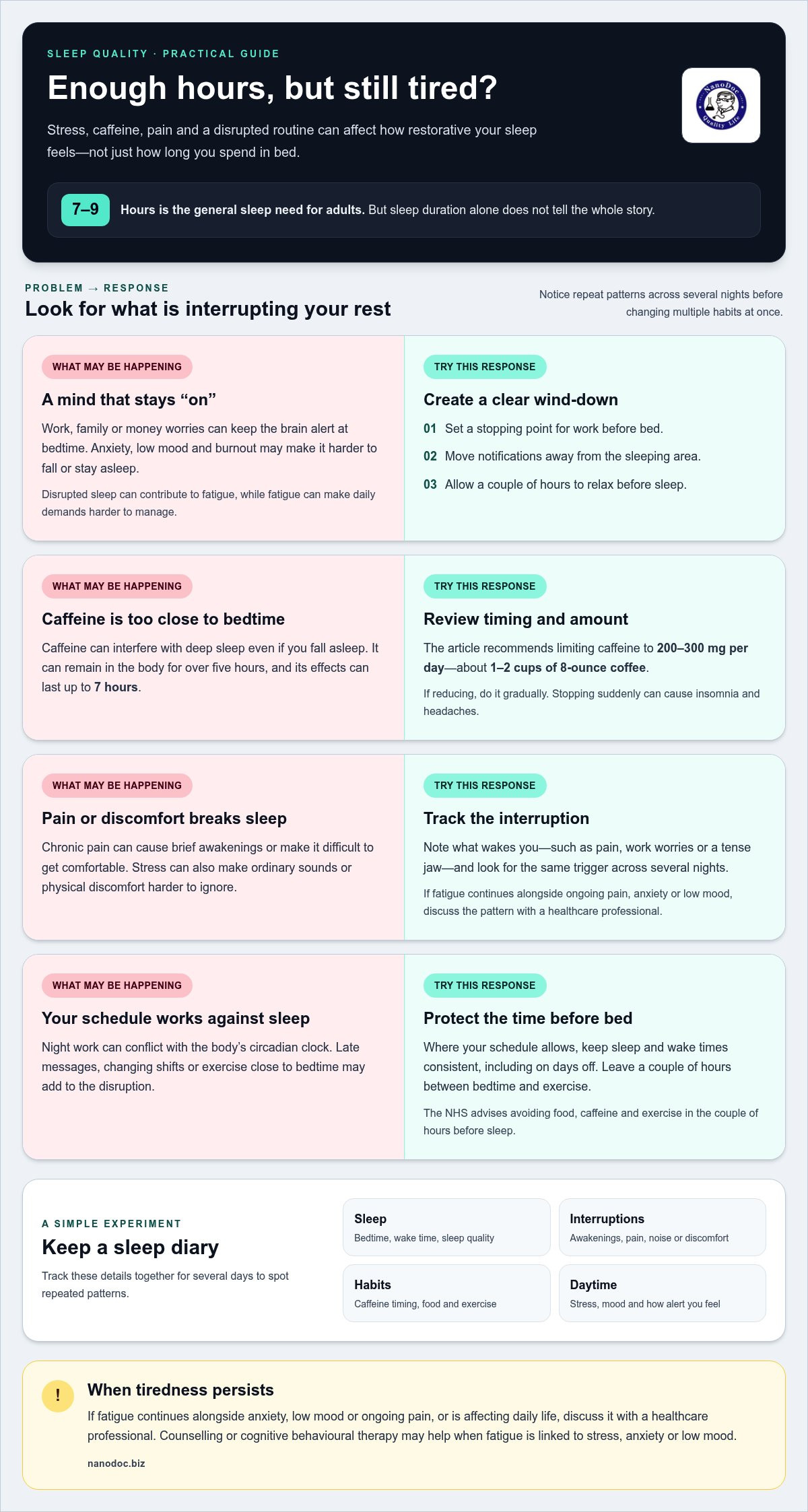
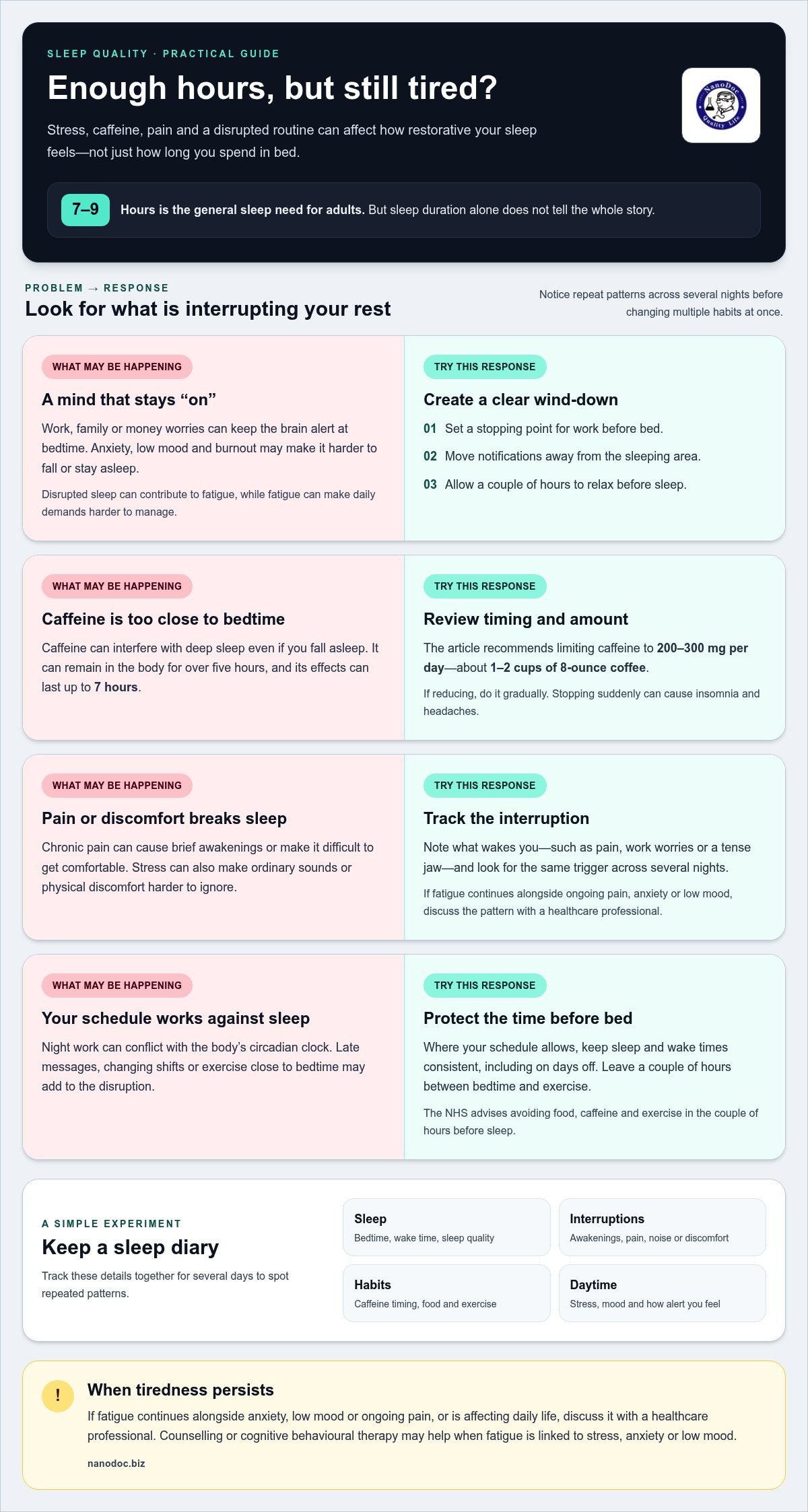
Stress, anxiety, depression and burnout can keep the brain alert at night, making it harder to fall or stay asleep. Worries about work, finances or family may continue after bedtime, while low mood can affect motivation and daytime energy. This can create a cycle: disrupted sleep contributes to fatigue, and fatigue makes daily demands harder to manage. If you’re asking why you’re always tired even with enough sleep, consider whether stress or mood changes are affecting the quality of your rest, not just its duration.
Stress can also make the body more alert to its surroundings, so ordinary sounds or physical discomfort become harder to ignore. Anxiety may bring racing thoughts, while chronic pain can cause brief awakenings or make it difficult to get comfortable. A useful first step is to note what interrupts your sleep, such as pain, work worries or waking with a tense jaw. Tracking these details can show whether the same trigger appears across several nights.
Shift work adds another challenge because working at night can conflict with the body’s circadian clock, which helps regulate sleep and alertness over a 24-hour period. Workplace stress may compound the disruption when changing shifts, deadlines or late messages extend mental activity into intended rest time. Where your schedule allows, keep sleep and wake times consistent, including on days off. Before bed, set a clear stopping point for work and move notifications away from the sleeping area.
The NHS advises relaxing for a couple of hours before sleep to help with tiredness or fatigue. It also advises avoiding food, caffeine and exercise in the couple of hours before sleep. Caffeine can interfere with deep sleep even if you fall asleep after drinking it, and it can remain in the body for over five hours. Its effects can last up to 7 hours. The article recommends limiting caffeine to 200 to 300 mg per day, about 1 to 2 cups of 8-ounce coffee.
For a practical experiment, track caffeine timing, pain, stress and sleep quality together for several days. If you usually drink coffee in the afternoon, reduce your intake gradually rather than stopping suddenly, which can cause insomnia and headaches. Regular physical activity can support wellbeing, reduce stress and help most people sleep; choose a time that leaves a couple of hours before bed. If fatigue persists alongside anxiety, low mood or ongoing pain, discuss the pattern with a healthcare professional. Counselling or cognitive behavioural therapy may help when fatigue is linked to stress, anxiety or low mood.
2. Can allergies make you tired?
Yes. Alcohol can fragment sleep and reduce restorative REM sleep, while sleeping pills, some prescription drugs and over-the-counter remedies such as melatonin can cause morning grogginess. Caffeine can interfere with deep sleep even if it doesn’t stop you falling asleep. Allergy symptoms can also disrupt sleep and leave you tired during the day.
A blocked nose, sneezing, itching or watery eyes can make it harder to breathe comfortably and stay asleep. For example, someone with nighttime congestion may wake repeatedly to clear their nose without fully noticing each interruption. The result can be poorer sleep quality and lower energy, even when time in bed seems adequate. Note whether symptoms worsen after cleaning the bedroom, contact with pets or time outdoors; these patterns may help identify triggers.
To distinguish allergy symptoms from other lifestyle factors, keep a simple sleep diary for several days. Record bedtime, awakenings, congestion, medication use, caffeine and alcohol. Also note whether the room was noisy, bright or warm. Comparing entries can reveal whether a particular habit or symptom regularly precedes a difficult night. A quiet, dark sleeping space can reduce environmental interruptions, but it won’t resolve nasal symptoms on its own.
Caffeine can affect sleep quality by keeping the brain more alert and limiting deep sleep. Its effects can last up to 7 hours, so an afternoon coffee or strong tea can still matter at bedtime. Alcohol creates a different pattern: it may help you fall asleep faster, then fragment sleep later and reduce restorative REM sleep. A full 8 hours in bed after drinking can still end with next-day tiredness. The sleep specialist advises having the last alcoholic drink at least two hours before bed.
Review timing and symptoms before changing several habits at once. Try moving caffeine earlier, then observe whether falling asleep or waking overnight changes. If alcohol is part of your evening routine, compare nights with and without it while keeping bedtime similar. For suspected allergies, note whether congestion, sneezing or itchy eyes accompany poor sleep, and record any medicine taken. This can help distinguish a possible allergy pattern from caffeine, alcohol, noise or light. Don’t stop a prescribed medicine on your own; discuss persistent morning drowsiness with the prescriber, especially if it affects driving or daily tasks.
3. What is unrefreshing sleep, exactly?
Adults generally need 7 to 9 hours of sleep each night. Assess sleep quality by noting how easily you fall asleep, awakenings, and how alert you feel after waking. A simple sleep diary can capture bedtime, wake time, interruptions and daytime sleepiness. For example, record whether you wake refreshed after a full night or struggle to stay alert at breakfast. This helps distinguish time in bed from restorative sleep.
Sleep unfolds in cycles, with an average night containing four to six cycles. Each cycle comprises four different stages, and the pattern repeats throughout the night. A longer sleep period doesn’t automatically mean better quality if discomfort or noise repeatedly interrupts those stages. Someone may sleep a full eight hours and still feel as tired as after an all-nighter. The duration looks sufficient, but how you feel on waking suggests the sleep may not have been restorative.
Some interruptions are brief enough that a person doesn’t remember waking. Sleep apnea, for instance, can cause repeated awakenings that disrupt restorative sleep; people with the condition may wake dozens of times per hour. A partner might notice pauses in breathing or frequent snoring, while the sleeper recalls little. Persistent morning tiredness alongside these observations is useful information to share during a health assessment.
The bedroom environment can also fragment sleep without fully waking you. A room that’s too bright, noisy or warm may trigger brief awakenings or make it harder to settle. The NHS advises keeping the sleeping area not too bright, noisy or warm. Try one practical change at a time, such as blocking street light or reducing a recurring sound, then record whether your awakenings or morning alertness change.
Insufficient sleep is one explanation, but poor-quality sleep and sleeping too long can also contribute to fatigue. Regularly sleeping for 10 or more hours while still feeling unrefreshed could signal an underlying issue. Sleep difficulties can involve trouble falling asleep, waking during the night or waking earlier than intended, and may affect daytime wellbeing. If you’re experiencing chronic fatigue, note whether it follows short nights, frequent interruptions or unusually long sleep.
Keep a consistent record for several nights: write down sleep and wake times, awakenings, room conditions and daytime alertness. Include examples, such as waking with a dry mouth or feeling sleepy during a morning meeting. Compare patterns rather than relying on one difficult night. If tiredness continues despite adequate sleep or disrupts daily activities, share the record with a healthcare professional. It can help clarify whether the main concern is sleep duration, sleep quality or a possible sleep disorder.
4. Does vitamin D deficiency cause tiredness?
Yes, sleep apnoea can cause fatigue after a full night because repeated awakenings interrupt restorative sleep, sometimes without the sleeper noticing. Clues include disrupted sleep and persistent daytime tiredness; a bed partner may notice breathing interruptions. Record these observations alongside your sleep times to discuss at a medical appointment.
Fatigue is a symptom, not a condition in itself. Ordinary tiredness often follows exertion or a demanding day and improves with rest; persistent fatigue can continue despite sleep and interfere with physical or mental tasks. This distinction is useful, but it can’t identify the cause on its own. Note when fatigue began, whether rest changes it, and which daily activities have become difficult.
Vitamin D deficiency is one possibility to discuss, but research is ongoing into whether it directly causes tiredness. Low iron can contribute to restless legs syndrome; uncomfortable leg sensations may ease only with movement and disrupt sleep. Sleeping for over nine hours can also leave some people feeling more tired and less energetic. These patterns can overlap, so sleep duration alone can’t confirm a deficiency or medical condition.
Fatigue can accompany thyroid conditions, diabetes, anaemia, chronic pain, infections, kidney or liver disease, heart or lung disease, autoimmune disorders, fibromyalgia, Long COVID, cancer and its treatment, or recovery from surgery. High blood pressure is a separate health concern; if you’re concerned about your blood pressure as well as fatigue, include both in a medical assessment. A clinician may review your medical history, diet, lifestyle and recent life events, then consider an examination or tests such as bloodwork. Don’t treat fatigue as proof of one specific cause.
The NHS advises seeing a GP if tiredness has lasted for a few weeks and its cause is unclear. Before the appointment, note when fatigue began, how sleep affects it, medicines you take and symptoms such as restless legs or persistent pain. This gives the GP a clearer picture of possible causes and supports a focused assessment.
Seek prompt medical assessment if fatigue is overwhelming, isn’t relieved by rest and sleep, causes distress or makes daily activities difficult. These patterns warrant attention even without a known diagnosis. If tiredness is sudden or rapidly worsening, describe the change clearly when seeking care; its timing and effect on daily function help establish the level of concern.
5. Nutrient deficiencies, including low iron and vitamin D
Low iron and vitamin D are possible contributors to consider when fatigue persists, but tiredness alone can’t identify a nutrient deficiency. Research is ongoing into whether vitamin D deficiency directly causes tiredness. Fatigue can have several causes, including poor sleep, stress, a medical condition or medication effects. Record your symptoms, diet, sleep and medicines before drawing conclusions. This gives a clearer picture than assuming one nutrient explains every low-energy day.
Low iron can contribute to restless legs syndrome. The leg sensations may ease only with movement, making it difficult to settle or stay asleep. Note whether discomfort appears while resting in bed and improves when you get up and walk. Track how often this happens and whether it affects your sleep or daytime energy. Mention these details during a medical assessment, especially if fatigue and restless legs occur together.
Iron deficiency anaemia is another possibility to discuss if persistent fatigue has no clear explanation. Anaemia is among the medical conditions associated with tiredness, but fatigue alone doesn’t establish the diagnosis. A healthcare provider may review your medical history and diet, perform a physical examination, and recommend bloodwork to investigate possible causes. Share specific examples, such as feeling tired during routine activities or finding that symptoms persist despite rest.
Vitamin D production can respond to sunlight exposure. At least 10 minutes of daily sunlight exposure can boost vitamin D production, but that fact doesn’t show whether an individual’s fatigue comes from vitamin D deficiency. Research is still ongoing on the direct relationship between deficiency and tiredness. Write down your usual outdoor routine and any relevant symptoms to discuss with a healthcare provider. Don’t treat a possible deficiency as a confirmed explanation based only on how you feel.
Prepare for an appointment by noting when fatigue began, how it changes, and whether anxiety, sleep disruption or other symptoms occur alongside it. Include a simple account of meals and supplements, plus any recent changes in weight or daily routine. A healthcare provider may use this history to decide whether bloodwork or other investigation is appropriate. If tiredness has lasted for a few weeks and its cause is unclear, the NHS advises seeing a GP. This is especially relevant when fatigue affects daily activities or persists despite rest.
NanoDoc International Pte Ltd: Anti-Ageing Skin Care
NanoDoc International Pte Ltd offers Anti-Ageing Skin Care for readers interested in skin-focused care, alongside Nano Cellular Essential Nutrition for those exploring nutritional products. These are product options, not explanations or treatments for persistent fatigue. If tiredness continues or affects daily life, discuss possible causes such as sleep disruption or nutrient deficiency with a healthcare professional; supplements should not replace assessment or prescribed care.
Choose an offering based on the need it addresses: Anti-Ageing Skin Care for skincare, or Nano Cellular Essential Nutrition for nutrition. For pain-related needs, Pain Relief Care is another category, while Oral & Immunity Care addresses oral and immunity care. Explore NanoDoc International Pte Ltd’s offerings or visit nanodoc.biz to learn more.
Choose a next step that fits your needs
If you’re still asking why you’re always tired even with enough sleep, use that question to guide your next conversation. Track changes in your energy and the situations that affect your daily routine, then share those details with a healthcare professional if fatigue persists. A clearer account of the pattern can help make the discussion more focused.
For product-focused needs, NanoDoc International Pte Ltd offers Anti-Ageing Skin Care, Nano Cellular Essential Nutrition and Pain Relief Care. These products are separate from medical assessment, so persistent or unexplained fatigue calls for an appropriate health discussion, not a product to identify its cause.
If you’d like to learn more about NanoDoc International Pte Ltd’s offerings, contact NanoDoc International Pte Ltd. Taking a considered next step can help you move forward with greater clarity.
Frequently Asked Questions
Can allergies make you tired?
Yes, allergy symptoms can disrupt sleep and leave you tired during the day. For example, nasal congestion may cause repeated waking or make comfortable breathing difficult. Track symptoms alongside sleep, noting whether sneezing, itchy eyes or congestion worsen after particular activities or in your bedroom. This record can help you discuss the pattern with a healthcare professional and distinguish allergy-related disruption from other possible causes.
Can caffeine make you tired?
Yes. Caffeine may make you feel alert initially while interfering with deep sleep later, so next-day tiredness can follow even if you fell asleep normally. Its effects can last up to 7 hours. Try noting the time and amount of coffee, tea or other caffeinated drinks, then compare your sleep and morning energy on days you drink them earlier. Reduce intake gradually rather than stopping suddenly.
Can high blood pressure make you tired?
Fatigue alone can’t tell you whether your blood pressure is high or whether it explains your tiredness. If you already have elevated readings, record them with the time and any symptoms, and discuss the pattern with a healthcare professional. Don’t use tiredness instead of measuring blood pressure or change prescribed treatment based on how energetic you feel.
Can low iron make you tired?
Low iron can contribute to tiredness, including by contributing to restless legs syndrome that interrupts sleep. Notice whether uncomfortable leg sensations occur while resting and ease when you move. Iron deficiency anaemia is another possible medical cause, but symptoms alone can’t confirm it. Share persistent fatigue and any leg symptoms with a healthcare professional, who may assess whether blood tests are appropriate.
Can oversleeping make you tired?
Yes, sleeping longer than usual can leave some people feeling more tired and less energetic. Regularly sleeping for 10 or more hours without feeling refreshed could also signal an underlying issue. Note your actual sleep and wake times, including weekend changes, and compare them with daytime alertness. If long sleep and fatigue persist together, discuss the pattern with a healthcare professional rather than assuming extra time in bed will resolve it.
Does vitamin D deficiency cause tiredness?
It’s possible that low vitamin D and tiredness occur together, but research is ongoing to determine whether vitamin D deficiency directly causes tiredness. Feeling tired doesn’t establish that your vitamin D is low. Note persistent symptoms and discuss possible causes with a healthcare professional, who can consider your history and whether testing is appropriate. Avoid treating fatigue alone as a reason to assume a deficiency or start high-dose supplements.
How can I stop feeling tired all the time?
Start by tracking sleep and daytime energy for several days, including caffeine timing, alcohol, medicines and symptoms. Keep sleep and wake times consistent, and avoid screens in the hour before bed. If you’re wondering why you’re always tired even with enough sleep, this record can reveal patterns worth discussing. Seek medical advice if tiredness lasts a few weeks without a clear cause or interferes with daily life.
Is it possible to get too much sleep?
Yes. Sleeping for over nine hours can leave some people feeling more tired and less energetic, while regularly sleeping for 10 or more hours and still waking unrefreshed could point to an underlying issue. The pattern matters more than one long night. Record sleep duration alongside daytime alertness and changes in routine, then discuss persistent unrefreshing long sleep with a healthcare professional.
Frequently Asked Questions
- Can allergies make you tired?
- Yes, allergy symptoms can disrupt sleep and leave you tired during the day. For example, nasal congestion may cause repeated waking or make comfortable breathing difficult. Track symptoms alongside sleep, noting whether sneezing, itchy eyes or congestion worsen after particular activities or in your bedroom. This record can help you discuss the pattern with a healthcare professional and distinguish allergy-related disruption from other possible causes.
- Can caffeine make you tired?
- Yes. Caffeine may make you feel alert initially while interfering with deep sleep later, so next-day tiredness can follow even if you fell asleep normally. Its effects can last up to 7 hours. Try noting the time and amount of coffee, tea or other caffeinated drinks, then compare your sleep and morning energy on days you drink them earlier. Reduce intake gradually rather than stopping suddenly.
- Can high blood pressure make you tired?
- Fatigue alone can’t tell you whether your blood pressure is high or whether it explains your tiredness. If you already have elevated readings, record them with the time and any symptoms, and discuss the pattern with a healthcare professional. Don’t use tiredness instead of measuring blood pressure or change prescribed treatment based on how energetic you feel.
- Can low iron make you tired?
- Low iron can contribute to tiredness, including by contributing to restless legs syndrome that interrupts sleep. Notice whether uncomfortable leg sensations occur while resting and ease when you move. Iron deficiency anaemia is another possible medical cause, but symptoms alone can’t confirm it. Share persistent fatigue and any leg symptoms with a healthcare professional, who may assess whether blood tests are appropriate.
- Can oversleeping make you tired?
- Yes, sleeping longer than usual can leave some people feeling more tired and less energetic. Regularly sleeping for 10 or more hours without feeling refreshed could also signal an underlying issue. Note your actual sleep and wake times, including weekend changes, and compare them with daytime alertness. If long sleep and fatigue persist together, discuss the pattern with a healthcare professional rather than assuming extra time in bed will resolve it.
- Does vitamin D deficiency cause tiredness?
- It’s possible that low vitamin D and tiredness occur together, but research is ongoing to determine whether vitamin D deficiency directly causes tiredness. Feeling tired doesn’t establish that your vitamin D is low. Note persistent symptoms and discuss possible causes with a healthcare professional, who can consider your history and whether testing is appropriate. Avoid treating fatigue alone as a reason to assume a deficiency or start high-dose supplements.
- How can I stop feeling tired all the time?
- Start by tracking sleep and daytime energy for several days, including caffeine timing, alcohol, medicines and symptoms. Keep sleep and wake times consistent, and avoid screens in the hour before bed. If you’re wondering why you’re always tired even with enough sleep, this record can reveal patterns worth discussing. Seek medical advice if tiredness lasts a few weeks without a clear cause or interferes with daily life.
- Is it possible to get too much sleep?
- Yes. Sleeping for over nine hours can leave some people feeling more tired and less energetic, while regularly sleeping for 10 or more hours and still waking unrefreshed could point to an underlying issue. The pattern matters more than one long night. Record sleep duration alongside daytime alertness and changes in routine, then discuss persistent unrefreshing long sleep with a healthcare professional.