

If you’re searching for how to increase energy levels naturally, it can be hard to know where to start. Advice about sleep, food and caffeine is everywhere, but a steadier routine often begins with noticing which everyday patterns may be affecting how you feel.
Low energy can affect concentration, work and daily activities. Lifestyle habits are not the only possible explanation, so start with manageable adjustments and observe whether your energy changes over time. Don’t expect one food, drink or habit to provide an immediate fix.
This guide covers practical steps involving sleep, balanced meals, movement, hydration and caffeine, along with a simple way to track what changes. Supplements can be considered as a complement to foundational habits, not a substitute for them. If tiredness persists, worsens or comes with other concerning symptoms, seek medical advice rather than assuming lifestyle changes will resolve it.
Key Takeaways
- Distinguish a temporary dip in energy from tiredness that persists despite rest. Low energy is an experience, not a diagnosis.
- Use regular, balanced meals and a consistent sleep and wake schedule as practical foundations for steadier energy.
- If you’re exploring how to increase energy levels naturally, consider gentle movement and stress-management practices as manageable parts of your routine.
- Track sleep, meals, activity, caffeine and perceived energy, then review the pattern before deciding what to adjust.
- Seek medical assessment for persistent, worsening, unexplained or function-limiting fatigue, and urgent help for severe or sudden symptoms.
Table of Contents
- Why do energy levels fall, and what does “low energy” mean?
- How sleep, food, and hydration support steadier energy
- Can movement, stress management, and caffeine improve energy naturally?
- How to build a natural energy routine and track what changes
- When low energy needs medical attention, and where nutrition fits
Why do energy levels fall, and what does “low energy” mean?
“Low energy” describes how alert or capable you feel at a particular time. On its own, it isn’t a medical diagnosis. You might feel a brief afternoon dip after a demanding morning, or find that a poor night’s sleep makes it harder to concentrate. The first useful step is to notice whether the feeling is temporary and connected to your day, or persistent and difficult to explain.
Energy is influenced by several interacting factors, not one universal measure. Sleep timing and quality affect alertness, while workload and stress can make everyday demands feel more draining. Long gaps between meals, limited fluid intake and little movement may also shape how you feel. These are possible influences, not proof of a specific cause. Reviewing them can help you consider how to increase energy levels naturally without assuming one food, drink or habit will resolve every pattern of tiredness.
Is tiredness the same as persistent fatigue?
Tiredness is common after physical or mental exertion, a disrupted schedule or insufficient rest. It may ease when the demand passes or you have a chance to recover. Fatigue is often used to describe a more persistent sense of exhaustion or reduced capacity. Temporary tiredness may follow a clear demand and improve with rest, while persistent, disproportionate or unexplained fatigue deserves closer attention. Understanding Fatigue offers a broader overview of the term and its different contexts.
Duration and impact matter more than a single low-energy moment. Consider whether you’re repeatedly struggling with usual tasks, whether rest makes a difference and whether the feeling is changing over time. Those observations can help you describe your experience, but they can’t identify a cause by themselves. One symptom alone isn’t enough to diagnose a condition, and persistent tiredness can have more than one possible explanation.
Which daily patterns are worth noticing first?
Before changing several habits at once, take stock of a typical day. Note when you sleep and wake, how demanding your workload feels, when you eat, how much you drink and whether you have opportunities to move. Ask whether your energy dips at a particular time or after a repeated pattern. These observations can guide a manageable experiment, but they don’t confirm that any one habit is responsible.
For example, a late bedtime may coincide with a sluggish morning, or a packed schedule may leave little time for meals and movement. Treat these as clues to review, not conclusions. Lifestyle guidance is general education, not a substitute for medical assessment. If tiredness persists despite rest, worsens, has no clear explanation or interferes with daily function, seek advice from a healthcare professional. The following sections cover practical habits while keeping that distinction in view.
How sleep, food, and hydration support steadier energy
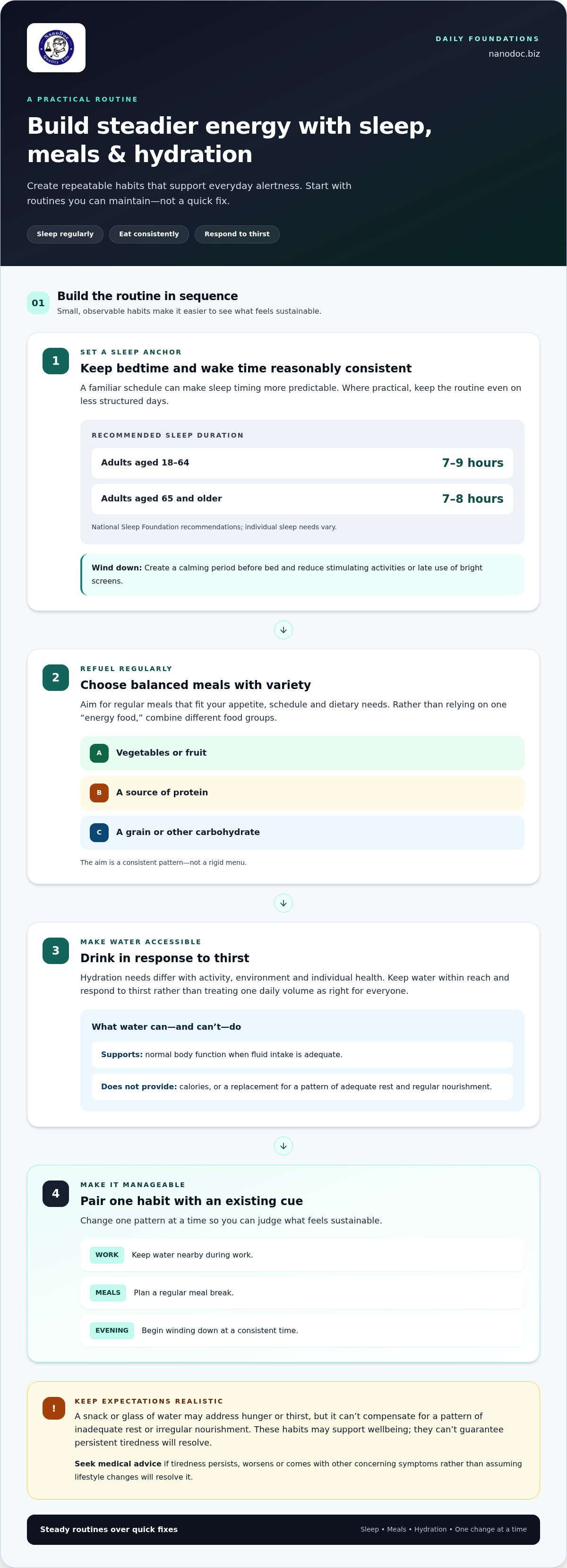
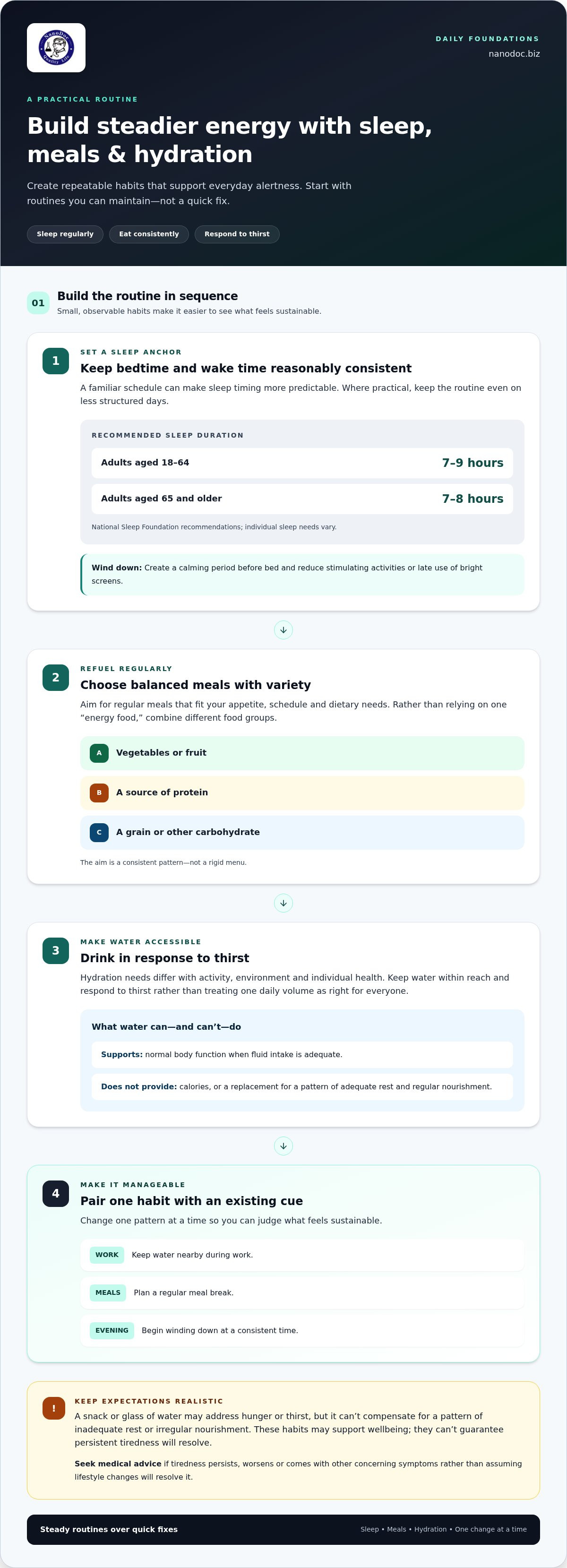
Sleep, meals and fluids are foundations for everyday alertness. A snack or glass of water may address hunger or thirst, but it can’t compensate for a pattern of inadequate rest or irregular nourishment. Instead of looking for one “energy food,” aim for routines that give your body regular opportunities to rest and refuel. These steps may support wellbeing, but they can’t guarantee that persistent tiredness will resolve.
Start by looking at how these habits fit into an ordinary day. A late bedtime, a long gap between meals or limited access to water during a busy schedule may be worth noting. Harvard Health Publishing also outlines lifestyle approaches in Harvard's Natural Energy Boosters. Focus on routines you can maintain rather than trying to adopt every suggestion at once.
How can a consistent sleep routine help?
Where practical, keep your bedtime and wake time reasonably consistent, including on less structured days. A familiar schedule can make sleep timing more predictable. Create a calming wind-down period, and reduce habits that disrupt bedtime, such as stimulating activities or late use of bright screens. The National Sleep Foundation’s 2026 recommendations are 7 to 9 hours for adults aged 18 to 64 and 7 to 8 hours for adults 65 and older. Individual sleep needs still vary.
What eating and drinking habits are worth trying?
Choose regular meals that include a range of nutrient-dense foods rather than relying on one item for lasting energy. For example, combine vegetables or fruit with a source of protein and a grain or other carbohydrate. This offers variety and can help make eating more consistent. The goal isn’t a rigid menu, but a pattern that suits your appetite, schedule and dietary needs.
Hydration needs differ with factors such as activity, environment and individual health. Keep water accessible and respond to thirst rather than treating one daily volume as right for everyone. Water doesn’t provide calories, but adequate fluid intake supports normal body function. If you’re considering supplements, remember they complement food and rest rather than replace them. Nutrient absorption depends on factors beyond a product’s label. That’s the context for exploring high-bioavailability nutrients, not a promise of increased energy.
Pair habits with existing cues: keep water nearby during work, plan a regular meal break and begin winding down at a consistent time. Change one pattern at a time so you can judge what feels sustainable. For information about nutrition products, explore NanoDoc’s nutrition information. Supplements are not a treatment for fatigue.
Can movement, stress management, and caffeine improve energy naturally?
Movement, stress and caffeine affect daily alertness in different ways. Coffee may make you feel more awake for a time, while regular activity can become part of a sustainable routine. Stress-management practices may support wellbeing, but they shouldn’t be treated as a direct cure for fatigue. If you’re considering how to increase energy levels naturally, focus on habits that support daily function rather than relying on repeated quick boosts.
Energy drinks and excess caffeine can temporarily mask tiredness without addressing why it’s happening. Caffeine can also interfere with sleep, particularly when consumed later in the day. A balanced approach considers both the immediate effects and the habits that support wellbeing over time.
What kind of movement is a realistic place to start?
If you’re currently inactive, begin with light movement that fits your ability, such as a short walk or a few minutes of gentle stretching. Aim for consistency rather than intensity. Increase duration or effort gradually as it feels manageable. Sudden, strenuous exercise may be difficult to sustain, especially if you’re not accustomed to it.
Choose an opportunity that already fits your day, such as walking during a break or standing and moving between tasks. If a health limitation or symptoms make activity uncertain, seek professional guidance before increasing your exercise. Movement can support general wellbeing, but it isn’t a substitute for assessing persistent or unexplained fatigue.
How should readers think about caffeine and stress?
Caffeine may temporarily increase alertness, but its effects and timing vary between people. Notice what you consume, when you have it and whether it seems to affect your sleep. The American Heart Association’s 2026 scientific statement says healthy adults can safely consume up to 400 mg per day. This isn’t a target or a suitable amount for everyone. Coffee, tea, energy drinks and other sources all contribute to intake. Repeatedly relying on caffeine to push through tiredness may also make an underlying pattern harder to notice.
Stress can feel mentally and physically draining. A brief pause for slow breathing, a short relaxation practice or deciding which task needs attention first may help you manage a demanding day. These are ways to support wellbeing, not guaranteed ways to restore energy. If stress or caffeine use is affecting sleep, the CDC Guidelines for Sleep Hygiene offer practical guidance on habits that support sleep.
Try one adjustment at a time, such as moving caffeine earlier or adding a short walk, and observe how it fits your routine. Supplements, including Nano Cellular Essential Nutrition, are a complement to food, sleep and appropriate medical assessment, not a treatment for fatigue or a promised energy boost.
How to build a natural energy routine and track what changes
Advice on how to increase energy levels naturally is easier to apply when you can see how it fits your day. Instead of changing sleep, meals, caffeine and activity all at once, observe your routine, adjust one thing and review the result. A brief record can help you notice whether low-energy periods tend to coincide with particular routines or demands. It can’t diagnose a medical cause, but it can give you clearer information to work with.
- Observe your usual routine. For several days, make short notes about sleep, meals, fluids, movement, caffeine, stress and how alert you feel. Aim for a realistic picture, not perfect data.
- Choose one manageable change. Use your notes to identify a small adjustment that suits your schedule and physical ability, such as moving a regular task to a different time or adding a brief pause to your day.
- Keep other habits reasonably steady. If several routines change together, it’s harder to tell which changes may be relevant. Everyday schedules vary, so consistency means keeping the comparison useful, not controlling every detail.
- Review and decide what to do next. Ask whether the adjustment felt sustainable and whether you noticed a pattern in your perceived energy. Keep it, adapt it or try a different single change.
What should a simple energy diary include?
Keep the record brief enough to maintain. Note approximate sleep and wake times, how rested you felt, when you ate, whether you drank fluids, and any movement, caffeine or notable stressors. You might rate perceived energy on the same simple scale each day, such as low, moderate or good, and add a short note about context. Avoid obsessive measurement. Consistency matters more than detail.
Context can make an entry more useful. A demanding workday, travel or a disrupted night may help explain why one day felt different from another, without proving what caused the change. If writing everything down feels burdensome, record only the factors you want to compare. The diary should support reflection, not become another source of pressure.
How can readers test one change at a time?
Choose a change that follows from your notes and is practical to repeat. Keep the rest of your routine reasonably stable where possible, then review your record after enough ordinary days to see how the adjustment fits. There’s no guaranteed timeline or result. If the change is difficult to maintain, make it smaller or try another approach.
Patterns are clues, not conclusions. A diary can’t determine whether tiredness has a medical cause, and apparent links may reflect other factors in your day. If fatigue persists, worsens, remains unexplained or interferes with daily activities, arrange a medical assessment rather than relying on tracking alone. If you’re considering nutritional supplements as part of your overall approach, explore NanoDoc’s nutrition resources. Supplements don’t replace food, sleep or appropriate medical assessment.
When low energy needs medical attention, and where nutrition fits
Lifestyle habits can support general wellbeing, but they don’t explain every change in energy. Learning how to increase energy levels naturally also means knowing when self-directed changes aren’t enough. Fatigue that continues despite rest, gets worse, has no clear explanation or limits work and everyday activities deserves medical assessment. A healthcare professional can consider your circumstances and decide whether further evaluation is appropriate.
When should someone seek professional medical advice?
Arrange medical advice if tiredness persists, repeatedly returns or makes usual tasks difficult, especially when it doesn’t improve with rest. Seek prompt help for symptoms that are new, severe, worsening or otherwise concerning. If symptoms feel sudden or severe, use urgent medical services. This isn’t a diagnostic checklist. Fatigue alone can’t identify its cause, and an article can’t replace an individual assessment.
It may help to note when the tiredness began, how it affects daily life and whether anything has changed in your routine or health. Bring this information, along with a list of medicines and supplements you use, to an appointment. Such notes can help you explain your experience, but they shouldn’t delay care when symptoms are serious or rapidly worsening.
What should readers consider before taking a supplement?
Supplements don’t replace assessment for persistent fatigue or foundational habits such as adequate rest and balanced meals. Before using one, consider your diet, health circumstances and any medicines or other supplements you take. A healthcare professional or pharmacist can help you consider possible interactions and whether supplementation is appropriate for you. Don’t use a supplement to bypass assessment when tiredness is unexplained or interfering with daily life.
Delivery technology alone doesn’t establish that a supplement will increase energy, treat fatigue or produce a clinical outcome. NanoDoc International offers Nano Cellular Essential Nutrition. The company states that its formulations are independently laboratory-tested for nanoparticle size and quality. That testing relates to those specified attributes. It isn’t evidence that a product treats fatigue or improves energy.
Nutrition is one part of a wider health picture. If you’re considering a supplement, treat it as a considered complement to food and other foundational habits, not a replacement for them or for medical assessment. Keep expectations grounded, and seek professional advice when persistent or concerning symptoms need attention. This distinction separates practical lifestyle support from the assessment needed to understand ongoing fatigue.
Make your next step a considered one
A sustainable approach to how to increase energy levels naturally doesn’t require a perfect routine. Choose one realistic habit to continue, adapt or replace based on what you notice in daily life. Treat progress as a way to learn about your own patterns, not a test of willpower. If tiredness remains concerning, include appropriate medical advice in your next steps.
Nutrition may also be an area you choose to explore, while keeping supplements in perspective. They don’t replace balanced food, foundational habits or medical assessment. NanoDoc International is the South East Asia representative of LG Bionano and offers Nano Cellular Essential Nutrition as an optional nutrition product. Explore NanoDoc’s Nano Cellular Essential Nutrition as you consider what fits your broader approach to wellbeing.
Start with one manageable routine change. If nutrition products are part of your approach, explore NanoDoc’s Nano Cellular Essential Nutrition as a complement to foundational habits, not a treatment for fatigue.
Frequently Asked Questions
Can a short nap improve energy during the day?
Yes, a brief nap may temporarily improve alertness if you’re sleepy, but it doesn’t replace sufficient nighttime sleep. If naps leave you groggy or make it harder to fall asleep at night, try resting earlier in the day or skipping the nap. A quiet break without sleeping may also help you pause and reset. If you regularly need naps to get through the day, consider whether your sleep is restorative and seek advice if tiredness persists.
Is it normal for energy levels to change throughout the day?
Yes, alertness can vary during the day. Your internal body clock, sleep quality, activity, meal timing and work demands can all influence how energetic you feel. A predictable dip isn’t automatically a sign of illness. Notice whether it follows a consistent pattern or disrupts your ability to function. A sudden, persistent or unexplained change differs from ordinary variation and may warrant medical advice.
How long should I try lifestyle changes before reviewing my energy levels?
There’s no universal trial period that suits everyone. Give one manageable change enough time to experience it during your usual routine, then review your notes across ordinary days rather than judging it from a single morning. For example, consider whether a new evening routine feels practical on both workdays and days off. The aim is to assess sustainability and patterns, not meet a deadline. Don’t postpone medical advice if fatigue is worsening or limiting daily activities.
Can caffeine make tiredness worse later in the day?
It can, particularly if caffeine consumed later affects your ability to fall asleep or sleep well. That may contribute to feeling tired the next day, even if caffeine initially made you feel more alert. Sensitivity varies, so note the type, amount and timing of coffee, tea or energy drinks alongside your sleep. If you notice a connection, try reducing your caffeine or moving it earlier and observe whether your sleep changes.
Do vitamins or supplements increase energy if I do not have a deficiency?
Not necessarily. Vitamins don’t provide energy in the way food calories do, and taking extra supplements without a deficiency isn’t a dependable solution for tiredness. Supplement needs can depend on diet, health circumstances and medicines, so consider those factors before use and seek appropriate professional advice if you’re unsure. Avoid using supplements to self-treat persistent fatigue. They shouldn’t replace a varied diet or assessment of unexplained symptoms.
What should I do if I wake up tired every morning?
Start by considering whether your sleep opportunity is consistent and whether anything regularly interrupts your rest, such as noise, an irregular schedule or late caffeine. A simple sleep record can help you describe the pattern, but it can’t determine its cause. If morning tiredness continues despite adequate opportunity to rest, affects your daily function or is getting worse, arrange medical assessment. Seek prompt help if symptoms are severe or feel sudden and concerning.
Frequently Asked Questions
- Is tiredness the same as persistent fatigue?
- Tiredness is common after physical or mental exertion, a disrupted schedule or insufficient rest. It may ease when the demand passes or you have a chance to recover. Fatigue is often used to describe a more persistent sense of exhaustion or reduced capacity. Temporary tiredness may follow a clear demand and improve with rest, while persistent, disproportionate or unexplained fatigue deserves closer attention. Understanding Fatigue offers a broader overview of the term and its different contexts. Duration and impact matter more than a single low-energy moment. Consider whether you’re repeatedly struggling with usual tasks, whether rest makes a difference and whether the feeling is changing over time. Those observations can help you describe your experience, but they can’t identify a cause by themselves. One symptom alone isn’t enough to diagnose a condition, and persistent tiredness can have more than one possible explanation.
- Which daily patterns are worth noticing first?
- Before changing several habits at once, take stock of a typical day. Note when you sleep and wake, how demanding your workload feels, when you eat, how much you drink and whether you have opportunities to move. Ask whether your energy dips at a particular time or after a repeated pattern. These observations can guide a manageable experiment, but they don’t confirm that any one habit is responsible. For example, a late bedtime may coincide with a sluggish morning, or a packed schedule may leave little time for meals and movement. Treat these as clues to review, not conclusions. Lifestyle guidance is general education, not a substitute for medical assessment. If tiredness persists despite rest, worsens, has no clear explanation or interferes with daily function, seek advice from a healthcare professional. The following sections cover practical habits while keeping that distinction in view. Sleep, meals and fluids are foundations for everyday alertness. A snack or glass of water may address hunger or thirst, but it can’t compensate for a pattern of inadequate rest or irregular nourishment. Instead of looking for one “energy food,” aim for routines that give your body regular opportunities to rest and refuel. These steps may support wellbeing, but they can’t guarantee that persistent tiredness will resolve. Start by looking at how these habits fit into an ordinary day. A late bedtime, a long gap between meals or limited access to water during a busy schedule may be worth noting. Harvard Health Publishing also outlines lifestyle approaches in Harvard's Natural Energy Boosters. Focus on routines you can maintain rather than trying to adopt every suggestion at once.
- How can a consistent sleep routine help?
- Where practical, keep your bedtime and wake time reasonably consistent, including on less structured days. A familiar schedule can make sleep timing more predictable. Create a calming wind-down period, and reduce habits that disrupt bedtime, such as stimulating activities or late use of bright screens. The National Sleep Foundation’s 2026 recommendations are 7 to 9 hours for adults aged 18 to 64 and 7 to 8 hours for adults 65 and older. Individual sleep needs still vary.
- What eating and drinking habits are worth trying?
- Choose regular meals that include a range of nutrient-dense foods rather than relying on one item for lasting energy. For example, combine vegetables or fruit with a source of protein and a grain or other carbohydrate. This offers variety and can help make eating more consistent. The goal isn’t a rigid menu, but a pattern that suits your appetite, schedule and dietary needs. Hydration needs differ with factors such as activity, environment and individual health. Keep water accessible and respond to thirst rather than treating one daily volume as right for everyone. Water doesn’t provide calories, but adequate fluid intake supports normal body function. If you’re considering supplements, remember they complement food and rest rather than replace them. Nutrient absorption depends on factors beyond a product’s label. That’s the context for exploring high-bioavailability nutrients, not a promise of increased energy. Pair habits with existing cues: keep water nearby during work, plan a regular meal break and begin winding down at a consistent time. Change one pattern at a time so you can judge what feels sustainable. For information about nutrition products, explore NanoDoc’s nutrition information. Supplements are not a treatment for fatigue. Movement, stress and caffeine affect daily alertness in different ways. Coffee may make you feel more awake for a time, while regular activity can become part of a sustainable routine. Stress-management practices may support wellbeing, but they shouldn’t be treated as a direct cure for fatigue. If you’re considering how to increase energy levels naturally, focus on habits that support daily function rather than relying on repeated quick boosts. Energy drinks and excess caffeine can temporarily mask tiredness without addressing why it’s happening. Caffeine can also interfere with sleep, particularly when consumed later in the day. A balanced approach considers both the immediate effects and the habits that support wellbeing over time.
- What kind of movement is a realistic place to start?
- If you’re currently inactive, begin with light movement that fits your ability, such as a short walk or a few minutes of gentle stretching. Aim for consistency rather than intensity. Increase duration or effort gradually as it feels manageable. Sudden, strenuous exercise may be difficult to sustain, especially if you’re not accustomed to it. Choose an opportunity that already fits your day, such as walking during a break or standing and moving between tasks. If a health limitation or symptoms make activity uncertain, seek professional guidance before increasing your exercise. Movement can support general wellbeing, but it isn’t a substitute for assessing persistent or unexplained fatigue.
- How should readers think about caffeine and stress?
- Caffeine may temporarily increase alertness, but its effects and timing vary between people. Notice what you consume, when you have it and whether it seems to affect your sleep. The American Heart Association’s 2026 scientific statement says healthy adults can safely consume up to 400 mg per day. This isn’t a target or a suitable amount for everyone. Coffee, tea, energy drinks and other sources all contribute to intake. Repeatedly relying on caffeine to push through tiredness may also make an underlying pattern harder to notice. Stress can feel mentally and physically draining. A brief pause for slow breathing, a short relaxation practice or deciding which task needs attention first may help you manage a demanding day. These are ways to support wellbeing, not guaranteed ways to restore energy. If stress or caffeine use is affecting sleep, the CDC Guidelines for Sleep Hygiene offer practical guidance on habits that support sleep. Try one adjustment at a time, such as moving caffeine earlier or adding a short walk, and observe how it fits your routine. Supplements, including Nano Cellular Essential Nutrition, are a complement to food, sleep and appropriate medical assessment, not a treatment for fatigue or a promised energy boost. Advice on how to increase energy levels naturally is easier to apply when you can see how it fits your day. Instead of changing sleep, meals, caffeine and activity all at once, observe your routine, adjust one thing and review the result. A brief record can help you notice whether low-energy periods tend to coincide with particular routines or demands. It can’t diagnose a medical cause, but it can give you clearer information to work with.
- What should a simple energy diary include?
- Keep the record brief enough to maintain. Note approximate sleep and wake times, how rested you felt, when you ate, whether you drank fluids, and any movement, caffeine or notable stressors. You might rate perceived energy on the same simple scale each day, such as low, moderate or good, and add a short note about context. Avoid obsessive measurement. Consistency matters more than detail. Context can make an entry more useful. A demanding workday, travel or a disrupted night may help explain why one day felt different from another, without proving what caused the change. If writing everything down feels burdensome, record only the factors you want to compare. The diary should support reflection, not become another source of pressure.
- How can readers test one change at a time?
- Choose a change that follows from your notes and is practical to repeat. Keep the rest of your routine reasonably stable where possible, then review your record after enough ordinary days to see how the adjustment fits. There’s no guaranteed timeline or result. If the change is difficult to maintain, make it smaller or try another approach. Patterns are clues, not conclusions. A diary can’t determine whether tiredness has a medical cause, and apparent links may reflect other factors in your day. If fatigue persists, worsens, remains unexplained or interferes with daily activities, arrange a medical assessment rather than relying on tracking alone. If you’re considering nutritional supplements as part of your overall approach, explore NanoDoc’s nutrition resources. Supplements don’t replace food, sleep or appropriate medical assessment. Lifestyle habits can support general wellbeing, but they don’t explain every change in energy. Learning how to increase energy levels naturally also means knowing when self-directed changes aren’t enough. Fatigue that continues despite rest, gets worse, has no clear explanation or limits work and everyday activities deserves medical assessment. A healthcare professional can consider your circumstances and decide whether further evaluation is appropriate.
- When should someone seek professional medical advice?
- Arrange medical advice if tiredness persists, repeatedly returns or makes usual tasks difficult, especially when it doesn’t improve with rest. Seek prompt help for symptoms that are new, severe, worsening or otherwise concerning. If symptoms feel sudden or severe, use urgent medical services. This isn’t a diagnostic checklist. Fatigue alone can’t identify its cause, and an article can’t replace an individual assessment. It may help to note when the tiredness began, how it affects daily life and whether anything has changed in your routine or health. Bring this information, along with a list of medicines and supplements you use, to an appointment. Such notes can help you explain your experience, but they shouldn’t delay care when symptoms are serious or rapidly worsening.
- What should readers consider before taking a supplement?
- Supplements don’t replace assessment for persistent fatigue or foundational habits such as adequate rest and balanced meals. Before using one, consider your diet, health circumstances and any medicines or other supplements you take. A healthcare professional or pharmacist can help you consider possible interactions and whether supplementation is appropriate for you. Don’t use a supplement to bypass assessment when tiredness is unexplained or interfering with daily life. Delivery technology alone doesn’t establish that a supplement will increase energy, treat fatigue or produce a clinical outcome. NanoDoc International offers Nano Cellular Essential Nutrition. The company states that its formulations are independently laboratory-tested for nanoparticle size and quality. That testing relates to those specified attributes. It isn’t evidence that a product treats fatigue or improves energy. Nutrition is one part of a wider health picture. If you’re considering a supplement, treat it as a considered complement to food and other foundational habits, not a replacement for them or for medical assessment. Keep expectations grounded, and seek professional advice when persistent or concerning symptoms need attention. This distinction separates practical lifestyle support from the assessment needed to understand ongoing fatigue. A sustainable approach to how to increase energy levels naturally doesn’t require a perfect routine. Choose one realistic habit to continue, adapt or replace based on what you notice in daily life. Treat progress as a way to learn about your own patterns, not a test of willpower. If tiredness remains concerning, include appropriate medical advice in your next steps. Nutrition may also be an area you choose to explore, while keeping supplements in perspective. They don’t replace balanced food, foundational habits or medical assessment. NanoDoc International is the South East Asia representative of LG Bionano and offers Nano Cellular Essential Nutrition as an optional nutrition product. Explore NanoDoc’s Nano Cellular Essential Nutrition as you consider what fits your broader approach to wellbeing. Start with one manageable routine change. If nutrition products are part of your approach, explore NanoDoc’s Nano Cellular Essential Nutrition as a complement to foundational habits, not a treatment for fatigue.
- Can a short nap improve energy during the day?
- Yes, a brief nap may temporarily improve alertness if you’re sleepy, but it doesn’t replace sufficient nighttime sleep. If naps leave you groggy or make it harder to fall asleep at night, try resting earlier in the day or skipping the nap. A quiet break without sleeping may also help you pause and reset. If you regularly need naps to get through the day, consider whether your sleep is restorative and seek advice if tiredness persists.
- Is it normal for energy levels to change throughout the day?
- Yes, alertness can vary during the day. Your internal body clock, sleep quality, activity, meal timing and work demands can all influence how energetic you feel. A predictable dip isn’t automatically a sign of illness. Notice whether it follows a consistent pattern or disrupts your ability to function. A sudden, persistent or unexplained change differs from ordinary variation and may warrant medical advice.
- How long should I try lifestyle changes before reviewing my energy levels?
- There’s no universal trial period that suits everyone. Give one manageable change enough time to experience it during your usual routine, then review your notes across ordinary days rather than judging it from a single morning. For example, consider whether a new evening routine feels practical on both workdays and days off. The aim is to assess sustainability and patterns, not meet a deadline. Don’t postpone medical advice if fatigue is worsening or limiting daily activities.
- Can caffeine make tiredness worse later in the day?
- It can, particularly if caffeine consumed later affects your ability to fall asleep or sleep well. That may contribute to feeling tired the next day, even if caffeine initially made you feel more alert. Sensitivity varies, so note the type, amount and timing of coffee, tea or energy drinks alongside your sleep. If you notice a connection, try reducing your caffeine or moving it earlier and observe whether your sleep changes.
- Do vitamins or supplements increase energy if I do not have a deficiency?
- Not necessarily. Vitamins don’t provide energy in the way food calories do, and taking extra supplements without a deficiency isn’t a dependable solution for tiredness. Supplement needs can depend on diet, health circumstances and medicines, so consider those factors before use and seek appropriate professional advice if you’re unsure. Avoid using supplements to self-treat persistent fatigue. They shouldn’t replace a varied diet or assessment of unexplained symptoms.
- What should I do if I wake up tired every morning?
- Start by considering whether your sleep opportunity is consistent and whether anything regularly interrupts your rest, such as noise, an irregular schedule or late caffeine. A simple sleep record can help you describe the pattern, but it can’t determine its cause. If morning tiredness continues despite adequate opportunity to rest, affects your daily function or is getting worse, arrange medical assessment. Seek prompt help if symptoms are severe or feel sudden and concerning.