
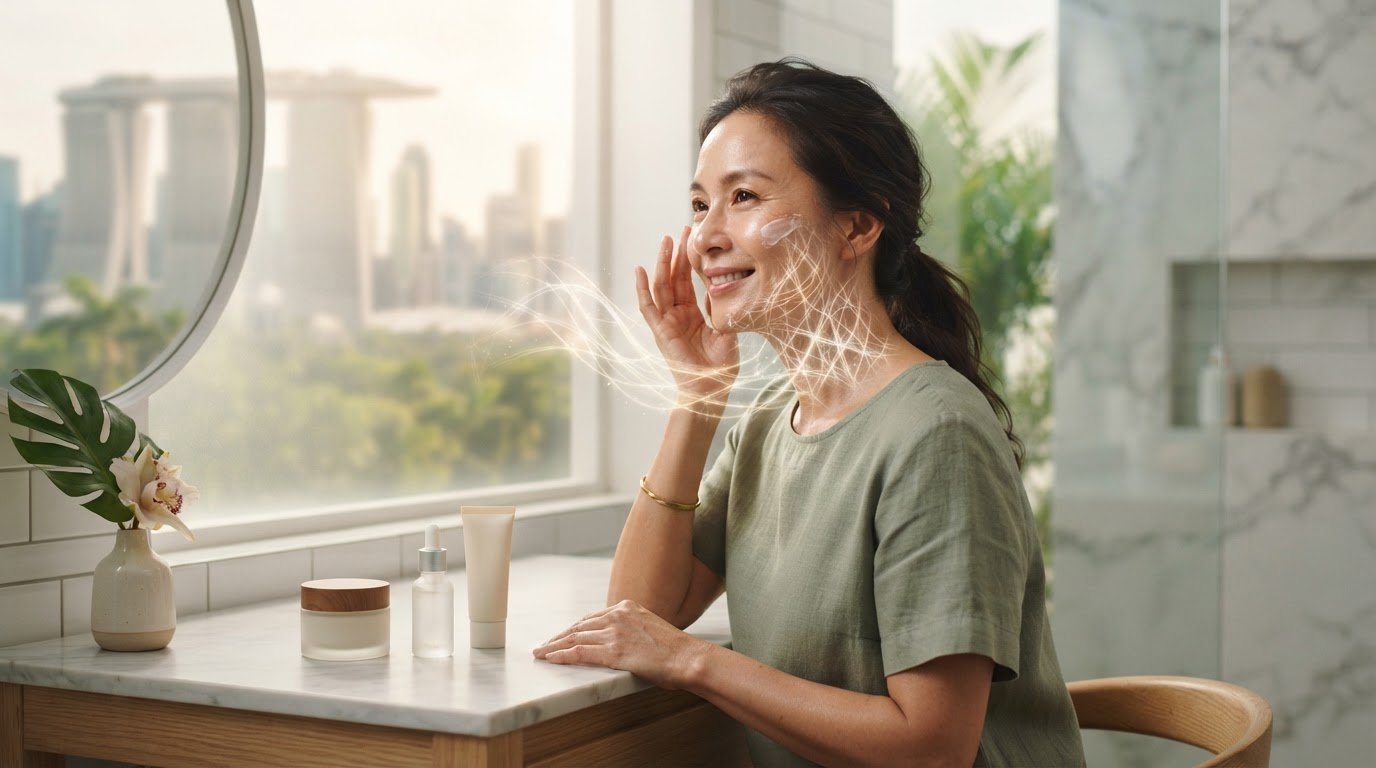
The “firming” cream you add may matter less than the protection and barrier care you practise every day. If you’re wondering how to improve skin elasticity on face, look beyond a single ingredient or product. Facial skin changes with age, UV exposure, hormonal shifts and other factors, so no cream can promise to reverse every change.
It’s understandable to feel uncertain when skincare claims, supplements and treatment options compete for attention. A more dependable starting point is to understand the roles of collagen, elastin and hydration, then build a manageable routine around consistent sun protection and suitable skincare. These steps can support healthier-looking skin, although results vary and take time.
This guide explains what affects facial skin elasticity and how to assess ingredients such as retinoids, vitamin C and peptides without expecting a quick fix. You’ll also find practical routine guidance, realistic expectations for at-home care and signs that it may be appropriate to seek advice from a qualified medical professional.
Key Takeaways
- Learn what facial skin elasticity means and how it differs from hydration and firmness.
- Understand which environmental, age-related, lifestyle and individual factors can influence elasticity, and where prevention may help.
- Explore how to improve skin elasticity on face with a manageable routine and realistic expectations about skincare ingredients.
- Use a practical checklist to assess product directions, suitability, evidence and claims before choosing elasticity-focused skincare.
- See why delivery technology alone doesn’t demonstrate clinical effectiveness for facial elasticity.
Table of Contents
What Does Facial Skin Elasticity Mean, and Why Can It Change?
Noticing that facial skin looks or feels less firm can prompt questions, especially when changes seem gradual or differ from one area to another. These shifts are common and don’t, by themselves, mean something is medically wrong. Understanding what elasticity describes can help separate normal variation from claims that promise more than skincare can deliver.
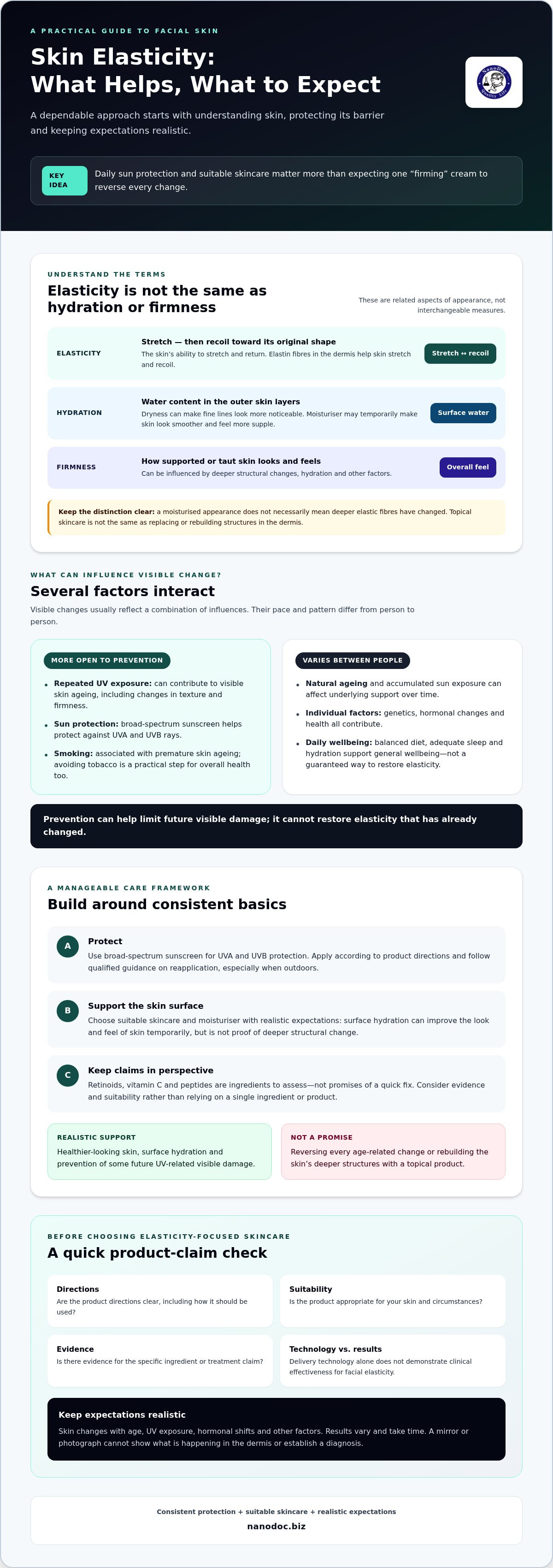
Facial skin elasticity is the skin’s ability to stretch and then return towards its original shape. It’s related to, but not the same as, hydration or firmness. Ageing, ultraviolet (UV) exposure and individual factors can influence how elastic or firm skin appears over time.
How collagen and elastin relate to skin resilience
Collagen and elastin are proteins in the dermis, the deeper layer of skin. Collagen provides structural support, while elastin forms flexible fibres that help skin stretch and recoil. The structure and function of elastin help explain why it’s central to elasticity. Neither protein works in isolation, though: skin’s visible characteristics reflect several interacting structures and processes.
Natural ageing and accumulated sun exposure can affect these structures. The effects aren’t identical for everyone; genetics, health and patterns of exposure contribute to individual differences. Skincare may support surface hydration and improve the appearance of skin, but applying a topical product isn’t the same as replacing or rebuilding structures in the dermis. That distinction matters when considering how to improve skin elasticity on face without expecting a cream to reverse every change.
Elasticity, hydration, and firmness are not the same
Hydration describes the water content of the outer skin layers. When the surface is dry, fine lines may look more noticeable. Moisturiser can temporarily make skin look smoother and feel more supple, but that change doesn’t necessarily mean the skin’s deeper elastic fibres have changed.
Firmness is a broader description of how supported or taut skin looks and feels. It can be influenced by deeper structural changes, as well as hydration and other factors. Elasticity specifically concerns stretch and recoil, so a moisturised appearance, perceived firmness and elastic response aren’t interchangeable measures.
A mirror or photograph can’t establish what’s happening in the dermis, and appearance alone isn’t a reliable basis for diagnosis. Treat these terms as a practical framework, not a test of skin health. The next step is to consider which influences you can protect against and which are less within your control.
What Affects Facial Skin Elasticity? Understand the Main Factors
Visible changes in facial skin usually reflect a combination of influences rather than one identifiable cause. Some are part of natural ageing; others, particularly repeated ultraviolet (UV) exposure, are more open to prevention. Understanding the difference helps set realistic expectations: protecting skin may help limit future visible damage, but it doesn’t restore elasticity that has already changed.
UV exposure and other environmental stressors
Repeated exposure to UV radiation can contribute to visible skin ageing over time, including changes in texture and firmness. Broad-spectrum sunscreen helps protect against UVA and UVB rays. Apply it according to the product directions and follow qualified guidance on reapplication, especially when outdoors. Sun protection is a preventive step, not a way to reverse existing structural changes.
A practical approach is to limit repeated UV exposure with broad-spectrum sun protection, while recognising that skincare can’t fully control ageing or individual differences. Healthline’s guide to skin elasticity also discusses sun protection and lifestyle considerations. Assess specific claims about an ingredient or treatment on their own evidence.
Age, habits, and individual differences
Natural ageing can alter the skin’s underlying support over time, but the pace and visible pattern vary. Genetics, hormonal changes, health and a person’s history of sun exposure can all contribute. Similar routines or ages don’t necessarily produce the same appearance, so a photograph or change in firmness alone can’t establish a single cause.
Daily habits may also matter. Smoking is associated with premature skin ageing, so avoiding tobacco is a practical step for overall health as well as skin. A balanced diet, adequate sleep and hydration support general wellbeing, but don’t treat them as quick or guaranteed ways to restore facial elasticity. Claims that a particular food, supplement or routine rapidly changes deeper skin structure require specific evidence. A general wellness benefit isn’t proof of an elasticity benefit.
As you consider how to improve skin elasticity on face, distinguish measures with a clear preventive role, such as sun protection, from claims that promise structural reversal. For topical options, compare ingredient evidence and product directions rather than assuming a delivery method proves an outcome. You can also explore anti-ageing skincare information.
Which Skincare Ingredients Can Support the Look of Elastic Skin?
Some skincare ingredients can improve hydration or the visible appearance of texture, while others have been studied for effects on signs of photoageing. Those outcomes aren’t the same as restoring the dermal structures that contribute to elasticity. When assessing a product, consider its ingredients, intended use and evidence for the specific claim rather than relying on broad “firming” language.
| Ingredient | Potential role | Evidence caveat | Suitability considerations |
|---|---|---|---|
| Topical retinoids, including retinol | May support the appearance of photoaged skin and skin texture. | Evidence and effects vary by retinoid, formulation and use. Cosmetic retinol isn’t equivalent to a prescription retinoid, and neither should be described as guaranteed to restore elasticity. | Can irritate skin. Follow the label; ask a qualified healthcare professional about use during pregnancy, with relevant medication, or if you have sensitive skin. |
| Moisturisers and humectants, such as hyaluronic acid | Help support surface hydration and a smoother, more supple appearance. | Improved hydration doesn’t show that deeper elastic structures have been replaced or restored. | Choose a formula suited to your skin and use it as directed. A moisturiser may help support the skin barrier. |
| Antioxidants, such as vitamin C | Can help protect the skin from oxidative stress and support a brighter-looking complexion. | Evidence depends on the ingredient and formulation; an antioxidant claim alone doesn’t establish an elasticity benefit. | Check directions and suitability, particularly if you have a history of irritation or sensitivity. |
Retinoids and ingredients associated with visible skin changes
Retinoids are a broad group of vitamin A derivatives. Over-the-counter cosmetic products and prescription treatments differ in formulation and shouldn’t be treated as interchangeable. Some topical retinoids have evidence for improving signs of photoageing, but that doesn’t establish that a cosmetic product can rebuild lost dermal structure. Introduce products according to their label, and seek qualified guidance if you’re pregnant, taking medication or unsure whether a retinoid is suitable.
Moisturisers, hyaluronic acid, and antioxidants
Humectants such as hyaluronic acid attract and retain water in the outer skin layers, which may temporarily make skin look more plump. Moisturisers can reduce surface dryness and support the skin barrier. Antioxidants such as vitamin C are used in products designed to help defend against oxidative stress. These functions can support appearance, but don’t prove that an ingredient will improve elasticity for everyone.
For anyone considering how to improve skin elasticity on face, a manageable routine is more useful than layering several new active ingredients at once. Patch test new products and follow the label, including directions for frequency and use with other ingredients. Stop using a product if it causes significant irritation. Seek advice from a qualified healthcare professional if irritation persists or you’re uncertain about suitability.
How to Build a Routine for Facial Skin Elasticity
A practical routine doesn’t need a long list of products. Prioritise daily sun protection and comfortable, consistent care. Add one treatment at a time if it suits your skin. This makes it easier to notice what your skin tolerates and keeps expectations realistic: a cosmetic routine may support healthier-looking skin, but it can’t guarantee restored elasticity.
A simple morning and evening skincare sequence
Use these steps as a starting point, adjusting them for your skin type and any care recommended by a healthcare professional.
- Morning: Cleanse gently if needed, apply moisturiser if your skin benefits from it, then use a broad-spectrum sunscreen with SPF 30 or higher. Follow the sunscreen label for application and reapplication, particularly if you spend time outdoors.
- Evening: Cleanse to remove sunscreen and daily residue. If suitable, apply one treatment product according to its directions, then moisturise to support comfort and the skin barrier.
Sun protection is the routine’s key preventive step because repeated UV exposure contributes to visible skin ageing. Sunscreen helps protect against further UV-related damage; it doesn’t reverse changes that have already occurred. Make it part of your daytime routine rather than reserving it for holidays or particularly sunny days.
If you’re considering how to improve skin elasticity on face, resist adding several active ingredients at once. Choose one product, check its directions and suitability, and introduce it cautiously. Don’t layer or combine products unless their instructions support doing so. Keep clinician-directed care unchanged unless the clinician advises otherwise.
How to assess progress without expecting instant change
Skin’s response varies, and visible changes may take time. Focus on whether the routine is comfortable and manageable rather than looking for a day-to-day transformation. Aggressive exfoliation or frequent product changes can irritate skin and make it harder to identify what is helping or causing a reaction.
- Introduce one new product at a time where practical, and follow its label.
- Pay attention to dryness, redness, stinging or persistent discomfort. Stop a product that causes significant irritation.
- Assess your skin occasionally under similar lighting, rather than comparing it daily or relying on photographs to diagnose structural changes.
Seek medical advice if a skin change is sudden, persistent or concerning, or if irritation doesn’t settle after stopping a product. For a considered next step, explore anti-ageing skincare options and review each product’s ingredients, directions and claims before deciding whether it fits your routine.
Choosing Elasticity-Focused Skincare and Next Steps
Product descriptions can make elasticity claims sound straightforward, but a technology or ingredient name alone doesn’t show that a finished product can produce a particular result. Check what the formulation contains, how it should be used and whether the evidence supports the specific claim being made.
Questions to ask before choosing an elasticity-focused product
Use this checklist to compare products and identify claims that need closer scrutiny:
- Are the ingredients clear? Check whether the key ingredients and their intended role are explained. If concentrations are disclosed, consider them in context; a concentration alone doesn’t prove effectiveness.
- Are directions and suitability stated? Review how to apply the product, any cautions, and whether it appears appropriate for your skin and existing care. Ask a qualified healthcare professional if you’re unsure about sensitivities, medication or other personal considerations.
- Does the evidence relate to the finished formulation? Evidence about an ingredient or delivery method doesn’t automatically establish that a particular product improves facial elasticity. Look for support relevant to the finished formulation and the outcome claimed.
- Are claims realistic? Be cautious with guarantees of lifting, permanent results or rapid structural repair. Product testing may verify specific characteristics, but that isn’t the same as evidence of a clinical effect on skin elasticity.
Where NanoDoc’s skincare technology fits, and what it cannot prove
NanoDoc International offers anti-ageing skincare formulations that use nano-encapsulation technology. This describes a delivery approach; on its own, it doesn’t establish clinical effectiveness for facial elasticity or prove that a product restores underlying skin structures. Assess any elasticity claim separately, based on evidence for the finished formulation and the specific result described.
NanoDoc’s formulations are independently laboratory-tested to verify nanoparticle size and quality. Those tests verify particle characteristics; they don’t, by themselves, demonstrate a clinical benefit for facial skin elasticity.
For anyone researching how to improve skin elasticity on face, careful product selection can help keep expectations grounded. Prioritise clear ingredients, directions, suitability information and evidence that matches the claim. To review the brand’s anti-ageing skincare information, explore NanoDoc’s skincare information.
Make Your Next Skincare Steps Count
Understanding how to improve skin elasticity on face starts with realistic expectations. Elasticity is influenced by factors such as ageing and UV exposure, and no single product can guarantee structural reversal. Consistent sun protection and a simple routine can support healthier-looking skin, while suitable moisturisers and active ingredients may help with hydration or visible texture.
Choose products by checking their ingredients, directions, suitability and evidence for the specific claims they make. Delivery technology can describe how a formulation is designed, but it doesn’t prove a clinical effect on facial elasticity. NanoDoc offers anti-ageing skincare formulations and independently tests nanoparticle size and quality.
To review the brand’s skincare information, explore NanoDoc’s anti-ageing skincare information. Take a steady, informed approach, and seek qualified medical advice if a skin change is sudden, persistent or concerning.
Frequently Asked Questions
Can you naturally improve skin elasticity on your face?
You can support healthier-looking skin, but natural approaches can’t guarantee that existing structural changes will be reversed. Daily broad-spectrum sun protection helps limit further UV-related damage, while a gentle, consistent routine can support skin comfort and appearance. Nutrition, sleep and avoiding smoking matter for general health, but don’t rely on a specific food, supplement or habit as a rapid fix for facial elasticity.
What is the best ingredient for facial skin elasticity?
There isn’t one best ingredient for everyone, and no topical ingredient guarantees restored elasticity. Retinoids have evidence for improving some visible signs of photoageing, while moisturisers and humectants such as hyaluronic acid can improve surface hydration and suppleness. Antioxidants such as vitamin C are used to help protect skin from oxidative stress. Choose based on your skin’s needs, product directions and evidence for the specific claim.
Does sunscreen help prevent loss of skin elasticity?
Yes. Broad-spectrum sunscreen helps protect skin from UVA and UVB exposure, which can contribute to visible skin ageing over time. Use a product with SPF 30 or higher, apply it according to the label, and reapply as directed, particularly after swimming or sweating. Sunscreen is preventive care; it can’t reverse existing changes in the skin’s deeper support structures.
How long does it take to see a difference in skin elasticity?
There’s no reliable timeline that applies to everyone. A moisturiser may make dry skin look smoother relatively quickly, but that reflects surface hydration, not necessarily a structural change in elasticity. Any visible response to active ingredients depends on the product, regular use, skin tolerance and individual factors. Follow product directions, avoid expecting instant results, and stop if significant irritation occurs.
Can moisturiser restore facial skin elasticity?
Moisturiser can support the skin barrier and reduce surface dryness, helping skin look and feel smoother or more supple. Ingredients such as hyaluronic acid can also increase surface hydration. These effects can improve appearance, but they don’t demonstrate that deeper elastic fibres have been replaced or restored. Choose a moisturiser suited to your skin and use it according to its directions.
Do collagen supplements improve skin elasticity?
Some clinical research suggests collagen supplements may support skin hydration and elasticity, but results can vary and don’t establish that every supplement will work for every person. Evidence for one formulation shouldn’t be assumed to apply to another, and supplements aren’t a substitute for sun protection or a balanced diet. If you’re pregnant, take medication or have a health condition, ask a qualified healthcare professional before using one.
When should I speak with a dermatologist about changes in facial skin?
Seek advice from a dermatologist or another qualified healthcare professional if a skin change is sudden, persistent, worsening or concerning, or if you have ongoing irritation after stopping a product. A professional can assess your individual situation; photographs and appearance alone can’t establish what’s happening beneath the skin. If a new skincare product causes a severe reaction, stop using it and seek prompt medical advice.
Frequently Asked Questions
- Can you naturally improve skin elasticity on your face?
- You can support healthier-looking skin, but natural approaches can’t guarantee that existing structural changes will be reversed. Daily broad-spectrum sun protection helps limit further UV-related damage, while a gentle, consistent routine can support skin comfort and appearance. Nutrition, sleep and avoiding smoking matter for general health, but don’t rely on a specific food, supplement or habit as a rapid fix for facial elasticity.
- What is the best ingredient for facial skin elasticity?
- There isn’t one best ingredient for everyone, and no topical ingredient guarantees restored elasticity. Retinoids have evidence for improving some visible signs of photoageing, while moisturisers and humectants such as hyaluronic acid can improve surface hydration and suppleness. Antioxidants such as vitamin C are used to help protect skin from oxidative stress. Choose based on your skin’s needs, product directions and evidence for the specific claim.
- Does sunscreen help prevent loss of skin elasticity?
- Yes. Broad-spectrum sunscreen helps protect skin from UVA and UVB exposure, which can contribute to visible skin ageing over time. Use a product with SPF 30 or higher, apply it according to the label, and reapply as directed, particularly after swimming or sweating. Sunscreen is preventive care; it can’t reverse existing changes in the skin’s deeper support structures.
- How long does it take to see a difference in skin elasticity?
- There’s no reliable timeline that applies to everyone. A moisturiser may make dry skin look smoother relatively quickly, but that reflects surface hydration, not necessarily a structural change in elasticity. Any visible response to active ingredients depends on the product, regular use, skin tolerance and individual factors. Follow product directions, avoid expecting instant results, and stop if significant irritation occurs.
- Can moisturiser restore facial skin elasticity?
- Moisturiser can support the skin barrier and reduce surface dryness, helping skin look and feel smoother or more supple. Ingredients such as hyaluronic acid can also increase surface hydration. These effects can improve appearance, but they don’t demonstrate that deeper elastic fibres have been replaced or restored. Choose a moisturiser suited to your skin and use it according to its directions.
- Do collagen supplements improve skin elasticity?
- Some clinical research suggests collagen supplements may support skin hydration and elasticity, but results can vary and don’t establish that every supplement will work for every person. Evidence for one formulation shouldn’t be assumed to apply to another, and supplements aren’t a substitute for sun protection or a balanced diet. If you’re pregnant, take medication or have a health condition, ask a qualified healthcare professional before using one.
- When should I speak with a dermatologist about changes in facial skin?
- Seek advice from a dermatologist or another qualified healthcare professional if a skin change is sudden, persistent, worsening or concerning, or if you have ongoing irritation after stopping a product. A professional can assess your individual situation; photographs and appearance alone can’t establish what’s happening beneath the skin. If a new skincare product causes a severe reaction, stop using it and seek prompt medical advice.