
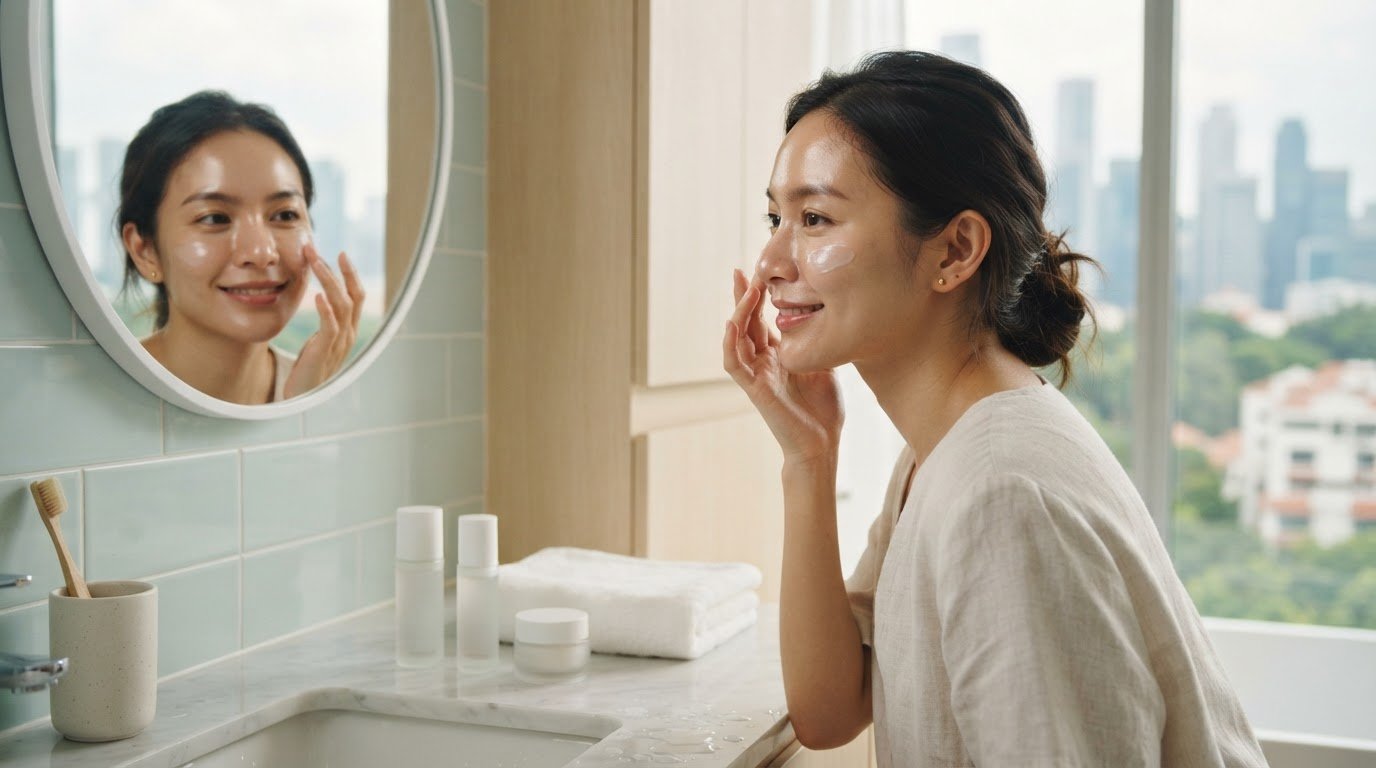
When you’re figuring out how to control oily T-zone in humidity, start with a balanced routine rather than a harsher cleanser. Heat, sweat and heavier-feeling skincare can make shine across the forehead, nose and chin more noticeable. Washing more often or skipping moisturiser may leave skin feeling tight without providing a lasting answer.
Humidity describes moisture in the air, not oil on your skin. Sweat, natural oil and product layers can all contribute to a sticky or reflective feel, so it helps to notice when shine appears and what you’ve applied. Gentle cleansing, comfortable hydration and daytime sun protection are practical places to start.
This guide explains how these factors affect the feel of your T-zone, then sets out a simple morning and evening routine. You’ll also find ways to compare product textures, introduce changes gradually and avoid common habits that can leave skin uncomfortable.
Key Takeaways
- Learn why the forehead, nose and chin may feel shinier in humid weather, and how surface oil differs from moisture in the air.
- Find out how to control oily T-zone in humidity with a balanced routine that prioritises comfort over aggressive cleansing.
- Understand how sweat and product layering can affect how your skin feels, and when a lighter touch may help.
- Use a simple morning and evening routine with gentle cleansing, moisturiser and daytime sun protection.
- Assess products by their texture, directions and your skin’s tolerance. Laboratory checks on a formulation do not prove a particular result for T-zone shine.
Table of Contents
Why Does an Oily T-Zone Feel Shinier in Humidity?
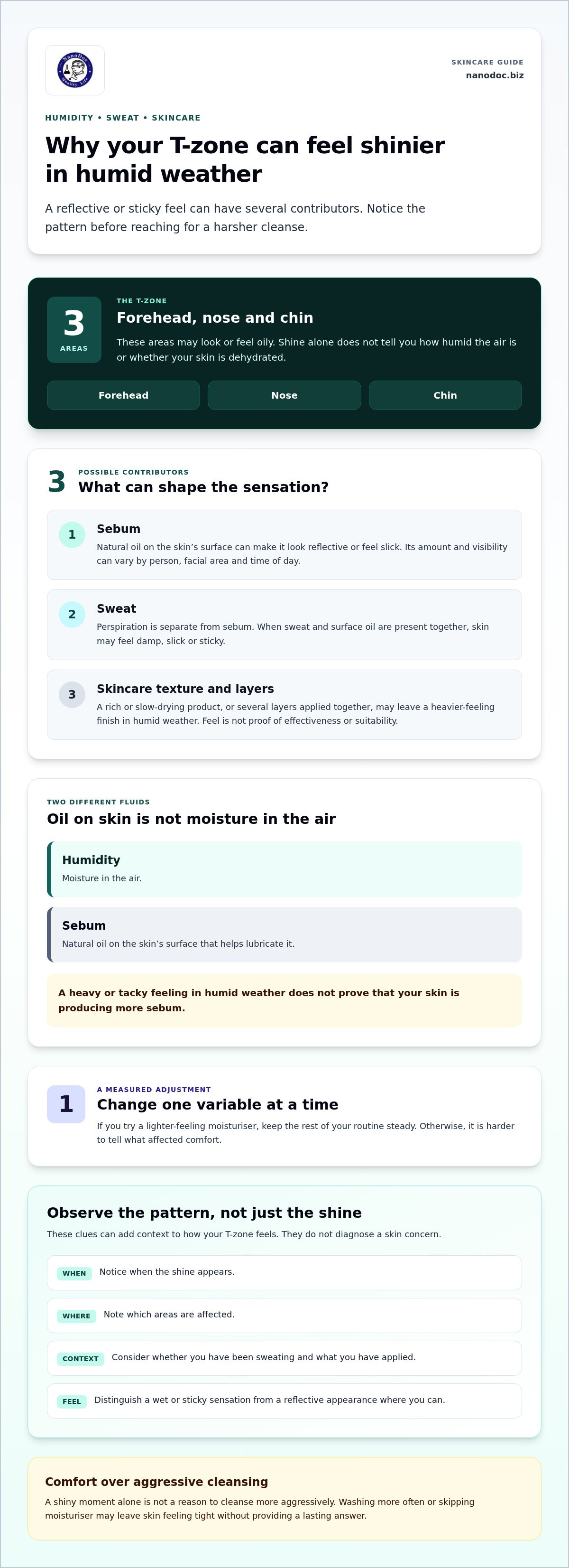
The T-zone is the forehead, nose and chin. These areas may look or feel oily while the surrounding air is humid, but humidity and sebum are different things. Humidity refers to water vapour in the air; sebum is oil on the skin’s surface. A shiny forehead alone doesn’t tell you how humid the air is or whether your skin is dehydrated.
What causes shine across the forehead, nose, and chin?
Sebum is the skin’s natural oil. Produced by the sebaceous glands, it helps lubricate the skin’s surface. Its amount and visibility can vary from person to person, between facial areas and over the course of the day. Your routine and the way products feel on your skin can also affect how noticeable shine seems.
Sweat can add to the sensation. It is a separate fluid from sebum, but when perspiration and surface oil sit together, skin may feel slick, damp or sticky. Noticing whether your face feels wet with sweat or looks reflective from oil can help you describe the change more accurately. Neither sensation, by itself, shows that your skin needs a more aggressive cleanse.
Does humid weather directly increase oil production?
Not necessarily. A heavy or tacky feeling in humid weather isn’t proof that your skin is producing more sebum. Heat, perspiration and the way skincare sits on the skin can all affect perceived shine. Because these factors may occur together, appearance alone may not reveal the cause.
Instead, track what you can observe: when shine appears, which areas are affected, whether you have been sweating and what you have applied. A shiny T-zone after time outdoors may feel different from persistent oiliness in a cool room. These notes don’t diagnose a skin concern, but they can help you make a measured routine adjustment instead of responding to every shiny moment with stronger cleansing.
- Reflective appearance: Surface oil can make skin look shiny.
- Damp or sticky feel: Sweat, humidity and product layers may contribute.
- Changing pattern: Timing and location provide context, not a diagnosis.
These distinctions are a useful first step in deciding how to control oily T-zone in humidity. Respond to your skin’s comfort and the pattern you observe, rather than treating all natural oil as a problem or assuming humid air directly causes excess sebum.
How Humidity, Sweat, and Skincare Affect T-Zone Comfort
Your forehead, nose and chin can feel sticky in humid conditions even if your skincare routine hasn’t changed. Sweat, natural skin oil and the finish of layered products may all contribute. The sensation matters, but it doesn’t identify its cause on its own. Understanding what each factor does can help you adjust your routine more thoughtfully than adding another cleanse or removing moisturiser altogether.
Sebum and sweat: why they can feel like one problem
Sebum lubricates the skin; sweat helps cool the body, and neither is the other. Sebum is produced by sebaceous glands, while sweat comes from sweat glands. In warm, humid weather, perspiration may remain noticeable on the face, and a film of sebum can make the surface feel slick. Together, they can blur the difference between oily, damp and sticky sensations. The skin does not need to be completely free of either.
Skin hydration refers to water within the skin, while surface oiliness refers to sebum on its outer surface. These describe different aspects of skin condition. A shiny face doesn’t automatically mean well-hydrated skin, and a sticky feeling alone can’t tell you whether skin lacks water. Treating every uncomfortable sensation as excess oil may lead to unnecessary routine changes.
Can a moisturiser make an oily T-zone feel heavier?
It can feel that way. A rich or slow-drying texture, or several layers applied together, may leave a heavier finish in humid weather. That describes how a product feels, not whether it is effective or suitable for your skin. Texture and label directions can guide your expectations, but your comfort matters too.
Rather than dropping moisturiser automatically, try one lighter-feeling layer while keeping the rest of your routine steady. Apply it as directed, then notice how your skin feels soon after and later in the day. Does the T-zone feel coated or comfortable? Is the shine different, or is the sensation mainly sweat after time outdoors? These observations help you assess texture without assuming that a lighter finish guarantees a particular result.
Change one variable at a time. If you switch moisturiser, avoid introducing a new cleanser and serum at the same time. Otherwise, it becomes harder to tell what affected comfort. Follow the product label, and discontinue use if a product causes a concerning reaction. Persistent irritation or unusual symptoms warrant advice from a healthcare professional.
A measured approach is central to understanding how to control oily T-zone in humidity: consider sensation, timing and product finish before revising several steps at once. For general context on skincare formulations, explore cosmeceutical skincare information. Formulation technology alone doesn’t demonstrate a specific result for oiliness.
Which Oily-Skin Strategies Help in Humidity, and Which Can Backfire?
A more considered routine is often a better starting point than a more aggressive one. Cleansing, blotting and choosing lighter-feeling layers serve different purposes: cleansing removes residue, blotting absorbs some surface oil temporarily, and product texture affects comfort. None is a complete solution on its own. Choose a strategy for what it can realistically do, then pay attention to how your skin responds.
Why over-cleansing may not be the answer
Washing repeatedly or using a cleanser that leaves skin tight can make a routine uncomfortable and may contribute to irritation. Tightness isn’t proof that cleansing has removed oil more effectively. Cleanse gently at the points your routine requires, and avoid extra washes solely because shine appears during the day. If skin becomes persistently dry or irritated, reconsider your products or cleansing frequency rather than pushing through discomfort.
Make one change at a time. For example, keep your routine steady while switching only to a gentler-feeling cleanser, then observe your skin’s comfort. This makes it easier to tell whether the change helped than if you alter several products at once.
Blotting, powders, and lightweight layers: what each can do
Blotting paper can pick up some surface oil and reduce visible shine temporarily, but it doesn’t change why oil is present or prevent it from returning. Powder is an optional cosmetic choice that may alter the skin’s finish. Its feel and suitability vary, so use it only if it’s comfortable. Neither is a substitute for a routine that feels manageable.
A lightweight texture may feel more comfortable than several rich or slow-drying layers in humid conditions, but texture alone doesn’t prove a product’s efficacy. Try simplifying your application before adding another step. Keep other routine steps consistent while you observe whether your skin feels more comfortable or the shine changes.
| Strategy | What it may do | What to watch for |
|---|---|---|
| Gentle cleansing | Removes surface residue | Tightness or irritation after washing |
| Blotting | Temporarily absorbs surface oil | Shine may return |
| Powder | Changes the cosmetic finish | Personal comfort and feel |
| Fewer, lighter-feeling layers | May reduce a heavy or coated sensation | Whether the routine still feels comfortable |
Use the comparison as a guide, not a universal ranking. If blotting helps between routine steps, it can be practical. If cleansing leaves your skin tight, increasing its frequency may not be the right response. A measured approach to how to control oily T-zone in humidity means choosing a strategy for its specific purpose and judging it by comfort, not by an assumption that all oil must be removed.
How to Build a Simple T-Zone Routine for Humid Days
A repeatable routine makes it easier to judge what feels comfortable in humid weather. Keep the basic steps consistent, follow product directions and adjust for your skin’s tolerance instead of adding products every time midday shine appears. These five steps separate morning sun protection from evening cleansing while keeping the routine straightforward.
- Cleanse gently in the morning. If your skin feels comfortable, use a mild cleanser without scrubbing. Adjust how often you cleanse to your needs, and avoid washing simply to chase shine.
- Apply a comfortable moisturiser. Choose a texture you can wear comfortably and use it according to its label. Don’t skip moisturiser automatically because your T-zone looks oily.
- Use daytime sun protection. Apply a broad-spectrum sunscreen as directed on the product label. Follow its instructions for the amount and reapplication.
- Cleanse in the evening. Gently remove sunscreen and the day’s residue with a cleanser that suits your skin. Follow the product directions and avoid harsh scrubbing.
- Moisturise again at night. Apply a comfortable layer. Keep the rest of your routine familiar while you assess how your skin responds.
A practical morning routine for humid weather
Choose morning cleansing based on how your skin feels when you wake up. You may prefer a light cleanse, or simply rinsing. Apply a comfortable layer of moisturiser, then use broad-spectrum sun protection before daytime exposure. Sunscreen directions differ, so follow the label for application and reapplication. If a product feels heavy, note that sensation before changing several steps.
An evening routine and a measured way to adjust it
At night, cleanse gently to remove sunscreen and daily residue, then apply moisturiser. Avoid introducing several new active products at once. Over the next several uses, notice shine, tightness and irritation, and make only one adjustment at a time. This gives you a clearer basis for deciding whether a texture or step suits you, though it can’t guarantee a specific change in oiliness.
Keep a brief note of what you used and how your skin felt later that day. If your T-zone feels comfortable after using a lighter moisturiser but tight after cleansing, that suggests different routine factors may be involved. Product choice should reflect personal tolerance and label instructions. Terms such as “lightweight” describe feel, not a guaranteed outcome. This measured process is a practical starting point for understanding how to control oily T-zone in humidity without making several changes at once.
Skincare technology describes how a formulation is developed, not proof that it addresses T-zone oiliness. To explore the science behind skincare formulation technology, visit NanoDoc’s skincare information.
How to Choose Skincare for an Oily T-Zone Without Overpromising Results
Assess products by how they feel and how your skin tolerates them, rather than relying on a front-label promise alone. “Lightweight” describes an intended texture, while “non-comedogenic” doesn’t guarantee the same experience for everyone. Neither term proves that a product will reduce shine. Treat labels as starting points, then consider the directions and your own response.
What product labels can, and cannot, tell you
Check the full ingredient list and instructions, especially if you know certain ingredients have caused discomfort before. Introduce one new product at a time and use it as directed. Changing several steps together makes it difficult to identify what your skin tolerates. A lighter-feeling formula may suit your preferences, but that alone doesn’t establish its effectiveness for oily skin.
Notice whether your skin feels uncomfortably tight, itchy, red or otherwise irritated after use. If a product causes a concerning reaction, stop using it and seek professional guidance. Persistent or unusual symptoms deserve more than trial-and-error product changes.
Where formulation science fits into a balanced skincare routine
NanoDoc’s skincare range includes cosmeceutical formulations using LG Bionano nano-delivery technology. The formulations are independently laboratory-tested to verify nanoparticle size and quality. These checks provide information about formulation characteristics; they don’t, by themselves, demonstrate that a product reduces sebum, controls T-zone shine or is suitable for every individual.
This distinction matters when evaluating skincare claims. A delivery technology describes how a formulation is designed, while a specific consumer outcome requires evidence relevant to that outcome. If your main concern is midday shine, judge products by their directions, texture and your personal tolerance rather than assuming that advanced formulation technology guarantees oil control.
Keep your assessment simple: note the product, how you used it and whether you experienced shine, comfort or irritation. Maintain the rest of your routine while evaluating one change, and don’t increase use beyond label directions in pursuit of a faster result. This approach supports more informed choices about how to control oily T-zone in humidity without treating every skincare claim as a promise.
For readers interested in the science behind skincare formulation, NanoDoc’s anti-ageing dermal technology guide offers related context. Explore the skincare information at your own pace, while keeping the distinction clear between formulation technology and evidence for a particular skin concern.
Make Your Next Skincare Change Deliberate
Rather than trying to eliminate every trace of shine, use comfort as a practical guide. Keep your routine steady, notice how your skin responds through the day and make one considered adjustment when there’s a clear reason. This gives you a more useful basis for deciding how to control oily T-zone in humidity than reacting to every change in weather or appearance.
NanoDoc represents LG Bionano in South East Asia, and its formulations are independently laboratory-tested for nanoparticle size and quality. These checks describe formulation characteristics, not a guaranteed effect on oiliness. Keep that distinction in mind when assessing skincare information and choosing products according to your needs and tolerance.
For more context on skincare formulation science, explore NanoDoc’s science-led skincare information. A balanced routine doesn’t need to be complicated. Start with a manageable approach, observe what feels right and let thoughtful changes guide your next step.
Frequently Asked Questions
Does humidity make your skin produce more oil?
Humidity alone doesn’t prove that your skin is producing more sebum. Warm conditions may increase sweating, and moisture, sweat and oil can make the face feel heavier or look shinier. If shine changes after you’ve been outdoors but settles once you cool down, that observation may help distinguish temporary surface effects from a persistent pattern. Track when it occurs before changing your routine.
Should I stop using moisturiser if my T-zone gets oily in humidity?
No, you don’t need to stop moisturiser automatically. Try a smaller amount or a lighter-feeling texture, following its directions, and see whether your skin remains comfortable through the day. If you use moisturiser only on some areas, note where it feels suitable. Don’t change several products at once, since that makes it harder to work out which adjustment affected comfort or shine.
How often should I wash my face when it is hot and humid?
For most routines, cleanse gently in the morning and evening, and after exercise when sweat or residue needs removing. Repeated washing throughout the day can leave skin feeling tight or irritated. If you become sweaty between routine cleanses, first cool down and gently pat your face dry; avoid scrubbing. Choose a cleanser that leaves your skin comfortable, and follow its label directions.
Can blotting papers help control an oily T-zone?
Yes, blotting papers can temporarily absorb some surface oil and reduce visible shine, which may be useful before a meeting or after commuting. Press the paper gently against the shiny area rather than rubbing, which can disturb makeup or irritate skin. The effect is temporary, so blotting is best understood as an occasional cosmetic step, not a way to change how much oil your skin produces.
What type of sunscreen feels comfortable on oily skin in humid weather?
Look for a broad-spectrum sunscreen whose texture feels comfortable to you; gel or matte-finish options may feel lighter, while “oil-free” or “non-comedogenic” labels can help narrow choices. These terms don’t guarantee an identical experience for everyone. Test how the sunscreen wears with your usual moisturiser, and follow its directions for application and reapplication. Don’t skip sun protection because the weather feels cloudy or humid.
Can sweat and sebum make skin look shinier?
Yes. Sweat can leave the face damp, while sebum creates a surface oil film; together, they can make skin look more reflective or feel slick. After being outdoors, for example, shine may include perspiration as well as oil. Once you’ve cooled down, gently pat the skin dry and reassess. This can help you distinguish temporary dampness from shine that remains.
What should I do if a new skincare product irritates my skin?
Stop using the product if it causes a concerning reaction, and avoid adding another new product while your skin settles. Check the label and note when the irritation began and how you used the product. Seek professional guidance if symptoms are severe, persist or seem unusual. Before trying other products, introduce them one at a time and follow their directions so you can better identify what your skin tolerates.
Explore NanoDoc’s anti-ageing skincare and other skincare formulations through its product range, and choose products according to their directions and your skin’s tolerance.
Frequently Asked Questions
- What causes shine across the forehead, nose, and chin?
- Sebum is the skin’s natural oil. Produced by the sebaceous glands, it helps lubricate the skin’s surface. Its amount and visibility can vary from person to person, between facial areas and over the course of the day. Your routine and the way products feel on your skin can also affect how noticeable shine seems. Sweat can add to the sensation. It is a separate fluid from sebum, but when perspiration and surface oil sit together, skin may feel slick, damp or sticky. Noticing whether your face feels wet with sweat or looks reflective from oil can help you describe the change more accurately. Neither sensation, by itself, shows that your skin needs a more aggressive cleanse.
- Does humid weather directly increase oil production?
- Not necessarily. A heavy or tacky feeling in humid weather isn’t proof that your skin is producing more sebum. Heat, perspiration and the way skincare sits on the skin can all affect perceived shine. Because these factors may occur together, appearance alone may not reveal the cause. Instead, track what you can observe: when shine appears, which areas are affected, whether you have been sweating and what you have applied. A shiny T-zone after time outdoors may feel different from persistent oiliness in a cool room. These notes don’t diagnose a skin concern, but they can help you make a measured routine adjustment instead of responding to every shiny moment with stronger cleansing. These distinctions are a useful first step in deciding how to control oily T-zone in humidity. Respond to your skin’s comfort and the pattern you observe, rather than treating all natural oil as a problem or assuming humid air directly causes excess sebum. Your forehead, nose and chin can feel sticky in humid conditions even if your skincare routine hasn’t changed. Sweat, natural skin oil and the finish of layered products may all contribute. The sensation matters, but it doesn’t identify its cause on its own. Understanding what each factor does can help you adjust your routine more thoughtfully than adding another cleanse or removing moisturiser altogether.
- Can a moisturiser make an oily T-zone feel heavier?
- It can feel that way. A rich or slow-drying texture, or several layers applied together, may leave a heavier finish in humid weather. That describes how a product feels, not whether it is effective or suitable for your skin. Texture and label directions can guide your expectations, but your comfort matters too. Rather than dropping moisturiser automatically, try one lighter-feeling layer while keeping the rest of your routine steady. Apply it as directed, then notice how your skin feels soon after and later in the day. Does the T-zone feel coated or comfortable? Is the shine different, or is the sensation mainly sweat after time outdoors? These observations help you assess texture without assuming that a lighter finish guarantees a particular result. Change one variable at a time. If you switch moisturiser, avoid introducing a new cleanser and serum at the same time. Otherwise, it becomes harder to tell what affected comfort. Follow the product label, and discontinue use if a product causes a concerning reaction. Persistent irritation or unusual symptoms warrant advice from a healthcare professional. A measured approach is central to understanding how to control oily T-zone in humidity: consider sensation, timing and product finish before revising several steps at once. For general context on skincare formulations, explore cosmeceutical skincare information. Formulation technology alone doesn’t demonstrate a specific result for oiliness. A more considered routine is often a better starting point than a more aggressive one. Cleansing, blotting and choosing lighter-feeling layers serve different purposes: cleansing removes residue, blotting absorbs some surface oil temporarily, and product texture affects comfort. None is a complete solution on its own. Choose a strategy for what it can realistically do, then pay attention to how your skin responds.
- Does humidity make your skin produce more oil?
- Humidity alone doesn’t prove that your skin is producing more sebum. Warm conditions may increase sweating, and moisture, sweat and oil can make the face feel heavier or look shinier. If shine changes after you’ve been outdoors but settles once you cool down, that observation may help distinguish temporary surface effects from a persistent pattern. Track when it occurs before changing your routine.
- Should I stop using moisturiser if my T-zone gets oily in humidity?
- No, you don’t need to stop moisturiser automatically. Try a smaller amount or a lighter-feeling texture, following its directions, and see whether your skin remains comfortable through the day. If you use moisturiser only on some areas, note where it feels suitable. Don’t change several products at once, since that makes it harder to work out which adjustment affected comfort or shine.
- How often should I wash my face when it is hot and humid?
- For most routines, cleanse gently in the morning and evening, and after exercise when sweat or residue needs removing. Repeated washing throughout the day can leave skin feeling tight or irritated. If you become sweaty between routine cleanses, first cool down and gently pat your face dry; avoid scrubbing. Choose a cleanser that leaves your skin comfortable, and follow its label directions.
- Can blotting papers help control an oily T-zone?
- Yes, blotting papers can temporarily absorb some surface oil and reduce visible shine, which may be useful before a meeting or after commuting. Press the paper gently against the shiny area rather than rubbing, which can disturb makeup or irritate skin. The effect is temporary, so blotting is best understood as an occasional cosmetic step, not a way to change how much oil your skin produces.
- What type of sunscreen feels comfortable on oily skin in humid weather?
- Look for a broad-spectrum sunscreen whose texture feels comfortable to you; gel or matte-finish options may feel lighter, while “oil-free” or “non-comedogenic” labels can help narrow choices. These terms don’t guarantee an identical experience for everyone. Test how the sunscreen wears with your usual moisturiser, and follow its directions for application and reapplication. Don’t skip sun protection because the weather feels cloudy or humid.
- Can sweat and sebum make skin look shinier?
- Yes. Sweat can leave the face damp, while sebum creates a surface oil film; together, they can make skin look more reflective or feel slick. After being outdoors, for example, shine may include perspiration as well as oil. Once you’ve cooled down, gently pat the skin dry and reassess. This can help you distinguish temporary dampness from shine that remains.
- What should I do if a new skincare product irritates my skin?
- Stop using the product if it causes a concerning reaction, and avoid adding another new product while your skin settles. Check the label and note when the irritation began and how you used the product. Seek professional guidance if symptoms are severe, persist or seem unusual. Before trying other products, introduce them one at a time and follow their directions so you can better identify what your skin tolerates. Explore NanoDoc’s anti-ageing skincare and other skincare formulations through its product range, and choose products according to their directions and your skin’s tolerance.