
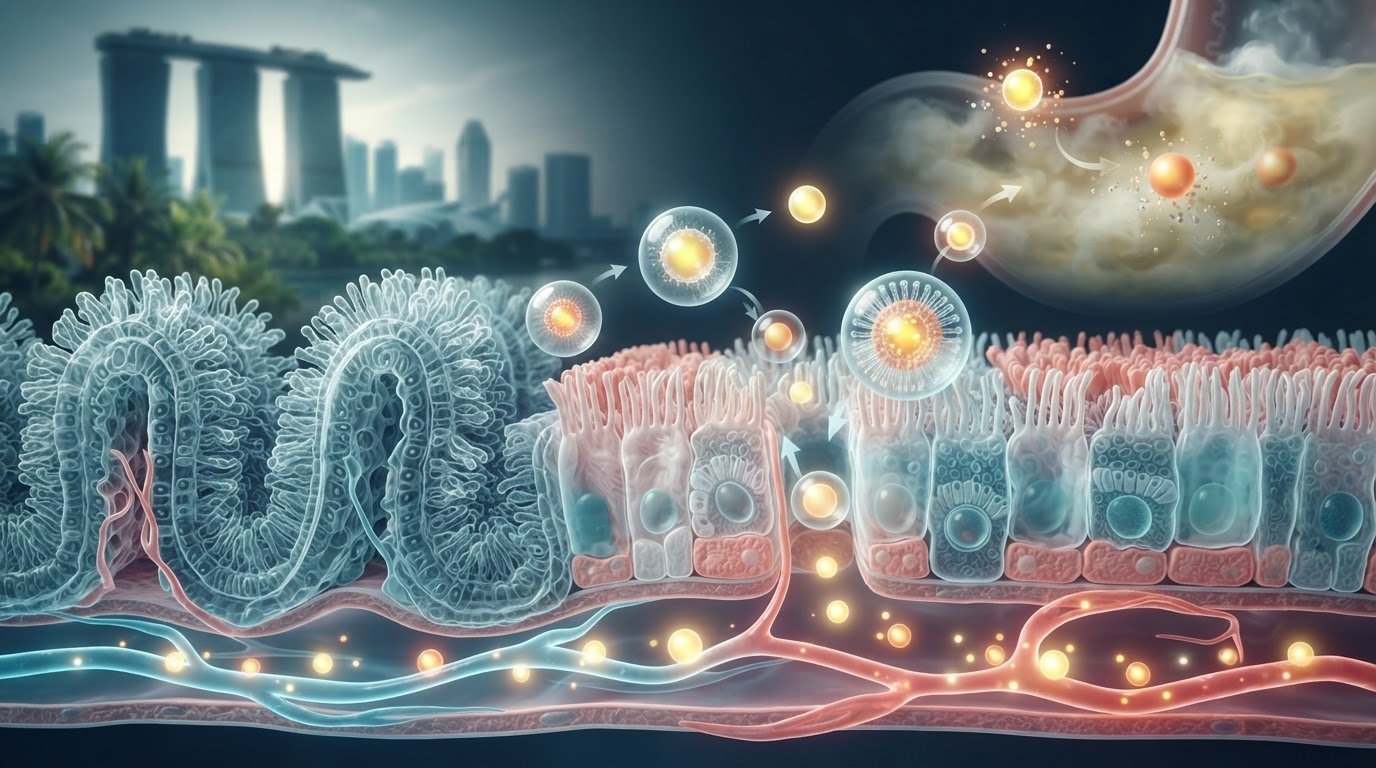
The biological value of an oral supplement isn't determined by the dosage printed on the bottle, but by the minute fraction that successfully crosses your intestinal epithelium into systemic circulation. If you swallow daily multivitamin tablets without experiencing tangible physiological improvements, or frequently battle gastrointestinal discomfort and contradictory timing advice, you aren't imagining the shortfall. Traditional compressed tablets routinely saturate selective brush-border transporters or degrade within harsh gastric acid long before reaching mucosal uptake sites. Achieving genuine clinical efficacy requires enhancing gut absorption of vitamins by working in synergy with your body's transport physiology rather than simply overwhelming the digestive tract.
Mastering the physiological mechanisms of intestinal uptake allows you to bypass the rate-limiting biological hurdles that render conventional oral supplements inert. This guide breaks down the kinetic barriers within the gastrointestinal tract, outlines evidence-based nutrient pairings and dietary fat thresholds for fat-soluble vitamins, and examines advanced delivery formats like nano-encapsulation that protect sensitive micronutrients from degradation to facilitate direct cellular uptake.
Key Takeaways
- Understand the precise biological hurdles, from gastric acid degradation to transporter saturation, that diminish the bioavailability of standard oral vitamins.
- Distinguish between the carrier-mediated kinetics of water-soluble nutrients and the lipid-dependent micellar pathways required for fat-soluble compounds.
- Learn evidence-based co-ingestion strategies and nutrient pairings proven effective for enhancing gut absorption of vitamins during digestion.
- Master a step-by-step daily administration protocol designed to prevent competitive uptake inhibition and eliminate gastrointestinal discomfort.
- Discover how advanced sub-micron platforms like nano-encapsulation shield fragile micronutrients to facilitate direct cellular uptake.
Table of Contents
- Understanding the Biological Barriers to Intestinal Vitamin Absorption
- Fat-Soluble vs. Water-Soluble Vitamins: Distinct Absorption Pathways
- Evidence-Based Strategies for Enhancing Gut Absorption of Vitamins
- A Step-by-Step Protocol to Maximize Daily Nutrient Uptake
- The Future of Bioavailability: Overcoming the Gut Barrier with Nano-Encapsulation
Understanding the Biological Barriers to Intestinal Vitamin Absorption
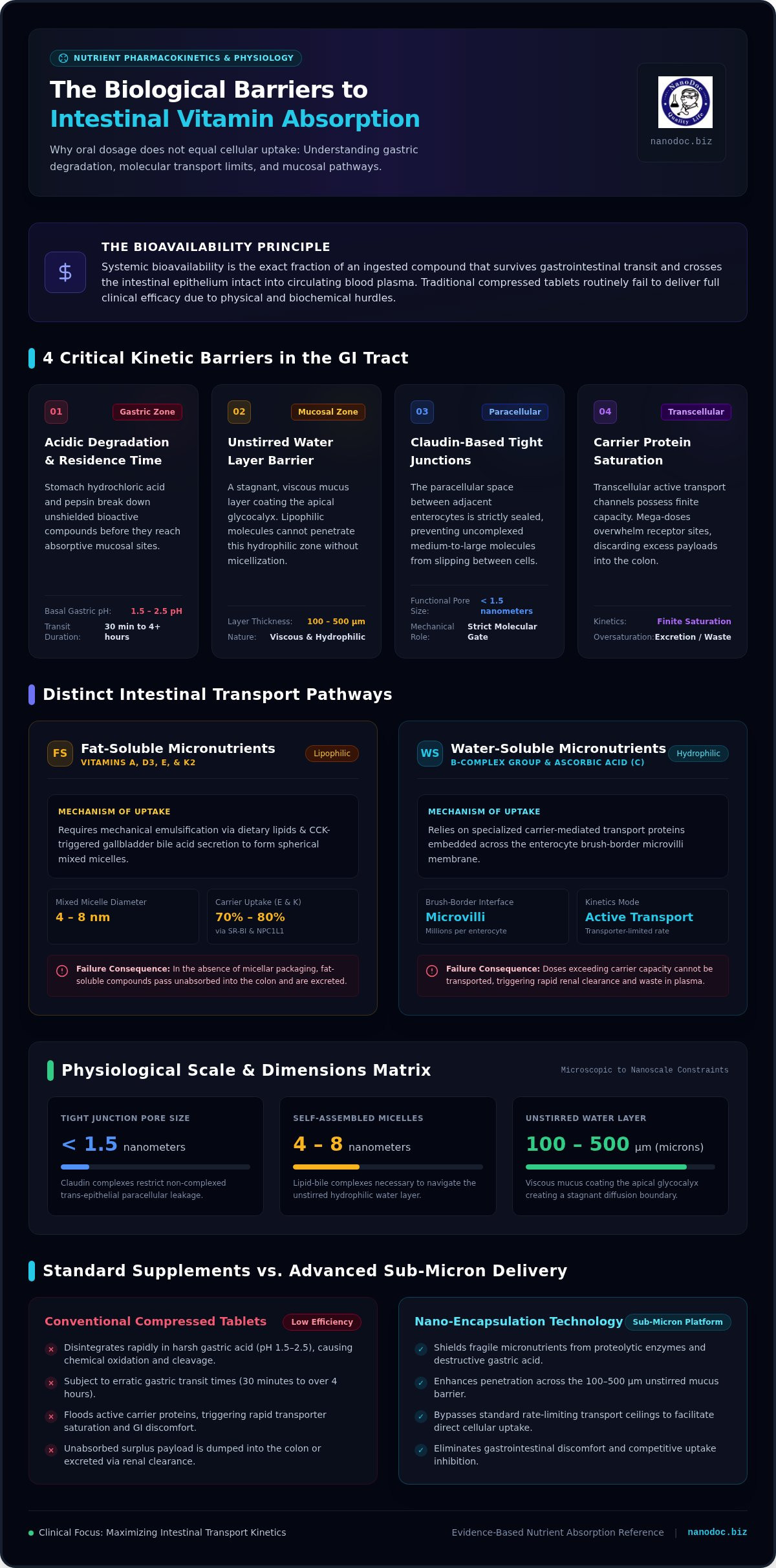
Oral intake doesn't guarantee cellular utilization. In clinical pharmacokinetics, the systemic bioavailability of nutrients represents the exact fraction of an ingested compound that survives gastrointestinal processing to enter circulating plasma intact. For conventional supplements, that fraction is often surprisingly low. The human intestinal tract functions as a sophisticated barrier rather than an open sponge. The brush border, composed of millions of microvilli lining the apical membrane of enterocytes, strictly regulates molecular traffic. Simultaneously, the paracellular space between adjacent epithelial cells is sealed by claudin-based tight junction complexes with functional pore diameters under 1.5 nanometers. This mechanical constraint prevents larger uncomplexed molecules from slipping between cells, establishing a primary physical hurdle for oral delivery platforms.
Gastric Transit and Acid Breakdown Challenges
Before reaching absorptive enterocytes in the duodenum and jejunum, oral supplements must navigate the hostile gastric environment. The stomach maintains a basal pH between 1.5 and 2.5, where hydrochloric acid and the proteolytic enzyme pepsin degrade unshielded bioactive compounds. Standard unbuffered oral tablets disintegrate rapidly within this acidic bath, precipitating chemical oxidation and molecular cleavage before mucosal contact is even possible. Gastric residence times also fluctuate substantially, ranging from 30 minutes in a fasted state to over four hours following solid meals. This erratic transit duration prolongs acid exposure, systematically destroying unshielded active payloads and frequently triggering gastrointestinal discomfort.
The Mucosal Layer and Cellular Diffusion Barriers
Upon clearing the pyloric sphincter, micronutrients encounter the unstirred water layer; a stagnant, viscous mucus barrier measuring 100 to 500 micrometers that coats the apical glycocalyx. Lipophilic compounds cannot cross this hydrophilic zone without bile acid micellization, whereas water-soluble molecules must negotiate specialized enterocyte transporters. Intestinal uptake operates via two mechanisms: paracellular flux between cells or transcellular transport through the enterocyte membrane. Standard micronutrients depend almost entirely on transcellular carrier-mediated proteins. These specialized channels possess finite transport capacity governed by saturation kinetics. When large single doses flood the lumen, active transporter sites saturate rapidly, dumping the remaining unabsorbed payload into the colon. Consequently, enhancing gut absorption of vitamins requires precise structural strategies that protect payloads and bypass these biological transport ceilings.
Fat-Soluble vs. Water-Soluble Vitamins: Distinct Absorption Pathways
Nutrient uptake depends on chemical solubility. Vitamins split into two distinct biochemical classes, each requiring entirely different physiological transport machinery. Lipophilic compounds (vitamins A, D3, E, and K2) demand mechanical emulsification and dietary lipids to partition into mixed micelles before crossing the gut epithelium. In contrast, hydrophilic nutrients (the B-complex group and ascorbic acid) rely on specialized carrier-mediated transport systems embedded within enterocyte brush-border membranes. When unabsorbed fat-soluble vitamins fail micellar packaging, they pass unutilized into the colon and are excreted. Conversely, excess water-soluble compounds that oversaturate membrane carriers encounter rapid renal clearance once inside circulating plasma, creating systemic waste.
Bile Salt Emulsification and Micelle Formation
Lipophilic vitamins cannot navigate the aqueous lumen independently. Ingestion of dietary lipids triggers cholecystokinin (CCK) secretion, prompting gallbladder contraction and hepatic bile acid release into the duodenum. Bile salts, phospholipids, and free fatty acids self-assemble into spherical mixed micelles measuring 4 to 8 nanometers. These structures encapsulate fat-soluble compounds within their hydrophobic cores, solubilizing them for delivery across the unstirred water layer. Membrane transporters like SR-BI and NPC1L1 account for up to 70% to 80% of carrier-mediated uptake for vitamins E and K. Diets containing under 5 grams of fat diminish micelle assembly, slashing systemic absorption by 30% to 50%.
Carrier-Mediated Transporters for B-Complex and Vitamin C
Water-soluble micronutrients operate under strict kinetic ceilings governed by specialized apical proteins:
- Ascorbic Acid: Transported by sodium-dependent vitamin C transporter 1 (SVCT1). Doses up to 200 mg show 70% to 90% bioavailability, but fractional absorption plummets below 50% at 1,000 mg as SVCT1 reaches saturation.
- Biotin and Pantothenic Acid: Share the sodium-dependent multivitamin transporter (SMVT). Concurrent high-dose biotin intake exceeding 5 mg competitively inhibits pantothenic acid uptake by more than 50%.
- Cobalamin (B12): Requires gastric intrinsic factor binding for uptake via ileal Cubam receptors, which saturate at just 1.5 to 2.5 micrograms per meal. Doses exceeding this cap depend on passive diffusion with an efficiency of only 1% to 2%.
Circumventing these finite brush-border bottlenecks is essential for enhancing gut absorption of vitamins. Exploring advanced delivery formats like Nano Cellular Essential Nutrition provides a viable method to deliver dense micronutrient payloads directly to cells without exhausting saturable mucosal transporters.
Evidence-Based Strategies for Enhancing Gut Absorption of Vitamins
Overcoming physiological uptake limitations requires coordinated intake protocols. Rather than consuming isolated compounds at random, enhancing gut absorption of vitamins relies on biochemical pairing and barrier preservation. A balanced gut microbiome reinforces tight junction integrity and synthesizes short-chain fatty acids that sustain enterocyte vitality, establishing an optimal mucosal surface. Simultaneously, deliberate co-administration strategies exploit digestive synergies to accelerate transit across the brush border.
Nutrient Synergies and Bioavailability Enhancers
Strategic pairing amplifies mucosal flux. For lipophilic compounds, co-administering medium-chain triglycerides (MCTs) or monounsaturated fatty acids, such as oleic acid, provides immediate lipid vectors that bypass slow digestive processing. MCTs stimulate rapid chylomicron assembly, expediting lymphatic transport into systemic circulation. Similarly, combining vitamin D3 with vitamin K2 ensures that stimulated intestinal calcium absorption is targeted directly to bone tissue rather than vascular endothelium.
Natural bio-enhancers provide another layer of uptake support:
- Piperine Administration: Standardized black pepper extract (piperine at 5 mg) temporarily adjusts brush-border membrane fluidity. It inhibits intestinal P-glycoprotein efflux pumps and CYP3A4 enzymes, preventing enterocytes from purging absorbed nutrients back into the intestinal lumen.
- Ascorbic Acid Reduction: Pairing vitamin C with non-heme iron reduces ferric iron ($Fe^{3+}$) to the soluble ferrous state ($Fe^{2+}$), facilitating entry through divalent metal transporter 1 (DMT1).
Managing Anti-Nutrient Interactions and Inhibitors
Dietary inhibitors frequently neutralize micronutrients before enterocytes can process them. Polyphenols and tannins present in coffee, tea, and cocoa bind to vitamins and minerals, creating insoluble chelates that pass directly through the stool. Separating oral supplements from polyphenol-rich beverages by at least two hours prevents this sequestration.
Divalent minerals also exhibit intense competitive receptor inhibition. Consuming high-dose zinc alongside copper or iron saturates DMT1 carriers, suppressing concurrent mineral uptake. Finally, phytic acid found in unrefined grains, raw seeds, and legumes binds micronutrients into indigestible salts. Utilizing culinary dephytinization methods, such as water soaking, sprouting, or lactic acid fermentation, activates endogenous phytases that break these molecular bonds and liberate vitamins for intestinal transit.
A Step-by-Step Protocol to Maximize Daily Nutrient Uptake
Translating pharmacokinetic principles into daily routines turns erratic nutrient uptake into reliable cellular nourishment. Implementing a structured five-step protocol is the most reliable approach for enhancing gut absorption of vitamins:
- Assess Digestive Baseline: Track transit regularity and markers of adequate stomach acid sufficiency before introducing high-potency micronutrients.
- Synchronize Lipid Intake: Pair lipophilic compounds with your primary fat-containing meal to prompt adequate bile and lipase secretion.
- Divide Hydrophilic Payloads: Fractionate water-soluble B vitamins and ascorbic acid into morning and midday doses to bypass saturable brush-border transporters.
- Reinforce Epithelial Defenses: Cultivate gut mucosal integrity through adequate hydration, microbiome balance, and upper gastrointestinal care.
- Upgrade Delivery Formats: Replace compressed dry powders with advanced lipid-based or liquid nanocarriers designed to protect fragile payloads.
Timing and Meal Composition Optimization
Take water-soluble B vitamins early in the day with a light breakfast to align with diurnal metabolic demands and mitochondrial cofactor utilization. Because ileal Cubam receptors and SMVT transporters require four to six hours to replenish apical density after saturation, separate secondary water-soluble doses by at least five hours. For fat-soluble vitamins (A, D3, E, and K2), clinical evaluations show that a threshold of 10 to 12 grams of dietary lipid is necessary to stimulate cholecystokinin release and micellar assembly. Meals with under 5 grams of fat diminish systemic bioavailability by nearly half. Digestive efficiency also starts in the mouth; supporting mucosal immunity upstream through proper oral hygiene for immunity prevents pathogenic microbial migration that destabilizes downstream intestinal barriers.
Supporting the Enterocyte Microenvironment
Intestinal epithelial turnover takes place every three to five days, a process fueled by short-chain fatty acids (SCFAs) like butyrate derived from fermentable dietary fibers. These fatty acids sustain colonocyte metabolism and maintain tight junction protein expression. Maintaining consistent hydration reinforces the unstirred mucosal water layer, ensuring smooth paracellular and transcellular diffusion gradients. Track your subjective markers of energy, digestive tolerance, and mental clarity over a four-week span to gauge systemic uptake. When standard tablets fail to yield noticeable vitality, explore advanced Nano Cellular Essential Nutrition to elevate your daily micronutrient protocol.
The Future of Bioavailability: Overcoming the Gut Barrier with Nano-Encapsulation
Standard compressed tablets and crude oil softgels represent an outdated paradigm in oral supplementation. Conventional oral formats rely on extensive gastric disintegration and unpredictable enzymatic breakdown, leaving raw micronutrients vulnerable to oxidative destruction before they ever reach mucosal borders. Overcoming these fundamental biological bottlenecks requires rethinking carrier architecture entirely. By engineering nutrients via patented bionano delivery platforms, active compounds are reduced to sub-micron dimensions. This structural refinement represents the cutting edge of enhancing gut absorption of vitamins, enabling delicate molecules to survive gastrointestinal transit intact.
How Nano-Delivery Bypasses Traditional Digestive Hurdles
Macro-scale particles frequently aggregate in fluid environments, presenting a minimal surface-area-to-volume ratio that stalls mucosal dissolution. In contrast, nano-encapsulated carriers form stable, freely dispersible structures that traverse the digestive tract unimpeded. Because their outer lipid membranes are engineered to mimic biological bilayers, they easily navigate the mucosal unstirred water layer without demanding extensive bile salt emulsification.
Once at the enterocyte border, these nanocarriers facilitate uptake by fusing directly with apical membranes or entering via endocytosis, completely circumventing rate-limited, saturable protein transporters. Clinical evaluations confirm that lipid-based nano-encapsulation yields a 1.4-fold to 1.77-fold increase in plasma area under the curve (AUC) compared to unencapsulated equivalents. This exact cellular delivery mechanic underpins advanced nano-formulated immunity boosters, which optimize bio-distribution while protecting fragile bioactive payloads from acid degradation.
Selecting Clinically Verified Nano Cellular Essential Nutrition
The efficacy of sub-micron supplementation depends strictly on structural consistency. When particle size distribution varies, biological performance drops and systemic uptake becomes erratic. NanoDoc maintains a clinical commitment to quality, ensuring all formulations are independently laboratory-tested for particle size integrity and stability.
Adopting Nano Cellular Essential Nutrition represents the logical transition away from poorly absorbed, unshielded tablets toward cellular-level nourishment. By shielding delicate payloads through patented delivery platforms, these systems deliver active nutrients directly where metabolic processes need them most. For individuals focused on enhancing gut absorption of vitamins through technical precision, explore verified innovations developed by NanoDoc.
Transforming Daily Bioavailability Through Advanced Cellular Delivery
Achieving meaningful systemic vitality isn't a matter of increasing oral dosages; it requires mastering the physiological rules of intestinal transit. By accounting for finite enterocyte transporter ceilings, meeting dietary lipid thresholds for micelle formation, and eliminating competitor anti-nutrients, you lay the functional groundwork for enhancing gut absorption of vitamins. Yet, behavioral timing alone can only carry standard compressed tablets so far against aggressive gastric acids and mucosal clearance mechanisms.
True cellular nourishment requires an evolutionary shift in carrier engineering. Built upon patented bionano nano-delivery technology developed in partnership with LG Bionano, Nano Cellular Essential Nutrition provides advanced cellular-level nutrient delivery engineered to bypass the digestive barrier entirely. Because all formulations are independently laboratory-tested to verify nanoparticle dimensions, fragile active payloads reach your cells intact. Explore the science of nano-encapsulated nutrition at NanoDoc and experience how precision delivery transforms daily health from the inside out.
Frequently Asked Questions
Why does my body fail to absorb vitamins from standard compressed multivitamin pills?
Standard compressed tablets fail primarily because dense binding excipients delay dissolution until long after passing optimal upper intestinal absorption windows. Strong gastric acid and digestive enzymes degrade unshielded micronutrients prematurely in the stomach. Once remaining compounds enter the small intestine, large particulate agglomerations struggle to cross the mucosal layer, while mega-dosed water-soluble vitamins quickly saturate finite brush-border transport carriers and get excreted.
Can drinking coffee or tea right after taking vitamins reduce intestinal absorption?
Yes, consuming coffee or tea alongside vitamins significantly impairs bioavailability due to polyphenols, tannins, and chlorogenic acid. These plant compounds act as antinutrients by chelating with minerals and vitamins, creating insoluble complexes that enterocyte carriers can't transport. Caffeine also speeds gastric transit, reducing the contact time required for mucosal uptake. You should separate polyphenol-rich beverages from oral supplementation by at least two hours.
How much dietary fat is necessary to absorb fat-soluble vitamins A, D, E, and K?
Intestinal uptake of fat-soluble vitamins requires a minimum threshold of 10 to 12 grams of dietary fat consumed during the same meal. Ingesting this lipid volume activates cholecystokinin release, triggering the hepatic bile acid and pancreatic lipase secretion essential for assembling mixed micelles. Consuming fat-soluble supplements on an empty stomach or with meals containing less than 5 grams of fat reduces systemic absorption by roughly half.
What is the primary difference between liposomal supplements and nano-encapsulation?
The primary difference lies in particle dimensions and structural stability. Traditional liposomes typically range from 100 to several hundred nanometers and can destabilize when exposed to gastric acid. Advanced nano-encapsulation, such as patented bionano delivery platforms, reduces carriers to sub-micron dimensions with engineered lipid shells. This ultra-small scale ensures rapid permeation through the mucosal unstirred water layer, enabling direct transcellular absorption without relying on standard digestive emulsification.
Does poor gut health directly cause systemic vitamin deficiencies?
Yes, chronic gut dysbiosis, low stomach acid, or damaged mucosal brush borders directly inhibit micronutrient assimilation. When intestinal microvilli experience inflammation, the expression of critical transport proteins like SVCT1 and ileal Cubam receptors declines significantly. Altered gut permeability also disrupts the unstirred water layer and bile acid conjugation. Supporting epithelial integrity is a fundamental step for enhancing gut absorption of vitamins across all categories.
Is it possible to take too many water-soluble vitamins if absorption is enhanced?
While water-soluble vitamins generally possess high renal clearance thresholds, enhanced absorption means higher peak plasma concentrations are achieved without ingesting megadoses. Formulations utilizing advanced delivery mechanics bypass the gastrointestinal irritation caused by excessive unabsorbed powders in the colon. However, respecting established upper intake levels remains critical. Enhanced bioavailability allows for lower, physiologically calibrated dosages that fulfill daily cellular demands safely.
How do nano-sized nutrient particles pass through the intestinal wall safely?
Nano-sized carriers navigate the intestinal barrier by utilizing natural cellular transport routes rather than disrupting epithelial tight junctions. Engineered with biocompatible lipid outer layers, these sub-micron structures mimic endogenous chylomicrons. They traverse the mucosal mucus layer passively and enter enterocytes via natural endocytosis or direct membrane fusion. Formulations verified by independent laboratory testing ensure particle size uniformity, delivering nutrients to cells without triggering local tissue irritation or structural damage.
Frequently Asked Questions
- Why does my body fail to absorb vitamins from standard compressed multivitamin pills?
- Standard compressed tablets fail primarily because dense binding excipients delay dissolution until long after passing optimal upper intestinal absorption windows. Strong gastric acid and digestive enzymes degrade unshielded micronutrients prematurely in the stomach. Once remaining compounds enter the small intestine, large particulate agglomerations struggle to cross the mucosal layer, while mega-dosed water-soluble vitamins quickly saturate finite brush-border transport carriers and get excreted.
- Can drinking coffee or tea right after taking vitamins reduce intestinal absorption?
- Yes, consuming coffee or tea alongside vitamins significantly impairs bioavailability due to polyphenols, tannins, and chlorogenic acid. These plant compounds act as antinutrients by chelating with minerals and vitamins, creating insoluble complexes that enterocyte carriers can't transport. Caffeine also speeds gastric transit, reducing the contact time required for mucosal uptake. You should separate polyphenol-rich beverages from oral supplementation by at least two hours.
- How much dietary fat is necessary to absorb fat-soluble vitamins A, D, E, and K?
- Intestinal uptake of fat-soluble vitamins requires a minimum threshold of 10 to 12 grams of dietary fat consumed during the same meal. Ingesting this lipid volume activates cholecystokinin release, triggering the hepatic bile acid and pancreatic lipase secretion essential for assembling mixed micelles. Consuming fat-soluble supplements on an empty stomach or with meals containing less than 5 grams of fat reduces systemic absorption by roughly half.
- What is the primary difference between liposomal supplements and nano-encapsulation?
- The primary difference lies in particle dimensions and structural stability. Traditional liposomes typically range from 100 to several hundred nanometers and can destabilize when exposed to gastric acid. Advanced nano-encapsulation, such as patented bionano delivery platforms, reduces carriers to sub-micron dimensions with engineered lipid shells. This ultra-small scale ensures rapid permeation through the mucosal unstirred water layer, enabling direct transcellular absorption without relying on standard digestive emulsification.
- Does poor gut health directly cause systemic vitamin deficiencies?
- Yes, chronic gut dysbiosis, low stomach acid, or damaged mucosal brush borders directly inhibit micronutrient assimilation. When intestinal microvilli experience inflammation, the expression of critical transport proteins like SVCT1 and ileal Cubam receptors declines significantly. Altered gut permeability also disrupts the unstirred water layer and bile acid conjugation. Supporting epithelial integrity is a fundamental step for enhancing gut absorption of vitamins across all categories.
- Is it possible to take too many water-soluble vitamins if absorption is enhanced?
- While water-soluble vitamins generally possess high renal clearance thresholds, enhanced absorption means higher peak plasma concentrations are achieved without ingesting megadoses. Formulations utilizing advanced delivery mechanics bypass the gastrointestinal irritation caused by excessive unabsorbed powders in the colon. However, respecting established upper intake levels remains critical. Enhanced bioavailability allows for lower, physiologically calibrated dosages that fulfill daily cellular demands safely.
- How do nano-sized nutrient particles pass through the intestinal wall safely?
- Nano-sized carriers navigate the intestinal barrier by utilizing natural cellular transport routes rather than disrupting epithelial tight junctions. Engineered with biocompatible lipid outer layers, these sub-micron structures mimic endogenous chylomicrons. They traverse the mucosal mucus layer passively and enter enterocytes via natural endocytosis or direct membrane fusion. Formulations verified by independent laboratory testing ensure particle size uniformity, delivering nutrients to cells without triggering local tissue irritation or structural damage.